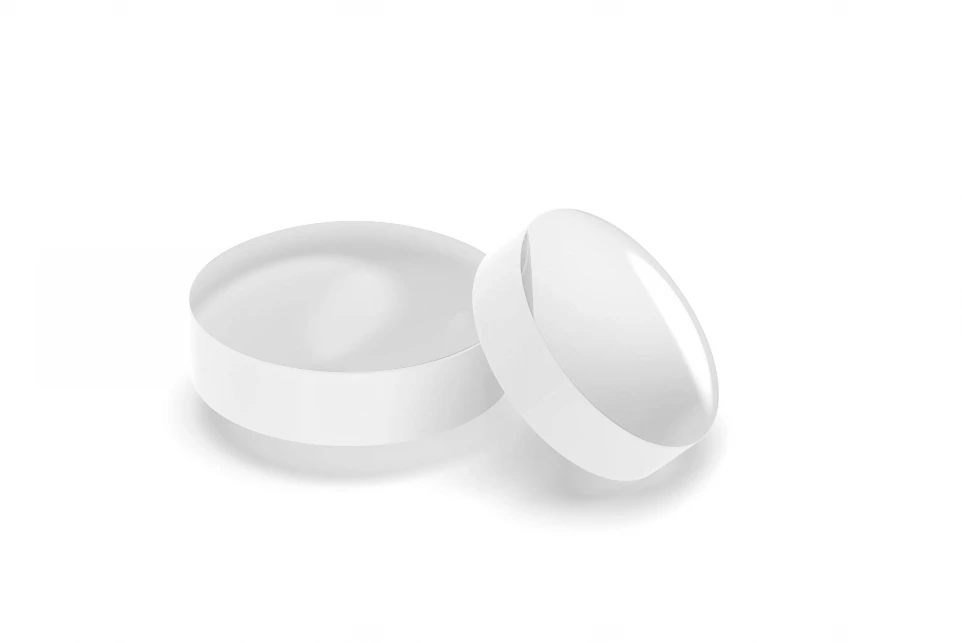
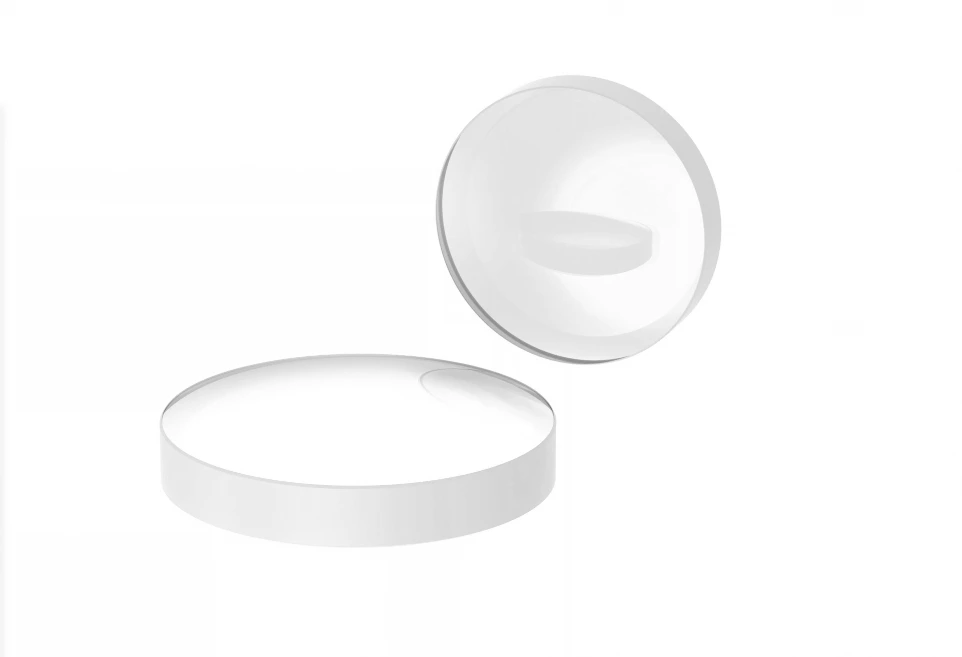
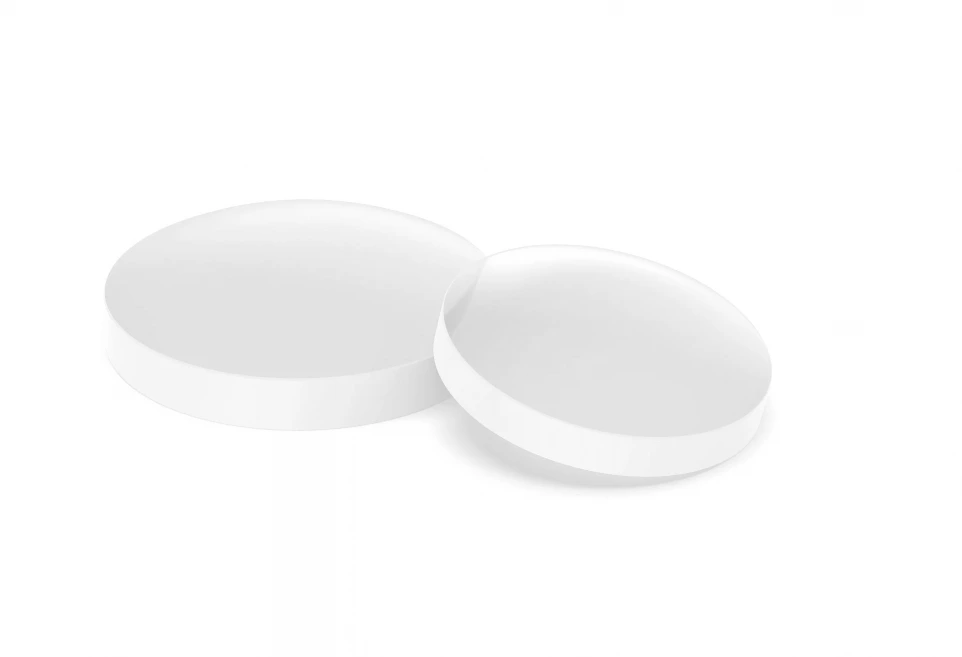
Achromatic Lens
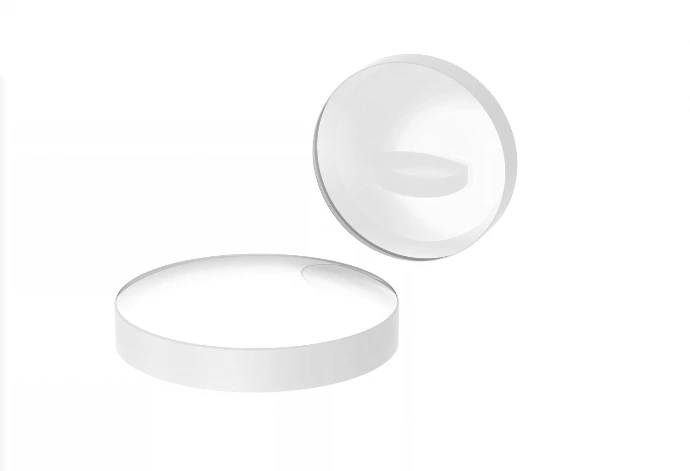
A multi-element optical solution engineered to overcome the fundamental limitations of single-element lenses — delivering sharper focus, truer color, and consistent performance across demanding optical systems.
Overview
- A compound optical lens combining two or more elements to actively counteract chromatic aberration
- Brings two distinct wavelengths — typically the red and blue ends of the spectrum — to a shared focal plane
- Produces tighter spot sizes, higher contrast, and more accurate color rendering than comparable singlet lenses
- Delivers consistent focal length independent of aperture size, enabling full use of the clear aperture
- A proven, widely trusted lens architecture used in precision optical systems for over two centuries
Key Features
Chromatic aberration correction
Two glass elements with opposing dispersion properties are paired to cancel each other's chromatic error, eliminating color fringing and bringing wavelengths to a unified focal point.
Superior image quality
Produces noticeably higher image brightness, finer resolution, and tighter focused spot sizes — particularly critical in polychromatic or broadband imaging scenarios.
Reduced spherical aberration
The doublet configuration is computer-optimized to minimize spherical aberration and coma — yielding improved on-axis and off-axis performance over equivalent singlet lenses.
Full aperture efficiency
Unlike singlets, achromatic lenses maintain optical performance across the entire clear aperture without needing to stop down — making them faster, more efficient, and more powerful in practice.
Design and Construction
Standard configurations
Common types
- Cemented doublets — compact form, minimal surface reflections, cost-effective production
- Air-spaced doublets — gap between elements offers greater thermal stability and design flexibility
Advanced options
- Achromatic triplets — three-element design for higher-order correction and relay applications
- Aspherized achromats — combine chromatic correction with aspheric surfaces to simultaneously address spherical aberration
- Negative achromats — diverging doublets used in beam expansion and telephoto systems
Design parameters
- Abbe number (V-number) governs the dispersion balance between the crown and flint elements
- Radii of curvature across all four lens surfaces determine the focal length and aberration correction
- Center and edge thickness tolerances are controlled to ensure optical axis alignment and phase accuracy
- Cemented interface surface quality is critical to minimize internal scatter and reflection loss
Optical Materials
Standard glass combinations
Crown glass (low dispersion)
- N-BK7 — industry-standard borosilicate crown, excellent visible transmission
- SK, LaK types — higher refractive index for more compact designs
Flint glass (high dispersion)
- N-F2, N-SF series — lead-free dense flints with Abbe numbers below 50
- Dispersion contrast between crown and flint determines correction bandwidth
Specialized materials
For UV applications
- UV-grade fused silica — high transmission below 350 nm, low thermal expansion
- Calcium fluoride (CaF₂) — minimal dispersion, superior deep-UV performance
For infrared applications
- Germanium, ZnSe, and silicon-based materials for extended NIR and SWIR ranges
- Material selection directly affects dispersion compensation and environmental stability
Wavelength Options
UV
- 200–400 nm
- CaF₂ or UVFS
- UV-optimized AR
Visible
- 400–700 nm
- N-BK7 / flint
- VIS 0° or MgF₂
NIR
- 700–1100 nm
- VIS-NIR coatings
- Optimized 1064 nm
SWIR
- 1100–2500 nm
- Specialist glass
- SWIR AR coatings
Applications
Microscopy
Fluorescence & brightfield
Fluorescence, brightfield, and confocal systems requiring color-accurate, high-resolution imaging of specimens across multiple fluorescent dye channels simultaneously.
Machine Vision
Imaging systems
Machine vision, industrial inspection cameras, and scientific imaging platforms needing sharp, distortion-free output across a broad wavelength range.
Laser Optics
Beam focusing & collimation
Beam focusing, collimation, and expansion in laser systems — including fiber coupling and laser scanning setups where consistent focal length across laser wavelength is required.
Spectroscopy
Analytical instruments
Light collection and focusing across multiple wavelengths simultaneously in analytical and research instruments where achromatic correction ensures accurate spectral measurement.
Metrology
Inspection & measurement
Precision measurement systems, optical gauging, and quality control equipment in manufacturing environments where consistent focal position across wavelengths is critical.
Astronomy
Refracting telescopes
Refracting telescopes for astronomy, surveillance, and long-range imaging where color clarity over distance matters and chromatic aberration would otherwise smear star images into colored halos.
Why choose Achromatic Lenses
Outperforms singlet lenses
The doublet design provides additional degrees of freedom for optical optimization — yielding smaller spot sizes and better off-axis performance than any equivalent single-element lens.
Cost-effective precision
Achieves high optical correction without the manufacturing cost of more complex multi-element systems — a reliable, value-driven solution for most broadband imaging needs.
Broad application fit
Available in positive, negative, triplet, and aspherized configurations — with material and coating options covering UV through SWIR wavelengths across almost every optical use case.
Custom design available
Diameter, focal length, material combination, and coatings can all be specified to match exact system requirements, with computer-optimized design tools ensuring consistent, repeatable results.
Frequently asked questions
Here are some common questions about achromatic lens.
The lens is constructed from two glass elements — one with low dispersion (crown glass) and one with high dispersion (flint glass). Because their Abbe numbers differ significantly, the chromatic error introduced by one element is precisely counteracted by the other. The result is a unified focal point for at least two wavelengths, with focal length variation minimized across the rest of the spectrum.
No. Achromatic lenses are primarily optimized to eliminate chromatic aberration and also reduce spherical aberration and coma compared to singlets. Higher-order aberrations such as astigmatism, field curvature, or distortion may still be present and typically require additional lens elements or more complex system designs to address fully.
Cemented doublets bond the elements with optical adhesive — reducing internal reflections, making them more compact, and lowering manufacturing cost. Air-spaced doublets maintain a controlled gap between elements — offering better thermal stability over temperature extremes and greater flexibility in optimizing each surface independently. Cemented doublets suit most standard applications; air-spaced designs are preferred for high-power laser use or wide temperature environments.
- Wavelength range — determines material and coating selection (UV, VIS, NIR, SWIR)
- Required focal length and working distance — defines the physical layout of your optical system
- Conjugate ratio — for symmetric imaging (1:1), a triplet design may perform better than a standard doublet
- Application type — imaging, laser collimation, spectroscopy, and measurement each have different tolerance and performance priorities
Yes. Achromatic lenses can be fully customized across all key parameters — including diameter, focal length, glass material combination, surface radii, center thickness, and anti-reflection coating type. Computer-optimized design tools allow precise tailoring to specific wavelength ranges and performance targets, making custom achromats a practical choice for OEM and specialized research applications.