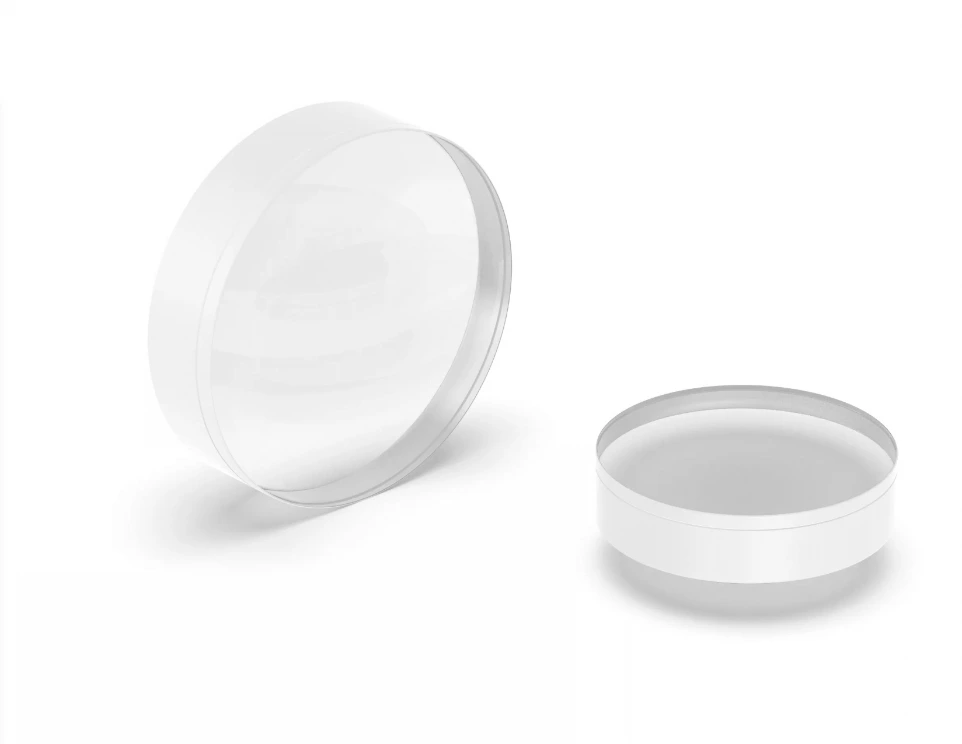
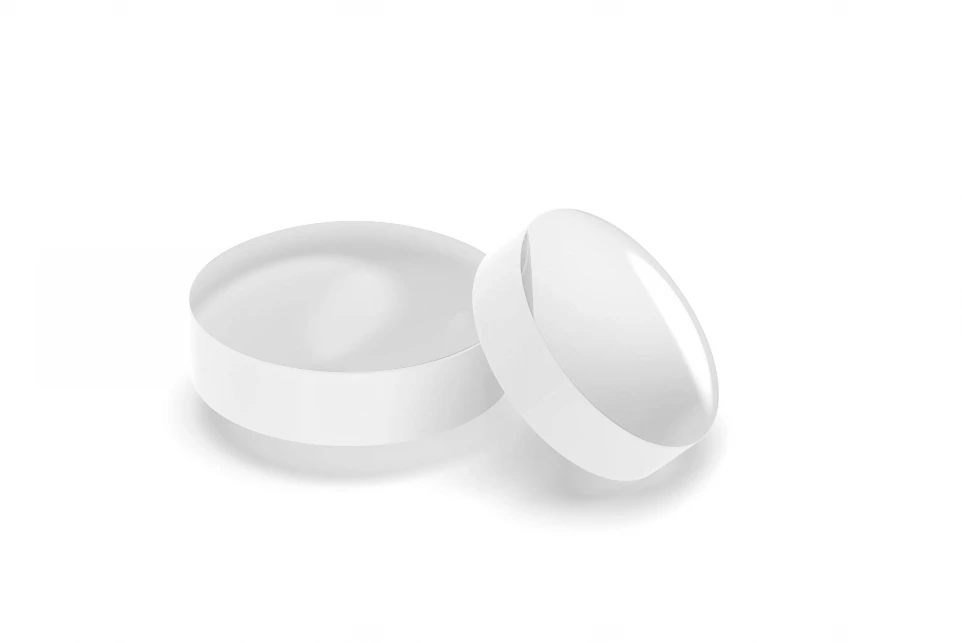
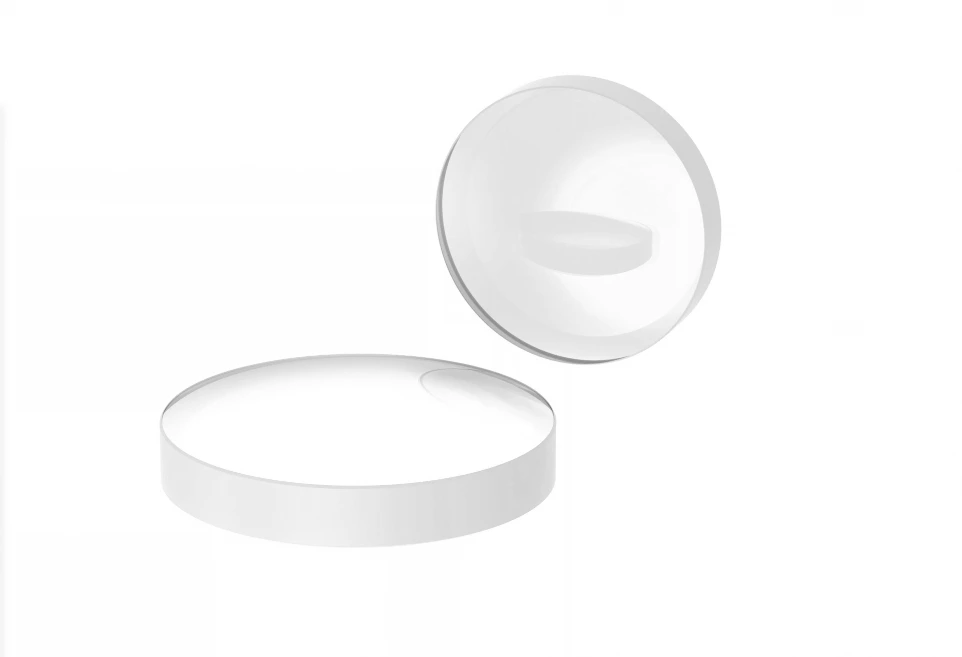
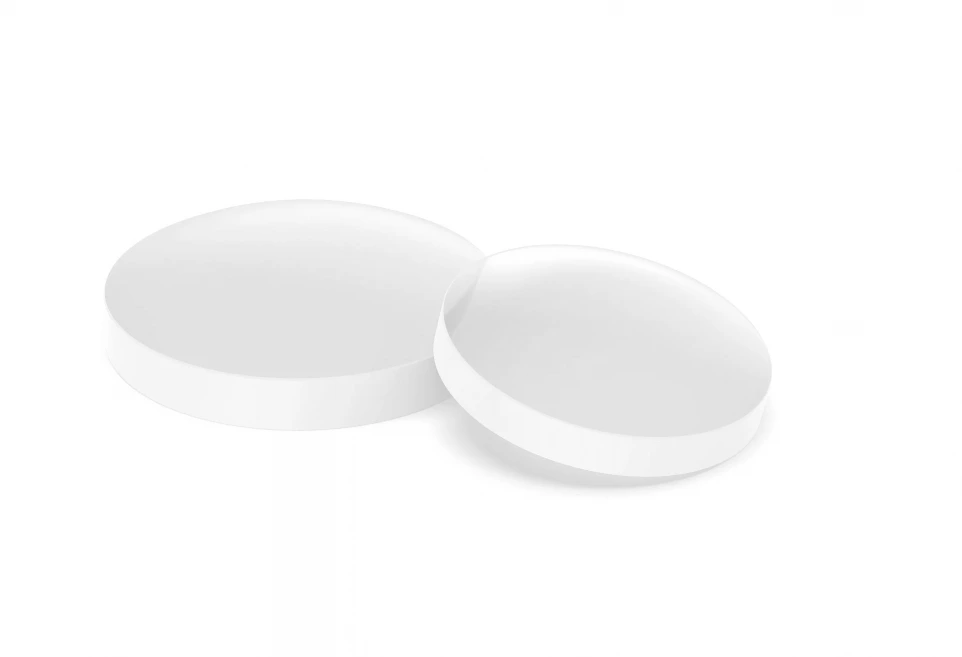
Bi-Concave Lens
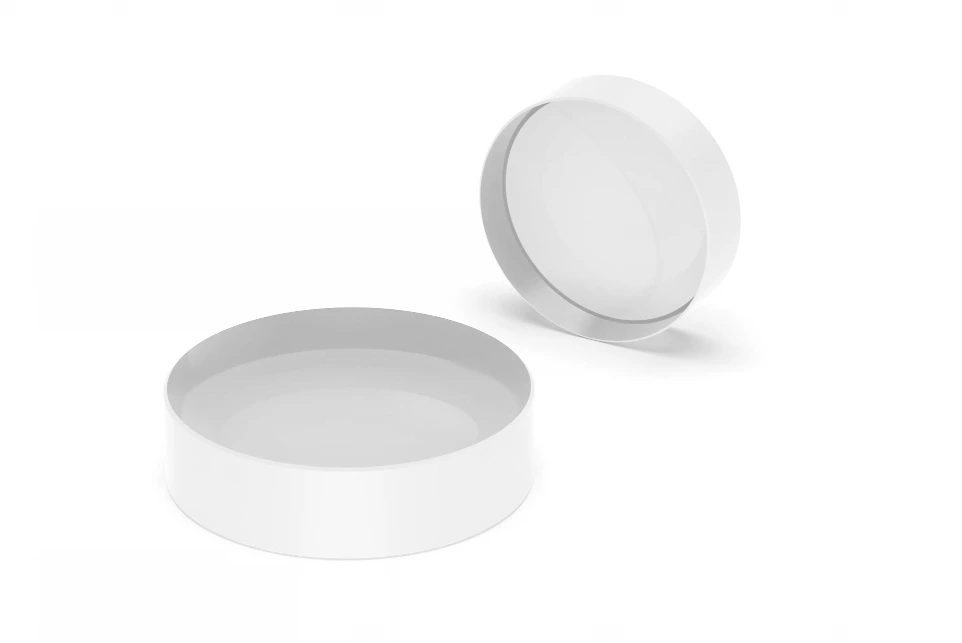
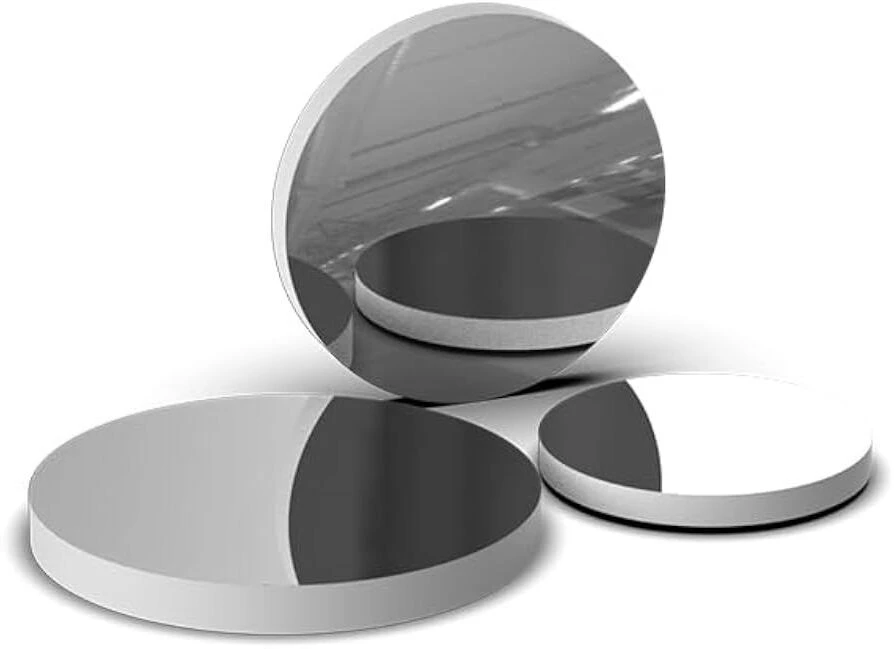
A diverging singlet lens with two inward-curving concave surfaces — providing the strongest negative optical power available in a single-element design. The preferred diverging element for symmetric beam expansion, focal length extension, and negative power balancing in compound optical systems.
Overview
- Two concave surfaces — negative focal length, strongly diverging lens
- Available in equiconcave (equal radii) and unequal-radii forms for different conjugate requirements
- Produces virtual, upright, and demagnified images on the same side as incident light
- Stronger negative power per diameter than plano-concave lenses — useful where significant divergence is needed compactly
- Equiconcave form minimizes aberrations when divergence at equal object and image conjugate distances is required
- Commonly used in Galilean beam expanders, telephoto designs, and as negative elements in compound systems
Key Features
Maximum single-element divergence
Dual concave surfaces provide the strongest negative power available in a simple lens geometry — essential for applications requiring substantial beam expansion, large divergence angles, or significant focal length extension in a minimal axial footprint.
Symmetric form factor
The equiconcave design distributes negative power equally across both surfaces — reducing off-axis aberrations in symmetric conjugate setups compared to a plano-concave lens working at the same conjugate ratio.
Beam expansion
Expands and controls collimated laser beams in one dimension or two — fundamental to Galilean beam expander designs used in laser machining, LIDAR, and free-space optical communication systems where clean, aberration-free divergence is critical.
System aberration correction
In compound lens designs, biconcave elements are used to reduce the Petzval field curvature, balance residual spherical aberration, and correct the chromatic output of strongly positive lens groups — without requiring complex multi-element assemblies.
Design and Construction
Surface & form specifications
Equiconcave form
- Both radii equal in magnitude: |R₁| = |R₂|
- Optimal for symmetric beam expansion at 1:1 divergence conjugate ratio
- Surface figure: λ/4 standard, λ/8 precision grade
- Surface quality: 60-40 standard, 20-10 laser grade
Unequal radii form
- Custom radii for asymmetric beam control or telephoto applications
- Larger-radius surface toward the shorter conjugate reduces spherical aberration
- Center thickness is minimum at the optical axis — edge is thicker
Design parameters
Optical parameters
- Lensmaker's equation: 1/f = (n−1)[1/R₁ − 1/R₂] — both radii negative for biconcave
- Focal length negative by convention; determined by substrate index and surface radii
- Abbe number influences chromatic contribution in compound systems
Coating options
- Uncoated — broadband or diffuse illumination applications
- BBAR coatings — reduce reflections below 0.5% per surface for visible, NIR, or IR
- V-coat — single-wavelength laser lines
- UV-AR — for 245–440 nm instruments
Optical Materials
Standard glass
Visible & NIR
- N-BK7 — most common; excellent visible transmission; V=64.2
- N-SF11 — high-index flint; compact strong-negative-power lenses
- Sapphire — hardest common optical material; rugged environments
UV-grade
- UV Fused Silica — 185–2100 nm; excimer laser and UV instrument use
- CaF₂ — 130 nm–10 µm; deep UV semiconductor and spectroscopy
Infrared materials
MWIR range
- Silicon — 1.2–8 µm; very hard; lightweight designs
- CaF₂ — dual UV–IR range; low dispersion
LWIR range
- Germanium — 2–12 µm; high index (n=4.0); compact thermal designs
- ZnSe — 0.5–20 µm; low absorption; CO₂ laser beam-expansion elements
Wavelength Options
Deep UV
- 185–350 nm
- CaF₂ or UVFS
- UV-optimized AR
Visible
- 400–700 nm
- N-BK7 standard
- MgF₂ or BBAR
NIR
- 700–2000 nm
- BK7 / Fused Silica
- VIS-NIR BBAR
MWIR
- 2–5 µm
- Silicon or CaF₂
- BBAR 3–5 µm
LWIR
- 8–12 µm
- Germanium or ZnSe
- BBAR 8–12 µm
Applications
Laser Systems
Galilean beam expanders
The negative element in Galilean beam expander designs — expands laser beams without producing a focal point (and therefore no plasma breakdown at air focus), which is critical in high-power laser systems above several watts.
Imaging
Focal length extension
Placed between a positive lens group and the image plane, a biconcave element increases effective focal length — used in telephoto designs for astronomy, surveillance cameras, and long-working-distance machine vision systems.
Medical
Ophthalmic & diagnostic
Negative elements are the basic corrective form for myopia in ophthalmic instruments. In diagnostic instruments, biconcave lenses contribute to aberration correction in slit-lamp biomicroscopes, indirect ophthalmoscopes, and laser treatment delivery systems.
Research
Laser divergence control
Used in research laser setups to pre-diverge beams before steering optics — controlling beam diameter at downstream components and managing fill factor for spatial light modulators and diffraction gratings.
Infrared
Thermal camera design
Germanium and ZnSe biconcave elements are used as negative group elements in compact infrared objectives — providing the telephoto compression needed for long-focal-length thermal imaging in a mechanically short housing.
Why choose Biconcave Lenses
Strongest single-element negative power
Two concave surfaces provide more negative power per unit diameter than a plano-concave design — achieving stronger divergence in a more compact form.
Optimal for symmetric divergence
At 1:1 divergence conjugate ratios, the equiconcave form outperforms plano-concave lenses on spherical aberration and coma — the correct choice for Galilean beam expanders.
Safe for high-power lasers
Unlike Keplerian designs with an internal focal point, Galilean expanders using biconcave lenses never generate an internal focus — preventing plasma damage to air and downstream optics at high laser power.
Wide material & coating range
Available in the full material ecosystem from UV fused silica to germanium — with matched AR coatings for all standard wavelength bands.
Frequently asked questions
Here are some common questions about achromatic lens.
Use a biconcave lens when the divergence conjugate ratio is near 1:1 (symmetric beam expansion) — the equiconcave form minimizes spherical aberration and coma at that condition. Use a plano-concave lens when one conjugate is at or near infinity (expanding a collimated beam) or when a flat surface is needed for mounting or integration convenience.
High-power continuous-wave or pulsed laser systems cannot tolerate an internal focal point — the concentrated intensity ionizes air, damages coatings, and creates plasma. Galilean beam expanders using a biconcave negative lens and a positive lens expand the beam without forming any internal focus, making them safe for kilowatt-class laser systems.
No. A true equiconcave lens has equal radii on both surfaces and is rotationally symmetric about the optical axis — it performs identically in either orientation. Unequal-radii versions should have the shallower (longer radius) surface facing the longer conjugate.
No — all biconcave (negative) lenses produce only virtual images that appear on the same side as the incoming light and cannot be projected onto a screen. A positive element must be combined with a biconcave lens in a compound system to form a real image.