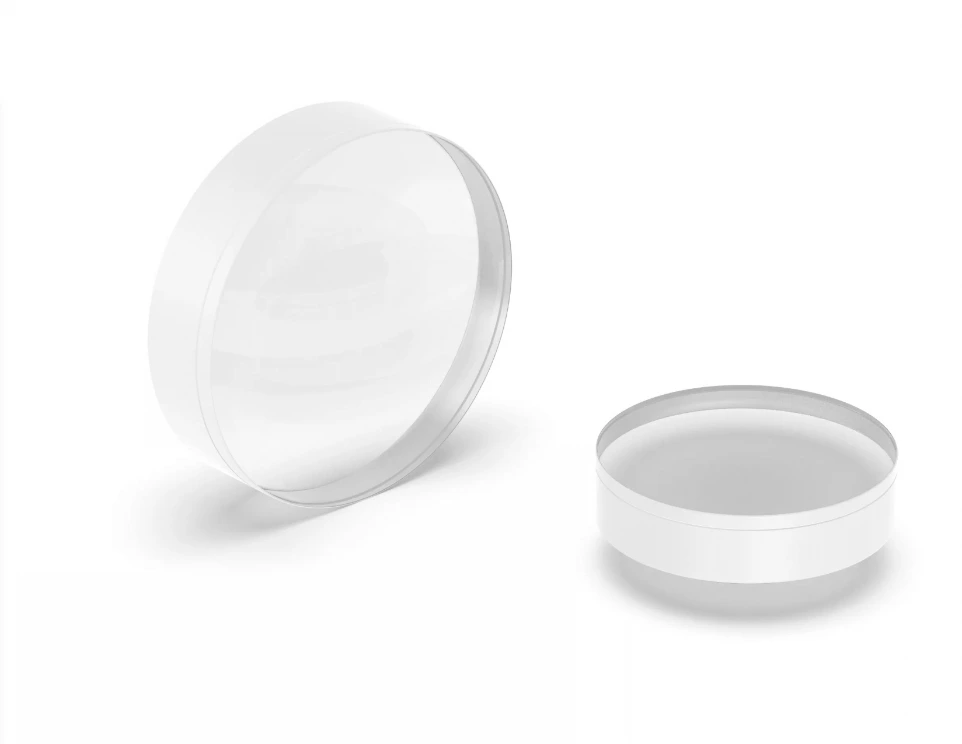
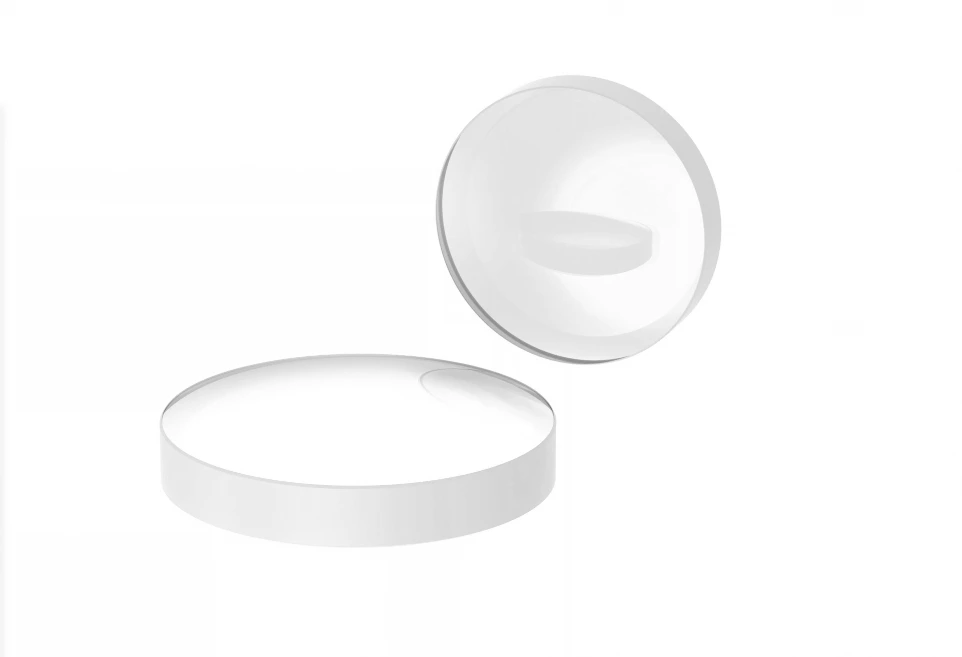
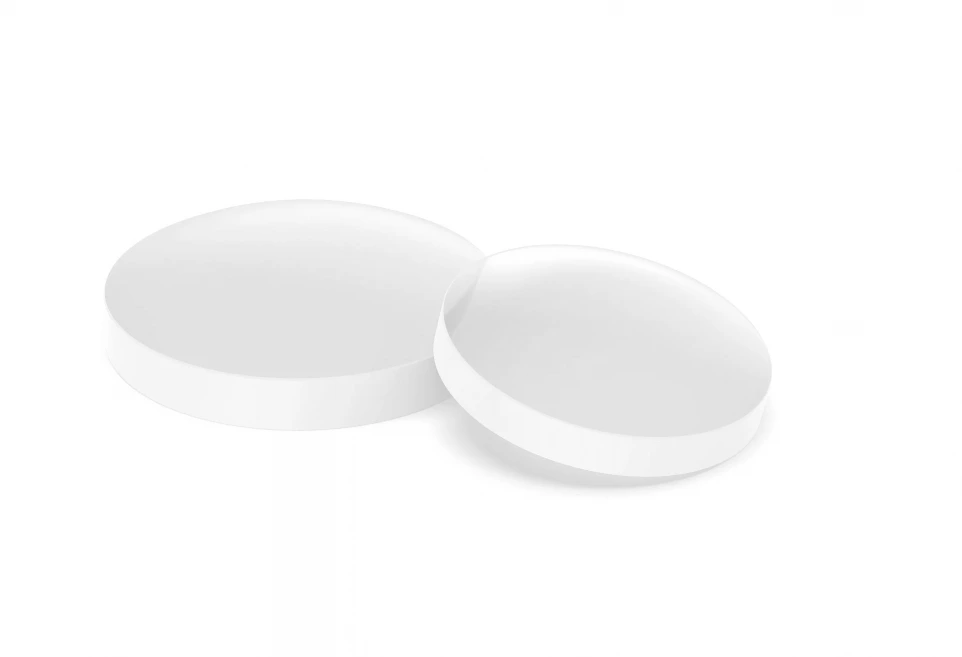
Bi-Convex Lens
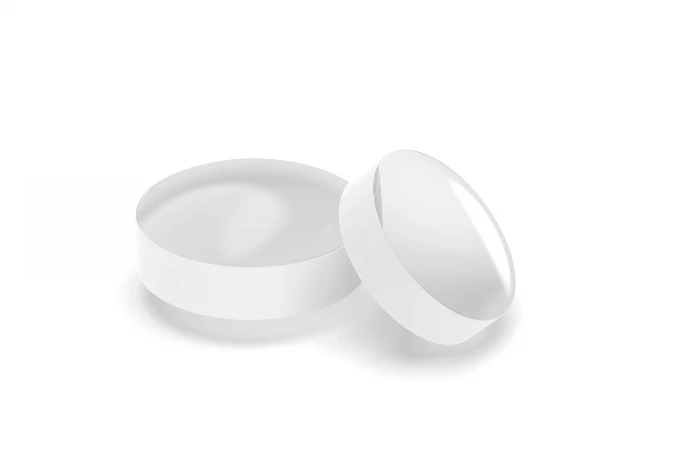
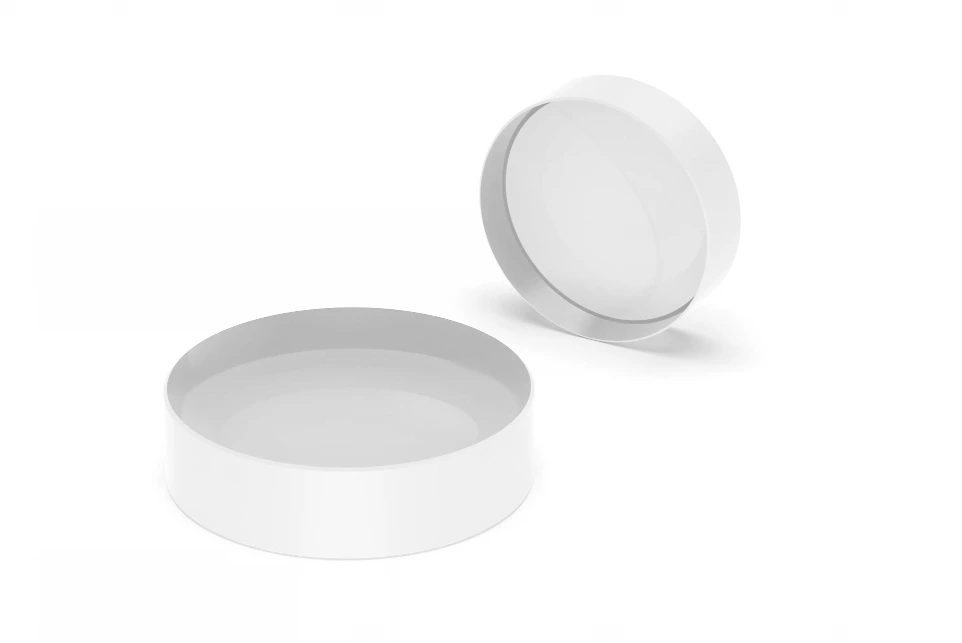
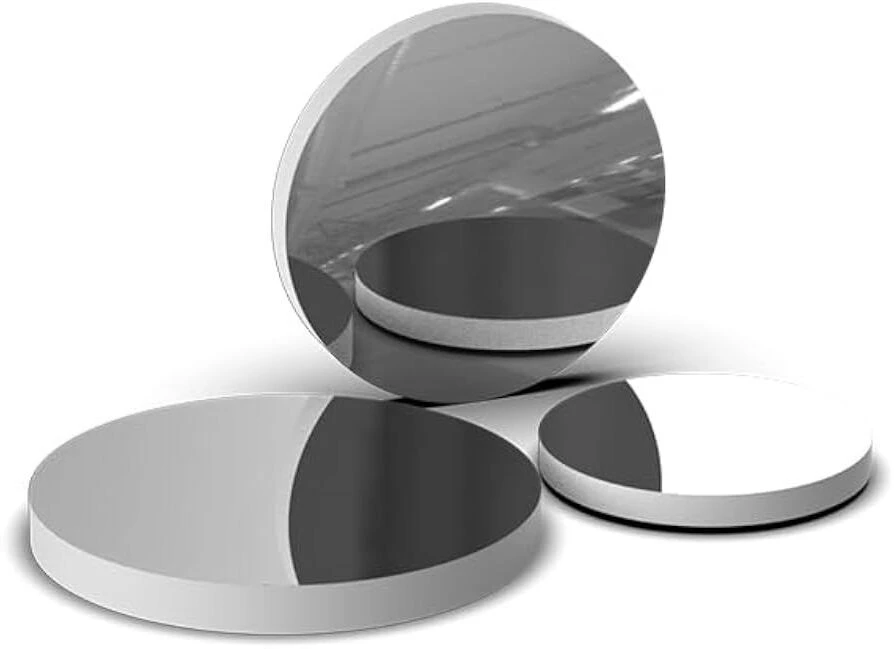
A converging singlet lens curved outward on both surfaces — delivering strong focusing power in a symmetric form. The preferred single-element choice for imaging and relay applications where object and image distances are comparable, and for high-power light collection where maximum convergence is needed in a compact package.
Overview
- Two outward-curving convex surfaces — positive focal length, strongly converging lens
- Available in equiconvex (equal radii) and unequal-radii variants optimized for different conjugate ratios
- Symmetric equiconvex form minimizes spherical aberration and coma when conjugate ratio is near 1:1
- Ideal conjugate ratio range: 0.2–5 — beyond this range, plano-convex becomes a better choice
- Higher optical power per unit thickness compared to plano-convex designs of the same diameter
- An integral component in imaging devices from microscopes to cameras, and in laser beam control systems
Key Features
Strong light convergence
With two curved surfaces bending light simultaneously, biconvex lenses achieve shorter focal lengths and stronger focusing power than a plano-convex lens of equal diameter. Both surfaces contribute equally to the total refractive power, making the design inherently efficient.
Symmetric aberration minimization
The equal-radius equiconvex form distributes aberration-producing optical power symmetrically between two surfaces. At a 1:1 conjugate ratio, spherical aberration, coma, and distortion are minimized — a property no other single-element lens shape can match at that working condition.
High light throughput
Applied anti-reflection coatings allow biconvex lenses to achieve transmission above 99% per surface — making them highly efficient for light collection and concentration in condensers, laser setups, and medical illumination systems.
Versatile conjugate control
By selecting lenses with unequal radii of curvature, optical designers can optimize a biconvex lens for off-1:1 conjugate ratios — pushing aberration correction to match the specific object-image geometry of a given application.
Design and Construction
Surface & form specifications
Equiconvex form
- Both radii equal in magnitude: R₁ = |R₂|
- Optimal for 1:1 conjugate imaging — equal object and image distances
- Surface figure: λ/4 standard, λ/8 precision grade
- Surface quality: 60-40 standard, 20-10 laser grade
Unequal radii form
- R₁ ≠ R₂ — optimized for specific conjugate ratios other than 1:1
- Computer-optimized to minimize spherical aberration for the target working distance
- Center thickness tolerance: ±0.1 mm standard, ±0.05 mm precision
Design parameters
Optical parameters
- Lensmaker's equation: 1/f = (n−1)[1/R₁ − 1/R₂]
- For equiconvex: 1/f = 2(n−1)/R — both surfaces contribute equally
- Abbe number governs chromatic dispersion — important for broadband imaging use
- Minimum spot size (for given f-number) better than equivalent plano-convex at 1:1 conjugate ratio
Coating options
- Uncoated — for low-power or broadband applications
- MgF₂ single-layer AR — visible range, cost-effective
- Broadband AR (BBAR) — <0.5% per surface across visible, NIR, or SWIR
- V-coat — single-wavelength laser lines (532, 1064, 1550 nm)
- Dual-band AR — two specific laser wavelengths simultaneously
Optical Materials
Standard optical glass
Visible & NIR range
- N-BK7 — industry standard borosilicate crown; Abbe number V=64.2; transmission 350–2000 nm
- N-SF11 — dense flint; n=1.784; used where a short focal length in a small diameter is needed
- BaF₂ — barium fluoride; excellent transmission 150 nm–12 µm; low dispersion for UV-NIR achromat pairs
- Sapphire (Al₂O₃) — extremely hard, transmission 150 nm to 5.5 µm; ideal for high-pressure or harsh environments
UV-grade materials
- UV-grade Fused Silica — transmission from 185 nm; very low thermal expansion (0.55×10⁻⁶/°C); preferred for excimer laser and UV microscopy applications
- Calcium Fluoride (CaF₂) — transmission from 130 nm to 10 µm; minimal intrinsic fluorescence; critical for deep-UV semiconductor lithography
Infrared & specialty materials
Near to mid-wave IR
- Silicon (Si) — 1.2–8 µm; low density, high hardness; lightweight MWIR designs
- Calcium Fluoride — extends to 8 µm; used where low-dispersion and UV-IR dual-range transmission is needed
- MgF₂ — 0.12–7 µm range; birefringent crystal; used in UV-extended biconvex designs
Long-wave IR
- Germanium (Ge) — 2–12 µm; high index of refraction (n≈4.0); strong focusing power in compact thermal lenses; subject to thermal runaway above 100°C
- Zinc Selenide (ZnSe) — 0.5–20 µm; low absorption coefficient; primary material for CO₂ laser (10.6 µm) biconvex focusing lenses
- Zinc Sulfide (ZnS) — 0.4–12 µm; higher hardness than ZnSe; preferred for rugged FLIR and defense systems
Wavelength Options
Deep UV
- 185–350 nm
- CaF₂ or UVFS
- UV-optimized AR
Visible
- 400–700 nm
- N-BK7 standard
- MgF₂ or BBAR
NIR
- 700–2000 nm
- BK7 / Fused Silica
- VIS-NIR BBAR
MWIR
- 2–5 µm
- Silicon or CaF₂
- BBAR 3–5 µm
LWIR
- 8–12 µm
- Germanium or ZnSe
- BBAR 8–12 µm
Applications
Imaging
Cameras & image relay
The equiconvex form is the textbook choice for 1:1 image relay systems — transferring an image from one focal plane to another with minimum aberration. Used in machine vision, industrial cameras, and scientific image relay optics.
Laser Systems
Beam focusing & coupling
Used in laser assemblies to focus collimated beams or couple light into fibers. High-index versions (N-SF11, ZnSe) achieve very short focal lengths in small diameters — ideal for tight-focus laser processing and fiber-coupling heads.
Illumination
Condenser systems
Biconvex lenses serve as condensing elements in microscope illuminators, projectors, and fiber light sources — collecting and directing light from extended sources into controlled beams with maximum throughput efficiency.
Microscopy
Objective & relay elements
Used as relay and field lenses within microscope objectives. The symmetric form reduces aberrations in the intermediate image plane — contributing to the flat-field, high-NA performance of compound microscope systems.
Medical
Endoscopy & diagnostics
Found in endoscope objectives, fundus cameras, ophthalmic slit lamps, and surgical microscopes where a compact, high-transmission converging element is needed within tight housing constraints.
Telecom & IR
Infrared & fiber applications
Germanium and ZnSe biconvex lenses are used in thermal camera objectives and CO₂ laser cutting heads. Fused silica versions serve telecom fiber coupling at 1310 nm and 1550 nm where low back-reflection is critical.
Why choose Biconvex Lenses
Best 1:1 conjugate performance
No other single-element lens geometry performs as well as an equiconvex lens for symmetric conjugate ratios — minimizing spherical aberration, coma, and distortion simultaneously.
More power per diameter
Two curved surfaces provide greater focusing power than a plano-convex lens of the same diameter and glass — enabling shorter focal lengths in more compact packages.
Symmetric mounting
The rotationally symmetric, equal-radius form is forgiving of reversal errors and simplifies alignment in automated assembly — reducing manufacturing scrap and alignment time.
Broad material compatibility
Available in BK7 through ZnSe, covering UV to LWIR — the same material and coating ecosystem as plano-convex lenses, enabling consistent system design decisions.
Frequently asked questions
Here are some common questions about achromatic lens.
Use a biconvex lens when the conjugate ratio (image distance / object distance) is between 0.2 and 5. At ratios close to 1:1, the equiconvex form minimizes aberrations better than any other singlet. Use a plano-convex lens when one conjugate is at or near infinity (ratio >5:1 or <0.2:1), as the plano-convex best-form geometry is then more appropriate.
Like all singlet lenses, biconvex lenses introduce spherical aberration (rays at different aperture heights focus at slightly different axial distances), chromatic aberration (different wavelengths focus at different distances), coma (off-axis comet-shaped blur), astigmatism (different focal planes in orthogonal axes for off-axis points), and field curvature (the focal surface is a sphere, not a plane). Chromatic aberration can be corrected by using an achromatic doublet design instead.
For a true equiconvex lens (equal radii), orientation makes no optical difference — the lens performs identically either way. For unequal-radii biconvex lenses designed for a specific conjugate ratio, the more strongly curved surface should face the shorter conjugate (closer object or image distance) for optimal aberration performance.
Yes, but with limitations. Biconvex singlets suffer from chromatic aberration, which causes different wavelengths to focus at different distances. For single-wavelength (laser) or narrowband use this is not a problem. For broadband or multi-wavelength imaging (such as fluorescence microscopy with multiple dye channels), an achromatic doublet or apochromatic lens system is strongly recommended.
Standard catalog biconvex lenses are manufactured to 60-40 scratch-dig surface quality and λ/4 surface figure — suitable for most imaging and laser applications. Precision grades (20-10 surface quality, λ/8 surface figure) are available for wavefront-sensitive applications such as interferometry, laser resonators, and high-NA microscopy objectives. Custom tolerances beyond these are available on request.