Cold Mirror
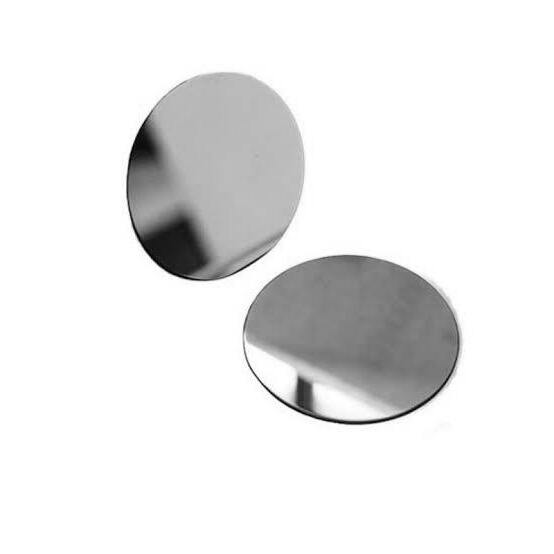
A specialized dichroic mirror that reflects visible light while transmitting infrared radiation through — the inverse of a hot mirror. Used to direct cool, heat-free visible illumination toward a target while passing unwanted IR heat through and away, essential in fiber optic illuminators, dental and medical lighting, and any application requiring "cold light."
Reflects
Visible (400–700 nm)
Transmits
IR (>700–750 nm)
Function
Cold light generation
Coating type
Multilayer dielectric
Overview
- A dichroic mirror engineered to reflect the visible spectrum (400–700 nm) while transmitting infrared radiation through the substrate and out the back
- The functional inverse of a hot mirror — where a hot mirror reflects IR and transmits visible, a cold mirror reflects visible and transmits IR
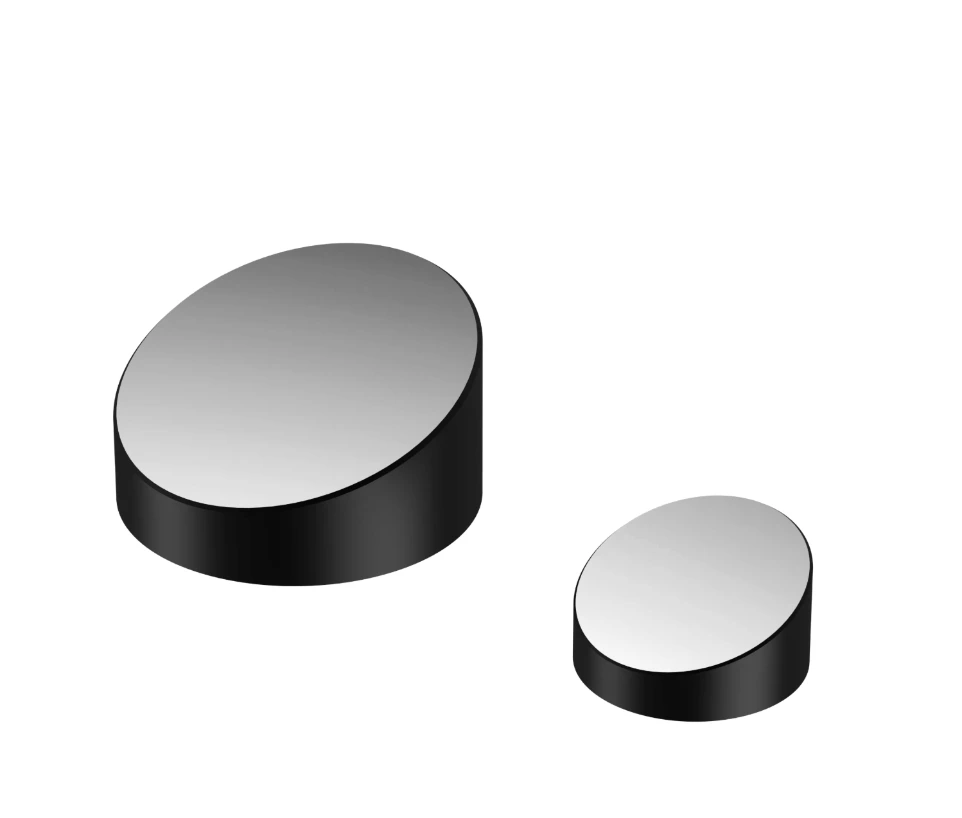
- Used at 45° to redirect "cold" (heat-free) visible light toward a target while allowing the unwanted IR heat component to pass through the mirror substrate and dissipate behind it, away from the illuminated subject
- Produces what is commonly called "cold light" — illumination with the thermal IR component removed, important wherever the illuminated subject is heat-sensitive
- Standard component in fiber optic illuminator light sources, where the lamp's IR output must be separated from the visible light before fiber coupling to prevent fiber damage and minimize heat delivered to the fiber's far end
- Like hot mirrors, manufactured with steep-edge multilayer dielectric coatings for maximum spectral selectivity between the visible and IR bands
Key Features
Cold light generation
Reflects the visible light needed for illumination while allowing the IR heat component of the source to transmit through and dissipate behind the mirror — delivering bright visible illumination to the target without the associated thermal load that would otherwise accompany a full-spectrum reflective surface.
Heat-sensitive subject protection
Critical in applications where the illuminated subject — living tissue, biological specimens, heat-sensitive materials, or delicate samples — cannot tolerate thermal exposure. The cold mirror delivers full visible brightness while the IR heat is diverted away from the subject entirely.
Fiber illuminator protection
Fiber optic light guides used in endoscopy, dental lighting, and microscope illumination are damaged by sustained IR heat exposure at the fiber input. A cold mirror placed before the fiber coupling optics removes this IR heat, extending fiber life and preventing thermal damage at the coupling interface.
Inverse complementary function
A cold mirror and a hot mirror used together — one reflecting and one transmitting at the same edge wavelength — can be combined to fully separate a light source's output into pure visible and pure IR beams traveling in two completely separated directions, useful in dual-purpose illumination/heating or imaging/thermal sensing systems.
Design and Construction
Coating design
Spectral performance
- Reflection band: 400–700 nm (visible); typically >95% reflectance
- Transmission band: 750–2500 nm (NIR); typically >80–90% transmission
- Edge transition: typically 700–750 nm; matched to complementary hot mirror designs where used as a pair
Mounting configurations
- 45° mounting — standard for redirecting visible light toward an illumination target while IR passes through
- Common in fiber illuminator housings positioned between the lamp and fiber bundle input
Substrate & specifications
Substrate considerations
- Borosilicate or fused silica — withstands thermal load from the transmitted IR passing through the substrate
- Substrate must tolerate continuous IR transmission without significant absorption-induced heating
Performance specifications
- Surface flatness: λ/2 to λ/4 — sufficient for illumination optics applications
- Color rendering: engineered for flat, neutral visible reflectance to avoid color shift in the reflected illumination
Optical Materials
Coating materials
Dielectric stack
- TiO₂/SiO₂ multilayer stack — standard cold mirror coating; engineered for visible-reflective, IR-transmissive response
- Layer count and design optimized for flat, color-neutral visible reflectance across 400–700 nm
Substrate materials
Standard substrates
- Borosilicate glass — standard substrate for fiber illuminator and general lighting applications
- Fused Silica — premium thermal performance for high-intensity lamp sources requiring extended IR transmission into the substrate
Wavelength Options
Visible (Reflect)
- 400–700 nm
- >95% reflectance
- Color-neutral design
NIR (Transmit)
- 750–1200 nm
- >80% transmission
- Primary IR pass-through
Extended IR
- 1200–2500 nm
- High transmission
- Extended heat dissipation
Applications
Medical
Dental & surgical lighting
Used in dental operatory lights and surgical illumination systems to deliver bright, shadow-free visible light to the treatment area without the heat that would cause patient discomfort or risk tissue damage during extended procedures.
Fiber Optics
Fiber illuminator light sources
The standard component in fiber optic illuminator housings — separating the visible light to be coupled into the fiber bundle from the IR heat that would otherwise damage the fiber input face or degrade the fiber cladding over time.
Microscopy
Stereo microscope illumination
Used in stereo and dissecting microscope illuminators to provide bright sample lighting without thermal damage to live specimens, sensitive biological samples, or temperature-critical experimental setups under observation.
Entertainment
Theatrical & architectural lighting
Used in stage lighting fixtures and architectural lighting installations where intense illumination is required near performers, artwork, or heat-sensitive display materials without the accompanying thermal load of full-spectrum reflective optics.
Industrial
Process inspection lighting
Used in machine vision and quality inspection lighting systems where heat-sensitive products (food, pharmaceuticals, electronics) must be illuminated brightly for imaging without thermal exposure that could alter the product or trigger false defect readings.
Photography
Macro & product photography
Used in specialized photography lighting setups for heat-sensitive subjects such as ice sculptures, chocolate, cosmetics, and other temperature-critical products requiring bright illumination during extended photo shoots.
Why choose Cold Mirrors
True cold light delivery
Delivers full-brightness visible illumination to the target while the IR heat component is diverted through the substrate and away — the standard solution for heat-sensitive illumination applications.
Extends fiber bundle life
Protects fiber optic illuminator bundles from IR-induced thermal damage at the coupling interface — significantly extending the operational lifetime of medical and industrial fiber light sources.
Patient & sample comfort
Essential in medical and biological applications where subject comfort and tissue/sample integrity depend on minimizing thermal exposure during extended illumination periods.
Complementary hot mirror pairing
Can be combined with a matched hot mirror to fully separate a source's visible and IR output into two completely independent beam paths for dual-purpose system designs.
Frequently asked questions
Here are some common questions about achromatic lens.
Both are dichroic mirrors that split visible light from infrared, but with opposite functions. A cold mirror reflects visible light (sending it toward the illumination target) and transmits IR through the substrate (dissipating the heat away from the target). A hot mirror does the opposite — transmits visible light (preserving the main beam path) and reflects IR back toward the source (removing heat from the downstream path). The choice between them depends on whether the visible light needs to be redirected (use a cold mirror) or continue straight through while IR is removed (use a hot mirror).
Fiber optic bundles used in medical and industrial illuminators are sensitive to heat at the input coupling face — sustained IR exposure can degrade the fiber cladding adhesive, cause discoloration, or in severe cases melt the fiber bundle ferrule. A cold mirror placed at 45° between the lamp and the fiber bundle input redirects the visible light (which is what needs to be coupled into the fiber for illumination) while allowing the IR heat to pass straight through the mirror and dissipate into a heat sink or vented housing behind it — protecting the fiber while delivering full visible brightness.