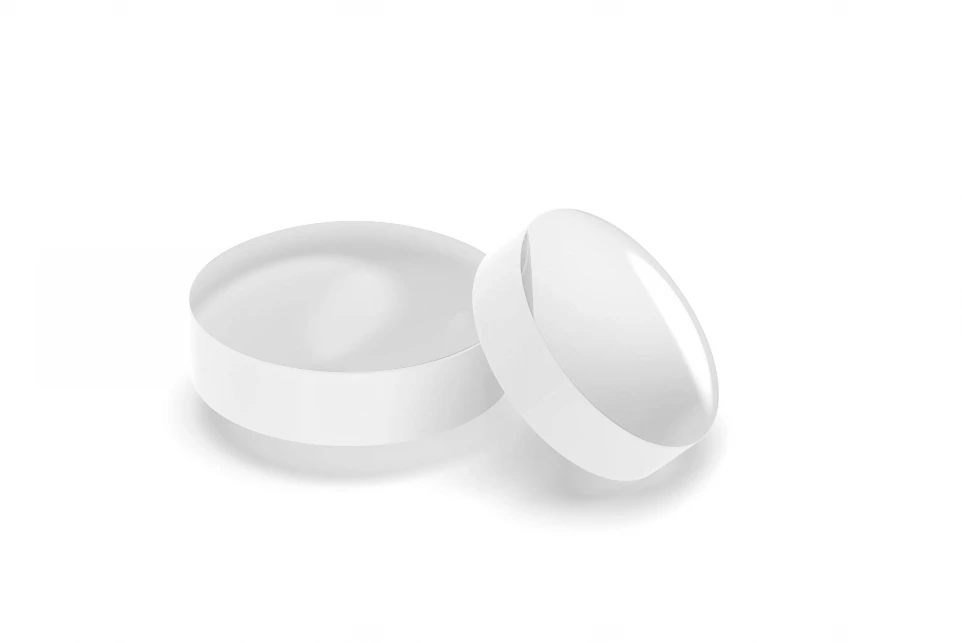
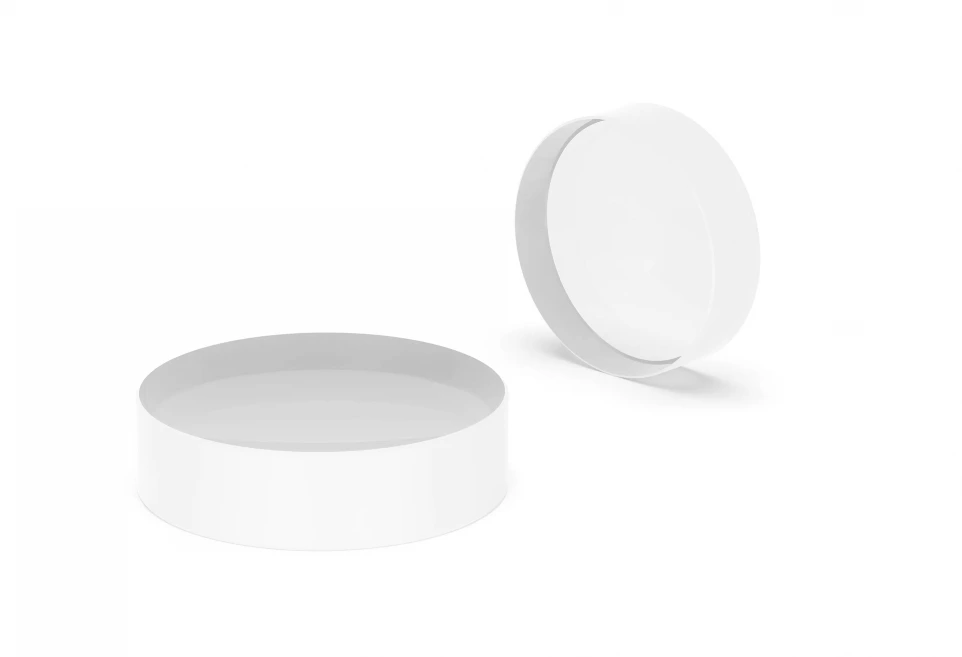
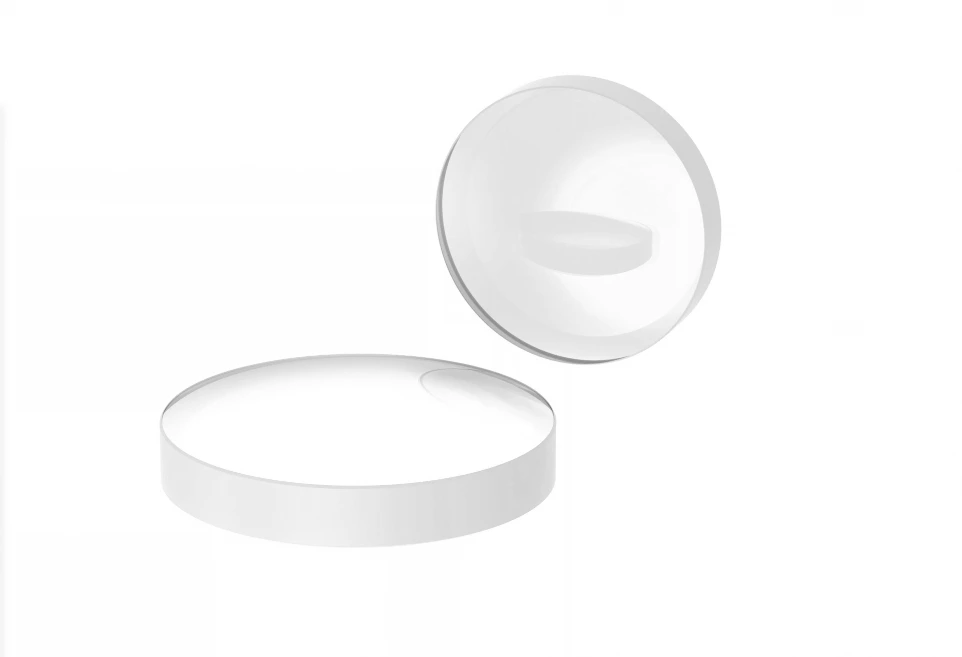
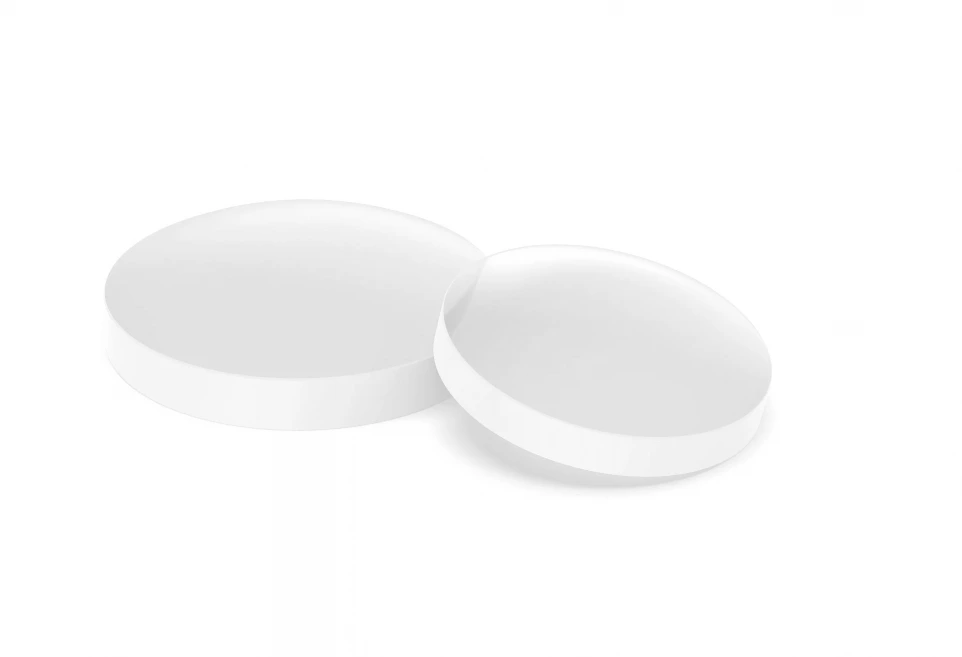
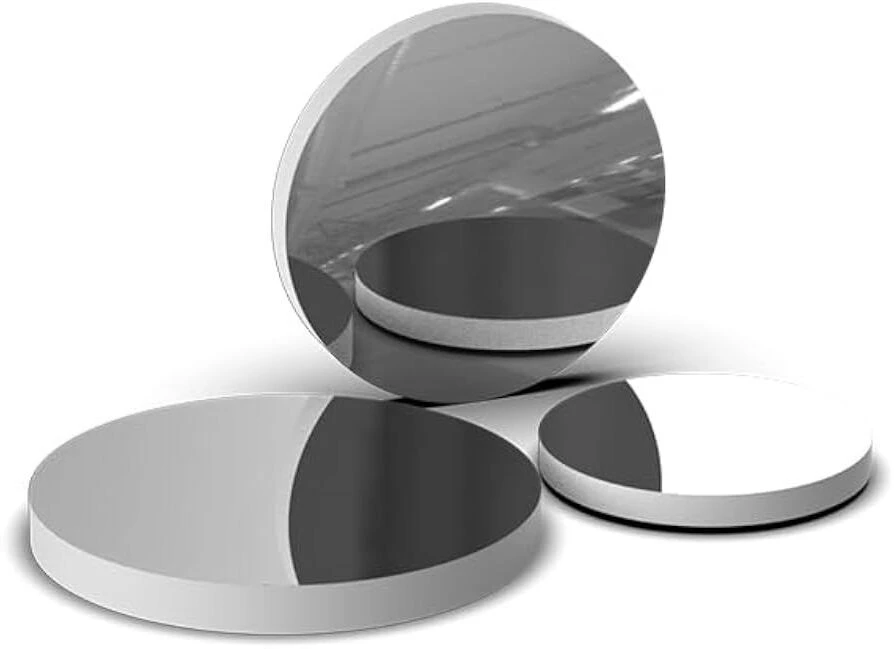
Plano-Concave Lens
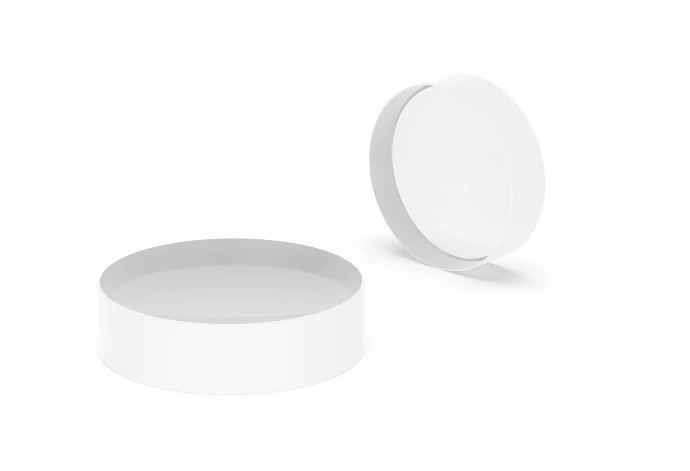
A diverging singlet lens with one flat surface and one inward-curving concave surface. Used to spread or diverge light beams, extend focal lengths in compound systems, and introduce controlled negative optical power into precision optical assemblies.
Overview
- Negative focal length singlet — causes light to diverge rather than converge
- Forms a virtual, upright, and demagnified image on the same side as the incoming light
- The flat surface reduces surface reflections and simplifies integration in multi-element assemblies
- Correcting orientation places the concave side toward the longer conjugate for minimal aberration
- Often used in combination with converging lenses to extend effective focal length or correct aberrations
- Available across the same wide material range as plano-convex lenses — UV through LWIR
Key Features
Beam divergence & expansion
Effectively spreads a collimated or converging beam into a controlled diverging wavefront. The degree of divergence is governed by the lens focal length — shorter focal lengths produce wider divergence angles for the same beam diameter.
Focal length extension
When placed before a positive lens, a plano-concave element increases the system's effective focal length without adding axial length — a key technique in telephoto and long-focal-length system design where physical compactness is required.
Aberration balancing
Negative elements are used throughout compound lens designs to balance the positive power of converging lenses, reducing field curvature, Petzval sum, and chromatic aberration when paired appropriately with positive elements.
Easy system integration
The flat surface of a plano-concave lens simplifies mounting, alignment, and cementing to other elements. This makes it a convenient negative element in beam expanders, collimators, and relay lens assemblies.
Design and Construction
Surface & form specifications
Surface quality
- Standard: 60-40 scratch-dig
- Precision: 20-10 or 10-5 for laser-grade use
- Surface figure: λ/4 standard, λ/8 precision
Key tolerances
- Focal length tolerance: ±1–2%
- Center thickness tolerance: ±0.1–0.05 mm
- Edge thickness is thicker than center — distinctive feature of all diverging singlets
- Centration: ≤3 arcmin standard
Design parameters
Optical parameters
- Negative radius of curvature produces negative focal length: f = R / (1−n)
- For plano-concave, the concave surface has a defined radius; the flat surface has infinite radius
- Abbe number still relevant — determines secondary chromatic contribution in compound systems
Coating options
- Uncoated — standard for low-power or broadband use
- BBAR coatings — minimize reflection across visible, NIR, or IR wavebands
- V-coat — single-wavelength laser applications
- BBAR UV-VIS — 245–440 nm range for UV instruments
Optical Materials
Standard glass
Visible & NIR
- N-BK7 — most common; transmission 350–2000 nm
- N-SF11 — high-index flint; short negative focal lengths in compact packages
- Sapphire — rugged; transmits 150 nm to 5.5 µm
UV-grade
- UV Fused Silica — excellent for 185–2100 nm range
- CaF₂ — 130–10,000 nm range; minimal dispersion
Infrared materials
MWIR
- Silicon — 1.2–8 µm; lightweight and mechanically hard
- Calcium Fluoride — through 8 µm; compatible with cryogenic use
LWIR
- Germanium — 2–12 µm; high index enables compact designs
- Zinc Selenide — 0.5–20 µm; low absorption for CO₂ laser use
Wavelength Options
Deep UV
- 185–350 nm
- CaF₂ or UVFS
- UV-optimized AR
Visible
- 400–700 nm
- N-BK7 standard
- MgF₂ or BBAR
NIR
- 700–2000 nm
- BK7 / Fused Silica
- VIS-NIR BBAR
MWIR
- 2–5 µm
- Silicon or CaF₂
- BBAR 3–5 µm
LWIR
- 8–12 µm
- Germanium or ZnSe
- BBAR 8–12 µm
Applications
Laser Systems
Beam expansion & divergence
Used as the negative element in Galilean beam expanders to widen laser beams before long-distance propagation or before focusing. Provides clean divergence without the focal point generated by Keplerian designs.
Telescopes
Galilean telescope eyepieces
The negative lens element in Galilean telescope designs — provides the erect virtual image and compact form factor needed for binoculars, rifle scopes, and hand-held viewing instruments.
Imaging
Focal length extension
In camera systems and imaging instruments, plano-concave elements placed before the image plane increase the effective focal length — useful for telephoto designs where physical tube length must be minimized.
Medical
Ophthalmology
Negative lenses are the core correction element for myopia (short-sightedness) in ophthalmic instruments and corrective eyewear. Plano-concave optics serve the same function in diagnostic slit lamps and fundus cameras.
Research
Aberration correction
Negative optical elements are used in multi-element optical systems (microscope objectives, spectrometer collimators, relay lens designs) to balance field curvature and chromatic contributions of positive elements.
Infrared
Thermal camera design
Germanium and ZnSe plano-concave lenses are used as negative elements in infrared objective designs for thermal imaging cameras — providing field curvature correction and focal length control in compact IR systems.
Why choose Plano-Concave Lenses
Simplest negative power element
The easiest and most cost-effective way to add negative optical power to any system — no complex design or multi-element construction required.
Compatible flat surface
The flat surface simplifies mounting, alignment, and cementing in compound assemblies — no special fixtures needed for the planar face.
Broad wavelength range
Available in the same substrate range as plano-convex lenses — covering UV through LWIR for consistent system design across wavelengths.
Versatile system element
Pairs effectively with plano-convex, biconvex, and achromatic lenses to control system focal length, reduce aberrations, and build compact compound optics.
Frequently asked questions
Here are some common questions about achromatic lens.
No. A plano-concave lens is a purely diverging element — it can only form virtual images, which appear on the same side as the incoming light and cannot be projected onto a screen. It must be combined with a positive lens to produce a real image of a real object.
For best performance, orient the concave surface toward the longer conjugate — the collimated input beam. The flat surface should face the shorter conjugate (image side). This minimizes spherical aberration and produces the lowest wavefront error for typical diverging beam applications.
Both are diverging (negative) lenses, but differ in power and application. A plano-concave lens has one flat and one concave surface — moderate negative power, simple mounting, good for asymmetric conjugate ratios. A biconcave lens has two concave surfaces — stronger negative power, better suited to symmetric conjugate beam-expansion tasks.
Standard catalog plano-concave lenses cover focal lengths from approximately −5 mm to −5000 mm, in a variety of diameters from 5 mm to 150 mm. Custom designs can extend beyond these ranges. Focal length is negative by convention for all diverging lenses.
Yes — diameter, focal length, substrate material, surface quality, and coating can all be specified to custom requirements. Custom plano-concave lenses in germanium or silicon are particularly common for IR system designs where standard sizes do not match thermal camera format requirements.