Achromatic Refractor
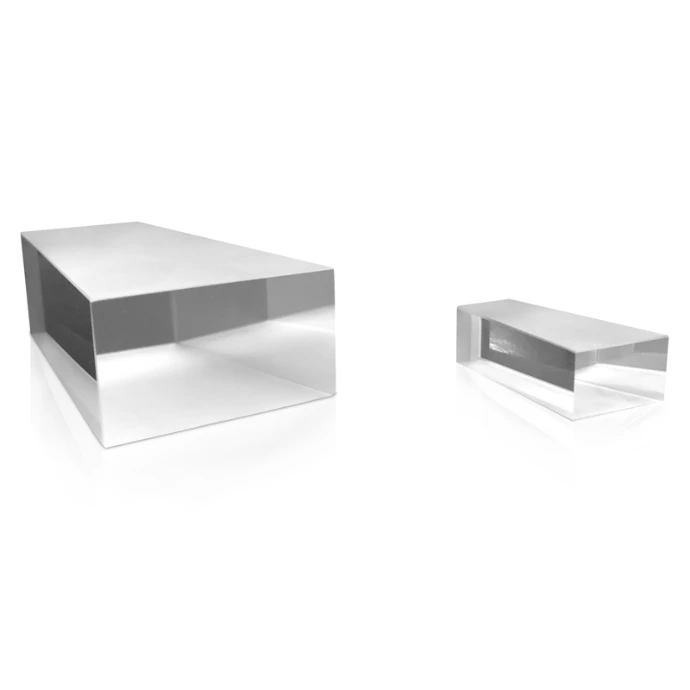
A two-element ("doublet") refracting objective using a convex low-dispersion crown-glass lens cemented or air-spaced against a concave higher-dispersion flint-glass lens, calculated to bring two selected wavelengths to a common focus. The standard, cost-effective color-correction approach that has been the entry point into refractor ownership since the 18th century.
Elements
2 (crown + flint doublet)
Wavelengths brought to common focus
2
Typical f-ratio
f/8 – f/15
Residual color error
Secondary spectrum (visible)
Overview
- Pairs a positive (converging) crown-glass element with a negative (diverging) flint-glass element, exploiting the fact that the two glass types disperse (bend) different wavelengths by different amounts, so their combined power can be balanced to bring two chosen wavelengths — typically in the blue and red — to the exact same focal point
- A third wavelength (typically green/yellow, where the eye is most sensitive) is left slightly out of focus relative to the other two — this residual, uncorrected error is called the "secondary spectrum," and shows up as a faint purple or green fringe around bright, high-contrast edges such as the Moon's limb or bright stars
- Secondary spectrum grows more visible as aperture increases and as focal ratio decreases (faster designs), which is why long-focal-ratio (f/11-f/15) achromats were historically favored — the longer focal length reduces the visual severity of the residual color error, at the cost of a longer physical tube
- Remains the most cost-effective way to get a color-corrected refracting objective, since crown and flint glass are both widely produced, well-understood optical materials without the cost premium of ED or fluorite glass
Key Features
Two-wavelength color correction
Crown/flint element pairing cancels chromatic aberration at two design wavelengths — sufficient for most visual observing, with a small, predictable residual fringe.
Most affordable color-corrected refractor
Standard optical glass and a simple two-element design keep achromats the lowest-cost entry point into refractor telescopes.
Longer focal ratios reduce visible fringing
f/11-f/15 achromats show noticeably less secondary-spectrum color than a fast f/6-f/8 achromat of the same aperture, at the cost of tube length.
Design and Construction
Element arrangement
- Cemented doublet — the two elements bonded directly together with optical cement, simpler mechanically but limited in the largest practical aperture due to differential thermal expansion stress between the glass types
- Air-spaced doublet — elements held a precise small air gap apart in a metal cell, tolerating larger apertures and temperature swings better than cemented designs, at added assembly cost and precision requirements
Focal ratio trade-offs
- Slow achromats (f/11-f/15) — minimal visible secondary spectrum, long tube length, historically the standard for serious achromatic refractors
- Fast achromats (f/6-f/8) — compact, portable tube, but noticeably more visible color fringing on bright targets, generally better suited to wide-field, lower-power viewing than critical planetary detail
Optical Materials
Glass types
- Crown glass (e.g., N-BK7 type) — lower dispersion, forms the front, stronger positive element
- Flint glass (e.g., N-SF or N-F type) — higher dispersion, forms the rear, weaker negative element that cancels the crown element's color spread
Coatings
- Single or multi-layer anti-reflection coating on all air-glass surfaces, standard on all but the most basic achromats, meaningfully improving light transmission and contrast
- Cemented designs use an optical-grade cement
- (historically Canada balsam, now typically a synthetic UV-cured optical adhesive) matched in refractive index to minimize the internal air-glass reflection the cement layer would otherwise still partially introduce
Applications
Entry-Level Astronomy
Beginner & budget-conscious telescopes
The standard objective type for affordable, entry-level refracting telescopes aimed at new observers.
General Visual Observing
Lunar, wide-field & casual planetary viewing
Delivers pleasing views for the majority of casual and moderately serious visual observing without the cost of apochromatic glass.
Why choose an Achromatic Refractor
Lowest cost color-corrected refractor
Delivers genuine two-wavelength color correction without the expense of ED or fluorite glass elements.
Well suited to most visual use
Residual secondary spectrum is often only noticeable on the brightest, highest-contrast targets under critical scrutiny.
Frequently asked questions
Here are some common questions about achromatic lens.
For most casual and moderately serious visual observing — general lunar viewing, wide-field star fields, typical planetary observation at modest apertures and longer focal ratios — the residual fringing is subtle enough that many observers don't find it distracting. It becomes most noticeable on very bright, high-contrast targets like the Moon's limb, Venus, or Jupiter, particularly at faster focal ratios (f/8 and below) and larger apertures (100 mm+), where a faint purple or green halo can become clearly visible around the bright edge, especially to observers who have directly compared the view to an apochromatic instrument.