Newtonian Telescope
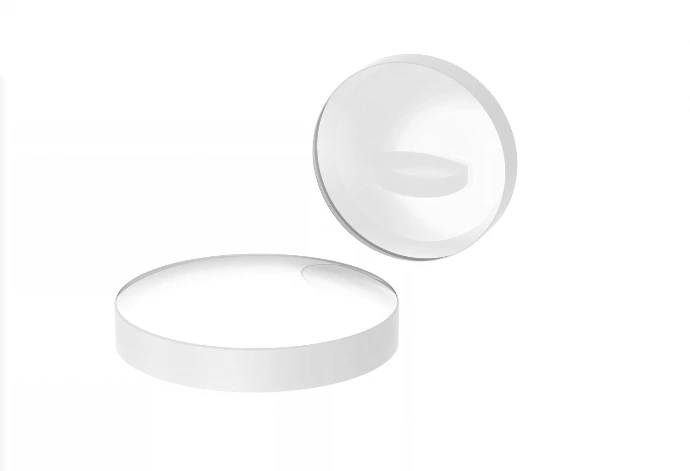
Invented by Isaac Newton in 1668, the Newtonian is the simplest and most cost-effective reflecting telescope design — a single parabolic primary mirror at the base of the tube, a flat elliptical secondary mirror angled at 45° near the top to divert the converging cone of light out through the side wall to an eyepiece. It remains the standard "aperture per dollar" choice in amateur astronomy because it needs only one precision-figured curved surface.
Primary mirror shape
Paraboloid (concave)
Secondary mirror shape
Flat, elliptical, 45°
Typical f-ratio
f/4 – f/8
Focus location
Side of tube, near topLearn more
Overview
- Light enters the open top of the tube and travels the full tube length to strike a concave paraboloidal primary mirror mounted at the closed bottom end
- The primary reflects and converges the light back up the tube toward a small flat secondary mirror, mounted on a support spider near the tube's open end and tilted at exactly 45° to the optical axis
- The secondary diverts the converging cone 90° out through a hole in the tube wall to the focuser and eyepiece, avoiding the need to view straight down the tube where the observer's head would otherwise block incoming light
- A paraboloid, rather than a simple sphere, is used for the primary because a paraboloid brings all parallel on-axis rays to a single perfect focus with zero spherical aberration — a spherical mirror of the same aperture and focal ratio would not, unless the focal ratio is very long (slow)
- Because only one curved, precision-figured surface (the primary) is required — the secondary is flat and comparatively simple and cheap to produce — the Newtonian delivers more usable aperture per manufacturing dollar than any other common telescope architecture
- The main inherent optical weakness is coma: off-axis stars away from the center of the field appear increasingly comet-shaped/smeared, an aberration that worsens at faster (lower) f-ratios and can be corrected with an add-on coma corrector lens
Key Features
Single curved-surface design
Only the primary mirror requires a precision parabolic figure; the secondary is flat, making the Newtonian the least expensive way to put a given aperture in an observer's hands.
Zero spherical aberration on-axis
The paraboloidal primary brings all parallel, on-axis incoming rays to one exact focus point, eliminating the spherical aberration a same-aperture spherical mirror would exhibit at fast focal ratios.
User-collimatable optics
Primary and secondary mirror alignment (collimation) is adjustable by the user via push-pull screws on the mirror cells — a routine maintenance step, unlike sealed refractor or catadioptric optical trains.
Coma at the field edge
The design's principal off-axis weakness — stars away from center take on a comet-like flare, most pronounced at fast f-ratios (f/4–f/5), correctable with a dedicated coma-corrector lens in the focuser drawtube.
Design and Construction
Primary mirror
Figure & fabrication
- Ground and polished to a paraboloidal (conic constant k = −1) concave surface, then figured and tested (typically via Foucault/knife-edge or interferometric null testing) to a fraction of a wavelength of surface accuracy
- Mounted in an adjustable cell at the tube's closed end, resting on support points (often on a triangulated float system for larger mirrors) that prevent print-through distortion of the glass under its own weight
Coating
- Front-surface aluminum coating (typically ~88–92% reflective) is standard; enhanced or protected-aluminum coatings raise reflectivity and add a protective overcoat against oxidation
- Front-surface coating avoids the double refraction/absorption a back-surface mirror would introduce, but leaves the reflective layer exposed and more vulnerable to handling damage and tarnish over time
Secondary mirror & spider
Secondary mirror
- Flat, elliptically-shaped mirror (an ellipse is used so the mirror presents a circular projected aperture to the primary's light cone when viewed at the 45° tilt angle)
- Sized as small as possible relative to the primary to minimize the central obstruction, since a larger secondary increases diffraction effects and reduces image contrast
- A thin metal (commonly curved or straight-vane spring-steel) spider holds the secondary mirror centered in the tube with minimal obstruction and minimal diffraction spike prominence
- Adjustable via a central collimation screw so the secondary's tilt and centering can be fine-tuned relative to the primary and focuser axis
Spider support
Optical Material
Mirror substrate glass
Standard substrates
- Borosilicate (e.g., Pyrex-type) glass — low thermal expansion coefficient compared to plain plate glass, reducing figure distortion (and thus image degradation) as the mirror cools to match ambient night air temperature
- Soda-lime plate glass — used in entry-level/budget mirrors; higher thermal expansion means longer cool-down time before optical performance stabilizes
Premium substrates
- Low-expansion ceramic glass (e.g., Zerodur-type or Cer-Vit-type materials) — near-zero thermal expansion, used in premium and observatory-grade primaries where thermal stability is critical
Reflective coatings
- Standard aluminum (Al) coating — the default front-surface reflective layer, vacuum-deposited, typically ~88–92% reflectivity across the visible band
- Enhanced aluminum coating — adds a dielectric overcoat that boosts reflectivity to roughly 94–96%, improving image brightness, especially valuable in a two-mirror system where reflectivity losses compound at each surface
- Silicon dioxide (SiO₂) protective overcoat — a hard, transparent layer applied over the aluminum to slow oxidation and ease safe cleaning of the mirror surface over its service life
Applications
Amateur Astronomy
Deep-sky visual observation
The dominant choice for observers prioritizing aperture (and thus faint-object visibility) per dollar spent, especially in Dobsonian-mounted large-aperture instruments.
Astrophotography
Deep-sky imaging (with coma corrector)
Fast f/4–f/5 Newtonians paired with a coma corrector are popular for wide-field deep-sky imaging, combining speed (short exposure times) with large aperture.
Education & Clubs
Public outreach & club telescopes
Large-aperture, low-cost Dobsonian Newtonians are widely used for public star parties where affordable aperture matters more than portability.
Why Choose a Newtonian Reflector
Best aperture per dollar
Only one precision curved surface to manufacture, delivering more usable aperture for a given budget than any other common architecture.
No chromatic aberration
An all-mirror optical path focuses every wavelength identically, sidestepping the color-fringing that refractors must correct for with special glass.
User-serviceable optics
Collimation and even mirror recoating are accessible, user-performable maintenance tasks over the instrument's long service life.
Frequently asked questions
Here are some common questions about achromatic lens.
A spherical mirror reflects rays parallel to the optical axis to slightly different focus points depending on how far from the center they strike the mirror — an aberration called spherical aberration, which becomes visually significant at the fast focal ratios (f/4–f/8) typical of amateur Newtonians. A paraboloidal figure is mathematically defined so that every parallel, on-axis ray reflects to exactly the same focus point regardless of where it strikes the mirror, eliminating spherical aberration on-axis entirely. At very long, slow focal ratios (roughly f/10 or slower) the difference between a sphere and a paraboloid becomes small enough to be visually negligible, which is why some very long-focal-ratio reflectors have historically used spherical primaries.
Collimation is the precise alignment of the primary mirror, secondary mirror, and focuser so their optical axes coincide exactly — when misaligned, star images become asymmetrically distorted and overall sharpness suffers, especially away from the field center. Because the primary and secondary are held in adjustable cells/spiders rather than permanently fixed and sealed as in most refractors, transport vibration, temperature cycling, and routine handling can shift alignment slightly over time, so Newtonian owners typically check and, if needed, adjust collimation before serious observing sessions using a collimation cap, Cheshire eyepiece, or laser collimator.
Coma arises because a paraboloidal mirror, while perfect for on-axis rays, does not treat off-axis rays symmetrically — rays entering at an angle to the optical axis focus asymmetrically, smearing off-axis star images into a comet-like shape that points away from the field center. The effect worsens with field angle (distance from center) and with faster (lower) focal ratios, since a faster mirror bends rays more steeply. It is commonly corrected by inserting a dedicated coma-corrector lens assembly into the focuser drawtube just ahead of the eyepiece or camera sensor, which reshapes the off-axis ray bundles to cancel the coma without materially affecting on-axis image quality.