Cassegrain Reflector
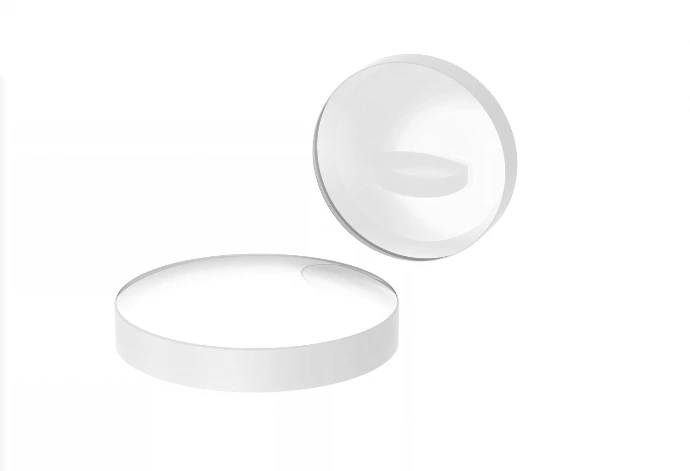
A two-mirror reflector design where light bounces off a concave primary mirror, back up to a small convex secondary mirror, and then back down through a central hole in the primary to a focus point behind it — folding a long effective focal length into a physically short tube, and forming the base architecture from which the Ritchey-Chrétien and Dall-Kirkham variants are derived.
Primary mirror
Concave paraboloid
Secondary mirror
Convex hyperboloid
Focus location
Behind primary, through central hole
Typical f-ratio
f/10 – f/15
Overview
- Light travels down the tube to a concave primary mirror, reflects back up toward a small convex secondary mirror mounted near the tube's open end, and reflects a second time back down through a central perforation in the primary to reach the eyepiece or camera at the rear of the tube
- The convex secondary mirror amplifies the primary's focal length considerably (typically 3-5× or more) before the light reaches focus, which is what allows a Cassegrain to achieve a long effective focal length — and correspondingly high magnification potential — in a tube only a fraction of that focal length long
- The classical Cassegrain configuration pairs a paraboloidal primary with a hyperboloidal secondary; this combination corrects spherical aberration well on-axis but leaves meaningful coma off-axis, similar in character to (though generally less severe than) a Newtonian's coma at an equivalent focal ratio
- Because both mirrors are curved (unlike a Newtonian's flat secondary), a Cassegrain requires more demanding fabrication and more careful collimation of two curved, mutually-dependent surfaces rather than one curved surface plus one simple flat
- Serves as the base design that the Ritchey-Chrétien (improved off-axis correction) and Dall-Kirkham (simplified fabrication) variants each modify to solve a different part of the classical Cassegrain's remaining limitations
Key Features
Long focal length in a short tube
The convex secondary's focal-length-amplifying effect is the defining advantage of the whole Cassegrain family, packing high-magnification potential into portable tube lengths.
Rear-accessible focus point
Focusing behind the primary mirror, rather than at the tube's side or front, keeps eyepieces, cameras, and instrumentation conveniently positioned at the tube's back end.
Coma present off-axis
The classical paraboloid-hyperboloid pairing leaves coma uncorrected away from the field center, addressed specifically by the Ritchey-Chrétien variant.
Optical Materials
Mirror substrates
- Low-expansion borosilicate or ceramic glass (Zerodur-type) substrates — used more consistently across the Cassegrain family than in Newtonians, since the tighter collimation tolerances make thermal figure stability more consequential
Coatings
- Enhanced or protected aluminum coatings on both mirrors — reflectivity losses compound across two reflections, making higher-reflectivity coatings especially valuable in maintaining overall system throughput
Design and Construction
Mirror figures
- Primary: concave paraboloid, perforated at the center to pass the final focused beam through to the rear
- Secondary: convex hyperboloid, mounted on a support structure (spider or corrector-plate-mounted, depending on the specific sub-variant) near the tube's front opening
Collimation demands
- Both mirrors are curved and their relative alignment (tilt, centering, and spacing) must be held to tighter tolerances than a Newtonian's flat-secondary system, since misalignment errors compound between two curved surfaces
- Secondary spacing (distance from primary) directly sets the system's effective focal length and back-focus distance, making secondary positioning a more critical fabrication and collimation parameter than in a Newtonian
Applications
Research Observatories
Base architecture for professional telescopes
The Cassegrain family forms the foundation of most large research and observatory telescope designs, typically as one of its refined variants.
High-Magnification Visual Use
Planetary & lunar observation
Long effective focal length in a compact tube suits high-power planetary and lunar viewing well.
Why Choose a Cassegrain Reflector
Compact, long-focal-length design
Delivers high-magnification-capable focal length in a tube far shorter than a Newtonian of equal focal length.
Base for refined professional variants
The architecture underlying the Ritchey-Chrétien and Dall-Kirkham designs used in serious research and imaging instruments.
Frequently asked questions
Here are some common questions about achromatic lens.
A convex mirror is a diverging optical element — rather than bringing rays to a focus like the concave primary, it spreads the already-converging cone of light back out before it reaches focus, effectively acting like a magnifying (telephoto-style) element inserted into the light path. The degree of this magnification depends on the secondary's curvature and its distance from the primary's focus point, and is typically designed to multiply the primary mirror's own focal length by a factor of roughly 3 to 5 times or more, which is how a physically short tube can deliver the long effective focal length characteristic of Cassegrain-family telescopes.