Galilean Telescope
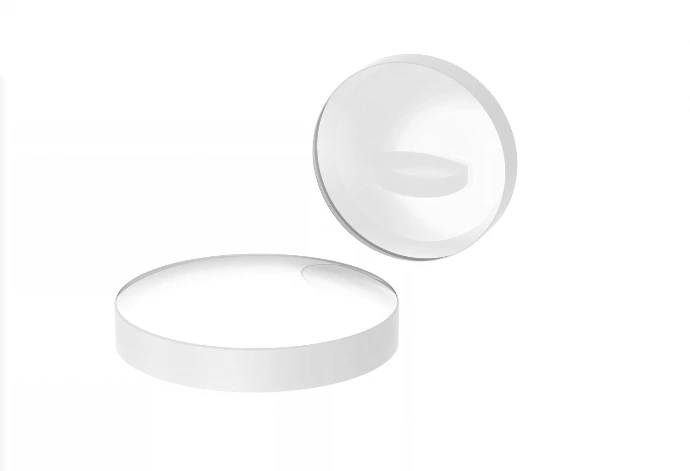
The original refracting telescope configuration, used by Galileo Galilei from 1609 — a positive (converging) objective lens paired with a negative (diverging) eyepiece lens, intercepting the objective's converging light cone before it reaches a real focus. The negative eyepiece delivers a naturally upright image with no erecting system needed, at the cost of a narrow field of view and eye relief that worsens sharply as magnification increases.
Eyepiece type
Negative (diverging) lens
Intermediate image
None — virtual only
Raw image orientation
Upright, correctly oriented
Exit pupil
Virtual, inside the tube (inaccessible)
Overview
- Pairs a positive (convex, converging) objective with a negative (concave, diverging) eyepiece lens positioned before the objective's light cone reaches a real focus — the diverging eyepiece intercepts the still-converging rays and spreads them back out into a parallel or near-parallel bundle for the eye, without ever forming a real intermediate image
- Because no real image ever forms inside the tube (the eyepiece acts before focus, not after it, as in a Keplerian design), the eye instead sees a virtual, upright, correctly left-right-oriented image directly — the defining and historically celebrated advantage of Galileo's original design, needing no erecting prism or lens-relay stage at all
- The negative eyepiece's exit pupil is virtual and forms inside the instrument itself rather than at an accessible point behind the eyepiece, meaning the observer's own eye pupil effectively becomes the system's limiting aperture stop — this is the root cause of the design's narrow apparent field of view and short, unforgiving eye relief, both of which worsen significantly as magnification is increased
- Because of these limitations, the Galilean configuration is only practical at low magnifications (typically under about 3-4×) — beyond that, the field of view becomes uncomfortably tiny (like looking through a narrow tube) and eye relief becomes so short that the eye must be pressed almost directly against the lens
- No real intermediate image also means no plane exists where a reticle or crosshair could be inserted, ruling the design out for any application needing precise aiming or on-image measurement
Key Features
Naturally upright image
No erecting prism or relay lens needed — the negative eyepiece delivers a correctly oriented image directly, the design's signature historical advantage.
Compact, simple two-lens design
Just two simple lenses with no erecting stage, keeping the instrument mechanically simple and historically easy to produce even with 17th-century lens-making techniques.
Narrow field & tight eye relief
The virtual, inaccessible exit pupil sharply restricts both apparent field of view and eye relief, worsening as magnification increases — the design's defining practical limitation.
Design and Construction
Basic two-lens layout
- Positive objective begins converging incoming light toward a would-be real focus point
- Negative eyepiece, placed before that focus point is reached, diverges the light back out before it converges, forming only a virtual image for the eye to view directly
Practical magnification ceiling
- Field of view and eye relief both shrink rapidly as magnification increases, which is why Galilean instruments are essentially never built above roughly 3-4× magnification in practice
Applications
Opera & Theater Glasses
Low-power event viewing optics
The classic modern survivor of the Galilean design — compact, simple, upright-image glasses for low-magnification event viewing where field of view is a minor concern.
Historical Instruments
Early telescope reproductions & education
Used in historical and educational reproductions of Galileo's original 17th-century telescope designs.
Why the Galilean Design Persists in Niche Use
No erecting system required
Delivers an upright image directly from just two simple lenses — ideal for very low-magnification, compact niche instruments.
Mechanically minimal design
The simplest possible two-lens telescope configuration, historically significant and still useful where extreme simplicity matters more than field of view.
Frequently asked questions
Here are some common questions about achromatic lens.
The Galilean configuration's virtual, inaccessible exit pupil means the observer's own eye pupil becomes the limiting aperture of the whole system, which sharply restricts both the field of view and the eye relief achievable — and both of these problems get significantly worse, not better, as magnification is increased. Once Johannes Kepler described the positive-eyepiece alternative in 1611 (offering a much wider field and comfortable eye relief at the cost of needing an erecting stage for terrestrial use), and erecting prism technology matured enough to add that correction compactly and affordably, the Keplerian layout became the practical choice for essentially every serious telescope, monocular, and binocular above the lowest magnifications — leaving the Galilean design to a narrow set of niche, low-power applications like opera glasses.