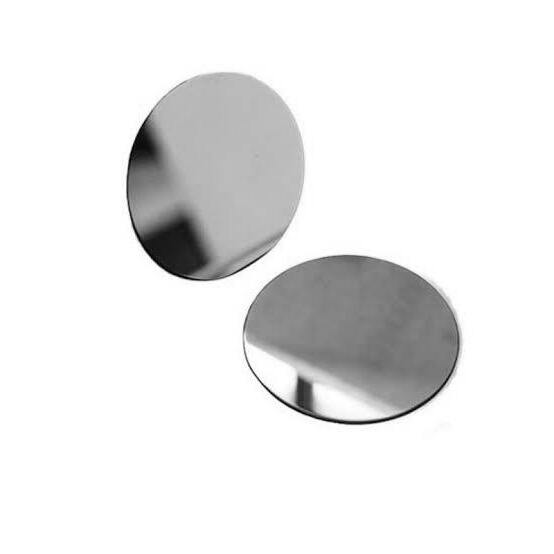
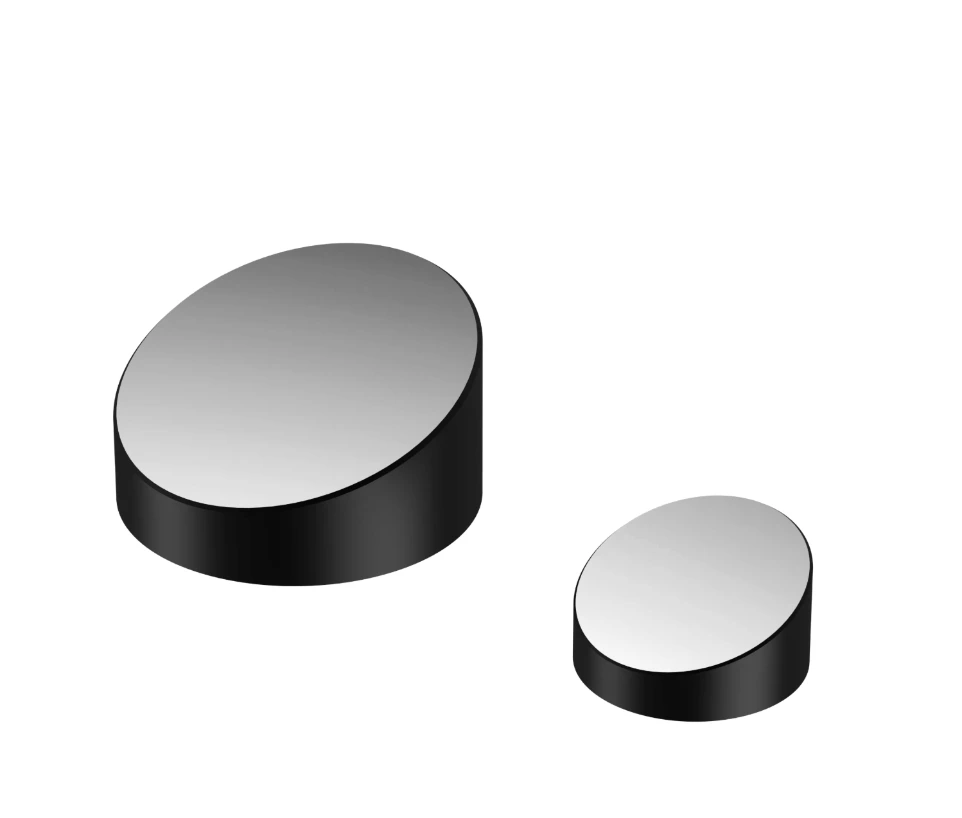
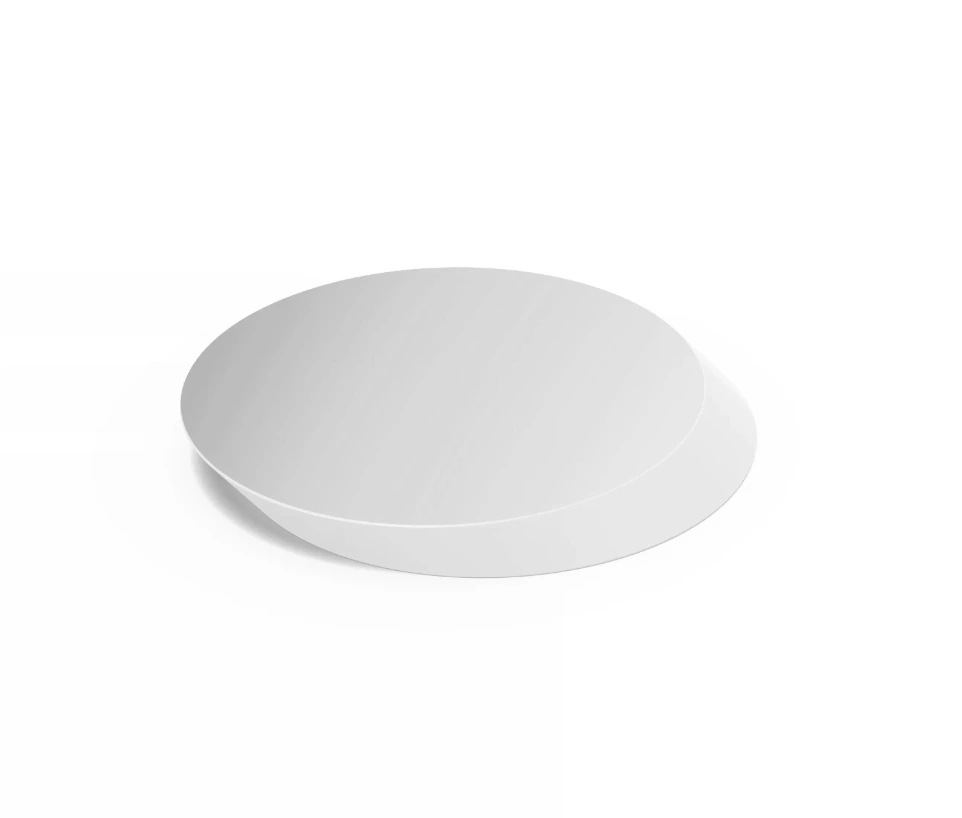
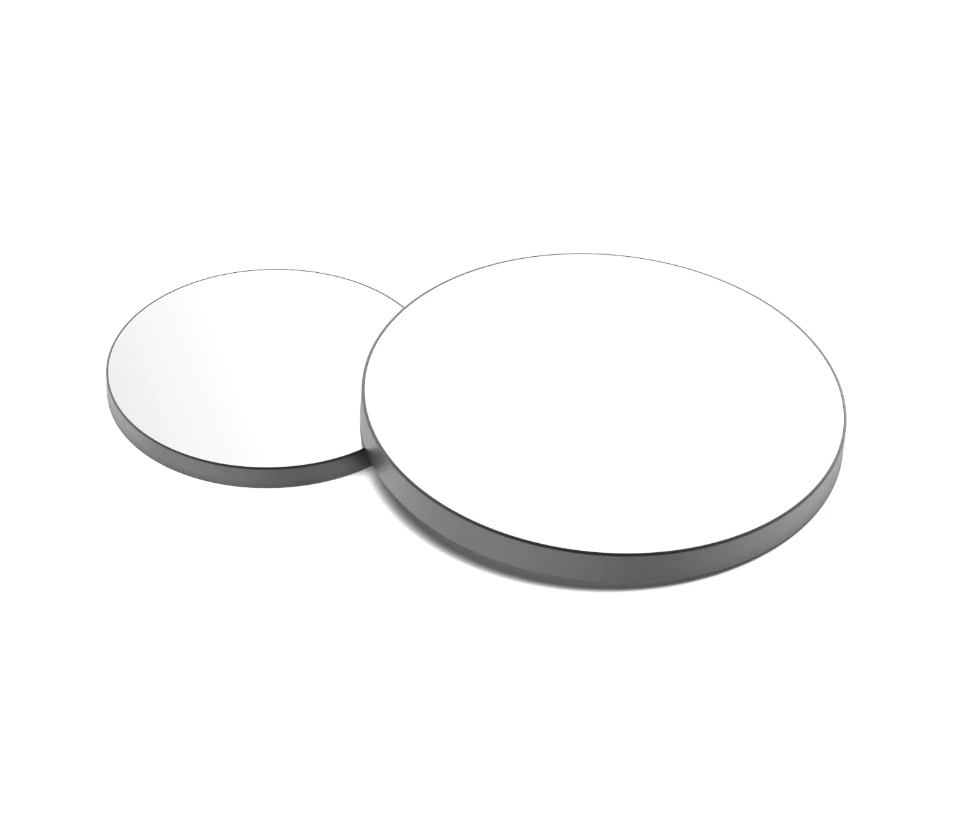
Colored Glass Filter Window
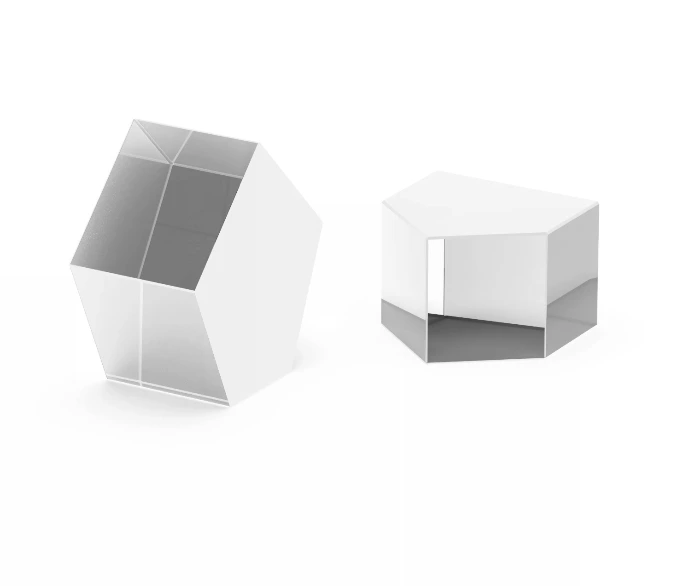
A flat window made from glass with dye, ion, or particulate additives mixed directly into the melt — absorbing specific wavelength bands throughout the bulk material rather than through a surface coating. The economical, durable solution for broad-band color filtering, laser safety viewing, and spectral selection across countless instruments.
Filtering mechanism
Bulk absorption (doped glass)
Filter types
Long-pass, short-pass, band-pass
Durability
Permanent (no coating to degrade)
Angle sensitivity
Low (unlike interference filters)
Overview
- A window manufactured from glass with light-absorbing dopants — metal oxides, rare earth ions, or colloidal particles — incorporated throughout the glass melt during manufacturing, rather than applied as a surface coating
- Functions as a long-pass, short-pass, or band-pass spectral filter depending on the specific dopants used, absorbing unwanted wavelength bands while transmitting the desired spectral range
- Because the filtering effect comes from bulk absorption
- throughout the material rather than thin-film interference, colored glass filters are far less sensitive to angle of incidence than interference (dichroic) filters — the spectral cutoff does not shift significantly with viewing angle
- Extremely durable and stable over time compared to coated interference filters — there is no thin-film layer to delaminate, scratch through, or degrade, since the color is an intrinsic bulk property of the glass itself
- Standard material for laser safety eyewear and viewing windows, where the filter must reliably block specific laser wavelengths across the full range of viewing angles a user might adopt
- Widely used historically and currently in photography, scientific instrumentation, and signaling applications requiring robust, long-lasting spectral selection at a lower cost than precision interference coatings
Key Features
Bulk (not surface) filtering
The absorbing dopants are distributed throughout the entire glass volume, not just a thin surface layer — meaning the filter's spectral performance is intrinsic to the material itself and cannot be scratched, scuffed, or worn away through normal handling and cleaning, unlike a coated interference filter.
Angle-independent spectral response
Because absorption-based filtering does not depend on thin-film interference effects, the cutoff wavelength and transmission characteristics of a colored glass filter remain essentially constant across a wide range of incidence angles — a significant advantage over dichroic interference filters, whose spectral edge shifts noticeably with angle.
Reliable laser safety filtering
The angle-independence and permanence of bulk absorption filtering make colored glass the material of choice for laser safety eyewear and viewing windows — ensuring consistent protection against specific laser wavelengths regardless of the angle at which a user views through the filter, a critical safety requirement.
Long-term stability & durability
Colored glass filters maintain stable spectral performance over decades of use and environmental exposure, with no risk of coating delamination, oxidation, or UV-induced coating degradation — making them well suited for permanently installed signaling, instrumentation, and architectural applications.
Design and Construction
Filter categories
By spectral function
- Long-pass filters — transmit wavelengths above a cutoff, absorb shorter wavelengths (e.g. UV-blocking, IR-pass filters)
- Short-pass filters — transmit wavelengths below a cutoff, absorb longer wavelengths (e.g. heat-absorbing visible-pass filters)
- Band-pass filters — transmit a defined spectral band, absorbing both shorter and longer wavelengths outside that band
- Neutral density (absorptive) — uniformly attenuates across a broad spectral range for intensity control
Manufacturing
- Dopants melted directly into the glass batch during manufacture, ensuring uniform color throughout the bulk
- Cut and polished to final dimensions after the doped glass blank is formed and annealed
Specifications
Optical performance
- Cutoff/cuton wavelength: determined by dopant composition and concentration
- Optical density (OD) at blocked wavelengths: scales with material thickness — thicker filters provide greater attenuation in the blocked band
- Surface flatness and quality: typically commercial to precision grade depending on imaging requirements
Coating additions
- AR coatings can be applied to the surfaces of a colored glass filter to reduce surface reflection losses in the passband, supplementing (not replacing) the bulk absorption filtering
Optical Materials
Common doped glass families
Standard colored glass types
- Schott-type colored glass (e.g. RG, KG, BG, GG series) — industry-standard families covering long-pass, heat-absorbing, and band-pass functions across UV through NIR
- Neodymium-doped glass — sharp absorption bands; used for color-correction and didymium welding glass
Specialty doped glass
- Rare-earth-doped glass — precise, narrow absorption features for specific wavelength blocking
- Colloidal metal/semiconductor-doped glass — sharp long-pass cutoff characteristics used in laser safety filters
Application-specific selection
By use case
- UV-blocking long-pass glass — protective and photographic applications
- Heat-absorbing short-pass glass — projector and illumination heat management (complementary to dichroic hot mirrors)
- Laser safety glass — formulated to block specific laser wavelength bands with high optical density while maintaining adequate visible transmission for safe viewing
Wavelength Options
UV-blocking
- Cuts <350–400 nm
- Long-pass colored glass
- Passes visible
Visible band-pass
- Custom band 400–700 nm
- Doped color glass
- Various Schott types
IR-pass
- Passes >700–800 nm
- Long-pass colored glass
- Visually opaque
Heat-absorbing
- Absorbs >700 nm
- Short-pass colored glass
- Passes visible
Applications
Safety
Laser safety eyewear & viewing windows
The standard filtering material for laser safety glasses and machine viewing windows, providing reliable, angle-independent blocking of specific laser wavelengths to protect operators' eyes during laser system operation and alignment.
Photography
Color correction & contrast filters
Used historically and currently in photographic filters for color correction, contrast enhancement, and selective wavelength photography, valued for stable, repeatable spectral performance across shooting conditions.
Illumination
Heat-absorbing projector glass
Heat-absorbing colored glass filters complement or substitute for dichroic hot mirrors in projector and illumination systems, absorbing IR heat from the light source while passing the visible spectrum needed for the projected image.
Industrial
Welding & furnace viewing glass
Specialized colored glass (such as didymium and shade-rated welding glass) protects workers' eyes from intense visible and IR radiation while viewing welding arcs, furnaces, and other extremely bright industrial light sources.
Scientific Instruments
Spectroscopic order-sorting filters
Used as order-sorting filters in grating spectrometers to block higher diffraction orders or stray light outside the wavelength range of interest, ensuring accurate spectral measurement.
Signaling
Traffic & navigation signal lenses
Durable colored glass forms the lens elements of traffic signals, railway signals, and maritime navigation lights, providing decades of stable, fade-resistant color performance in continuous outdoor service.
Why choose Colored Glass Filter Windows
Permanent, scratch-resistant color
The filtering effect is intrinsic to the bulk glass — immune to the scratching, delamination, and wear that can degrade thin-film interference coatings over time.
Reliable across viewing angles
Unaffected by the angle-dependent spectral shift that limits interference filters — essential for safety applications where the viewing angle cannot be controlled.
Proven laser safety standard
The trusted, widely standardized material for laser safety eyewear and viewing windows across research, medical, and industrial laser applications.
Cost-effective spectral selection
Provides robust broadband spectral filtering at a lower cost than precision multilayer interference coatings for applications where sharp-edge or narrow-band performance is not required.
Frequently asked questions
Here are some common questions about achromatic lens.
Use a colored glass filter when angle-independence, durability, and broad spectral blocking are priorities — such as laser safety eyewear, heat-absorbing windows, or general color correction. Use a dichroic interference filter when a very sharp spectral edge, narrow bandpass, or precisely tuned cutoff wavelength is required — such as fluorescence microscopy filter cubes or laser line selection. Many systems combine both: a colored glass filter for robust broadband blocking plus a thin-film interference coating for precise edge definition.
Optical density (OD) is a logarithmic measure of attenuation: OD = log₁₀(incident intensity / transmitted intensity). For a given doped glass composition, OD at the blocked wavelength increases with material thickness — thicker filters provide more attenuation. Laser safety standards specify the minimum OD required to protect against a given laser wavelength and power level for a specified maximum exposure time, and filter thickness is selected to meet or exceed that OD requirement at the specific laser wavelength in use.
Most colored glass filters exhibit some degree of temperature-dependent spectral shift, since the absorption characteristics of the doping ions can be influenced by thermal effects on the glass matrix — this is generally a secondary effect compared to the dominant composition-driven absorption, but can be measurable in precision applications. For applications involving significant temperature variation or where precise spectral stability is critical, manufacturers can provide temperature coefficient data for specific colored glass types, and in extreme cases thermal stabilization of the filter may be warranted.