Optical Flat
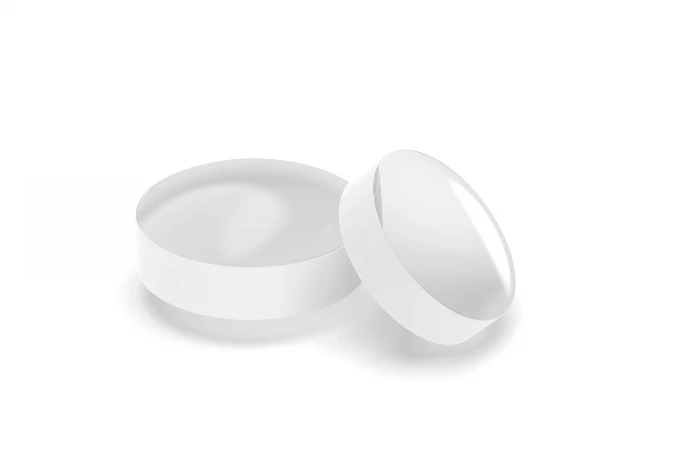
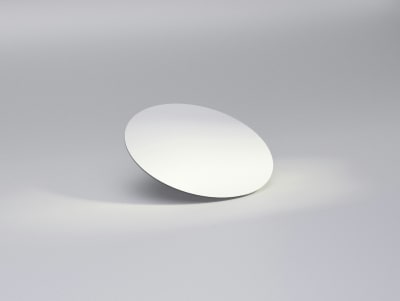
A reference-grade window polished to the absolute limits of achievable surface flatness — used not primarily to transmit a beam, but as the dimensional standard against which the flatness of other optical and mechanical surfaces is measured through interferometric comparison. The foundational metrology tool of precision optical manufacturing.
Flatness
λ/10 to λ/20 (or better)
Primary function
Interferometric reference standard
Common substrates
Fused silica, Zerodur, ULE
Measurement method
Fizeau interference fringes
Overview
- A flat window polished to an extremely high degree of surface flatness — typically λ/10 to λ/20 or better, among the flattest surfaces achievable by precision optical manufacturing
- Used primarily as a metrology reference standard rather than as a functional transmissive beam element — its purpose is to provide a known, certified-flat surface against which other optical and mechanical surfaces are compared and measured
- Surface flatness testing is performed by placing the optical flat in close proximity to the test surface and illuminating with monochromatic light — the resulting Newton's rings or straight-line interference fringe pattern directly reveals the flatness deviation of the test surface relative to the known-flat reference
- Manufactured from extremely thermally stable, dimensionally stable materials — since the flat's own surface must remain stable over time and across modest temperature variation to maintain its certified reference accuracy
- Used in pairs or sets within precision interferometers (Fizeau, Twyman-Green) as both the reference arm element and, in transmission testing configurations, the test cavity boundary
- Available in multiple grades distinguished by flatness specification — with the highest grades reserved for calibration laboratories and the most demanding precision optics manufacturing quality control
Key Features
Extreme surface flatness
Polished to surface accuracies of λ/10 to λ/20 (peak-to-valley at 633 nm) or finer in the highest reference grades — representing deviations of only a few tens of nanometers across the full clear aperture, among the most precisely controlled surfaces achievable in any manufacturing process.
Interferometric flatness testing
Placed in close contact (or near-contact) with a test surface and illuminated with a monochromatic source, an optical flat produces a Newton's rings or fringe pattern whose shape and fringe spacing directly reveal the surface form error of the test piece — the fundamental working principle behind essentially all precision surface flatness metrology.
Dimensional stability
Manufactured from materials with excellent thermal and long-term dimensional stability — since an optical flat's value as a reference standard depends entirely on its surface remaining unchanged over time and across the modest temperature variations of a typical metrology lab environment.
Certified reference standard
Premium-grade optical flats are supplied with traceable calibration certification documenting their actual measured flatness — providing the metrological traceability required in calibration laboratories and quality-controlled precision optics manufacturing environments.
Design and Construction
Flatness grades
Standard grades
- Commercial reference grade: λ/10 — general workshop and production flatness checking
- Precision grade: λ/15 to λ/20 — laboratory and calibration applications
- Ultimate reference grade: better than λ/20 — primary calibration standards and the most demanding metrology applications
Construction considerations
- Substantial thickness-to-diameter ratio to resist gravitational and mounting-induced sag that would distort the calibrated flat surface
- Edge chamfer designed to avoid stress concentration without compromising the usable clear aperture
Testing methodology
Contact (Newton's rings) testing
- Optical flat placed directly on or very near the test surface; air gap interference produces visible colored or monochromatic fringe rings
- Fringe count and shape directly indicate the magnitude and form of surface flatness deviation
Non-contact interferometer testing
- Used as the reference arm flat in Fizeau and Twyman-Green interferometers for non-contact, higher-precision surface and wavefront testing
- Avoids the risk of surface damage from physical contact testing methods
Optical Materials
Standard reference substrates
Glass substrates
- Fused Silica — standard optical flat substrate; good dimensional stability and excellent polishing characteristics for achieving extreme flatness
- BK7 — used for lower-grade commercial reference flats where ultimate stability is less critical
Ultra-stable substrates
- Zerodur — near-zero coefficient of thermal expansion glass-ceramic; premium reference flat substrate for the most demanding dimensional stability requirements
- ULE (Ultra-Low Expansion glass) — alternative near-zero CTE substrate used in primary calibration standard optical flats
Selection considerations
Matching substrate to application
- Production floor flatness checking: standard fused silica reference grade is typically sufficient
- Calibration laboratory primary standards: Zerodur or ULE substrate justified by their superior long-term dimensional stability
Wavelength Options
Visible (HeNe)
- 633 nm test wavelength
- Fused Silica / Zerodur
- Industry standard
Sodium line
- 589 nm test wavelength
- Fused Silica
- Classic Newton's rings test
Other laser wavelengths
- Application-specific
- Fused Silica / Zerodur
- Matched to test interferometer
Applications
Metrology
Surface flatness calibration standards
Serves as the primary reference standard for calibrating surface flatness measurement instruments and verifying the flatness of precision mechanical and optical reference surfaces in calibration laboratories.
Manufacturing
Optical component quality control
Used on the production floor of precision optics manufacturers to verify the surface flatness of lenses, mirrors, prisms, and windows during and after fabrication, ensuring components meet their specified flatness tolerances.
Interferometry
Fizeau interferometer reference arm
Forms the reference surface in Fizeau interferometer systems used for non-contact, high-precision surface form and flatness testing of optical components across research and industrial applications.
Semiconductor
Wafer & substrate flatness verification
Used to verify the flatness of semiconductor wafers, photomask substrates, and other ultra-flat surfaces critical to semiconductor lithography and device fabrication processes.
Precision Mechanical
Gauge block & reference surface checking
Used in precision mechanical metrology to verify the flatness of gauge blocks, sealing surfaces, and other precision mechanical reference surfaces requiring sub-micron flatness verification.
Education
Optics laboratory instruction
Used in optics education laboratories to demonstrate interference phenomena, Newton's rings, and the principles of optical flatness testing as a foundational hands-on learning tool.
Why choose Optical Flats
Ultimate flatness reference
Provides the most precisely known flat surface available — the foundational standard against which all other surface flatness measurements in an optical workshop are ultimately traced.
Direct visual flatness testing
Enables fast, intuitive, non-destructive surface flatness verification through visible interference fringe patterns — no specialized instrumentation required for basic contact testing.
Long-term dimensional reliability
Ultra-stable substrate options (Zerodur, ULE) ensure the reference flatness remains valid over years of laboratory use, preserving calibration traceability.
Essential manufacturing QC tool
An indispensable quality control instrument throughout precision optics manufacturing, from in-process verification to final inspection of finished optical components.
Frequently asked questions
Here are some common questions about achromatic lens.
When an optical flat is placed very close to (or in light contact with) a test surface, a thin wedge-shaped air gap forms between the two surfaces wherever they are not in direct contact. Monochromatic light reflecting from the top and bottom of this air gap interferes constructively or destructively depending on the local gap thickness, producing a pattern of bright and dark fringes. If the test surface is perfectly flat and exactly parallel to the optical flat, the fringes appear as straight, evenly spaced lines. Any curvature, bumps, or irregularities in the test surface cause the fringes to curve or bend — and the number and shape of these fringe deviations directly quantify the magnitude and form of the surface flatness error, typically to a precision of a fraction of the test wavelength.
An optical flat's value as a reference standard depends entirely on its surface shape remaining stable over time. Standard optical glass has a measurable coefficient of thermal expansion — meaning its surface flatness can shift slightly with normal temperature variations in a lab environment, introducing uncertainty into reference measurements. Zerodur and ULE (Ultra-Low Expansion) glass-ceramic materials are engineered to have a coefficient of thermal expansion extremely close to zero across a useful temperature range — meaning their surface shape remains essentially unchanged despite typical environmental temperature fluctuations, preserving the integrity of the reference standard for calibration and primary metrology applications where this stability is essential.
For general production floor flatness checking of standard optical components (lenses, windows, mirrors with typical λ/4 to λ/10 specifications), a commercial reference-grade optical flat (λ/10 flatness) provides adequate measurement resolution, since the reference flat should be meaningfully flatter than the tolerance you are trying to verify. For calibration laboratory primary standards, or for verifying the most precise optical components (λ/20 or better specifications), a precision or ultimate reference-grade flat (λ/15 to better than λ/20) is necessary so the reference itself does not become the limiting factor in measurement accuracy.