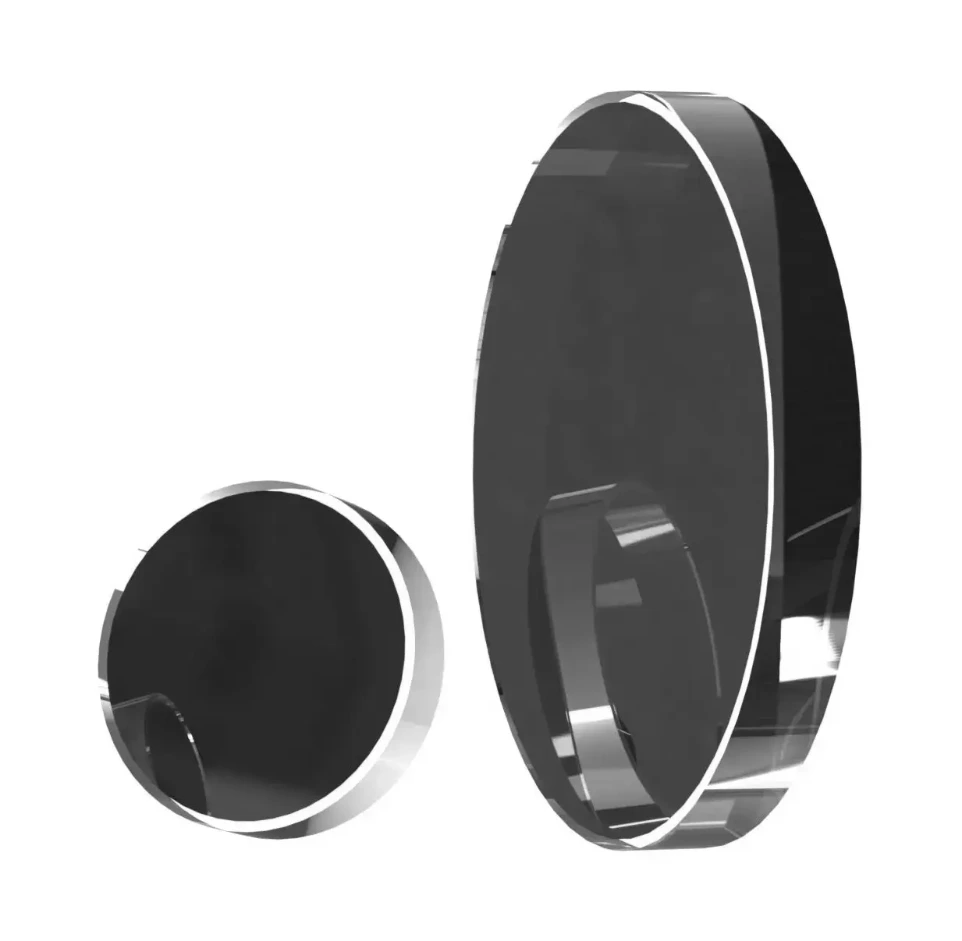
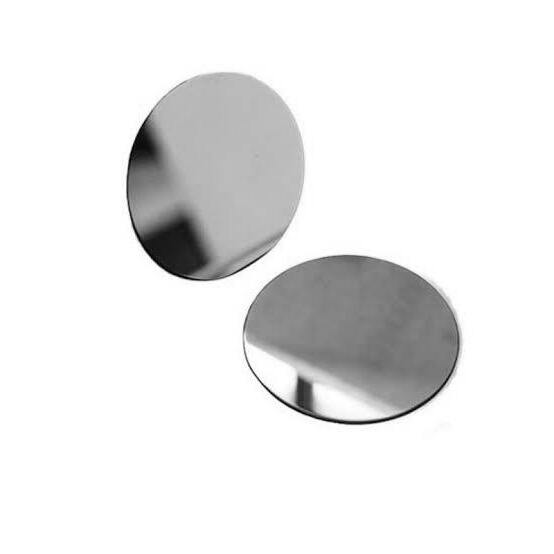
Vacuum Viewport
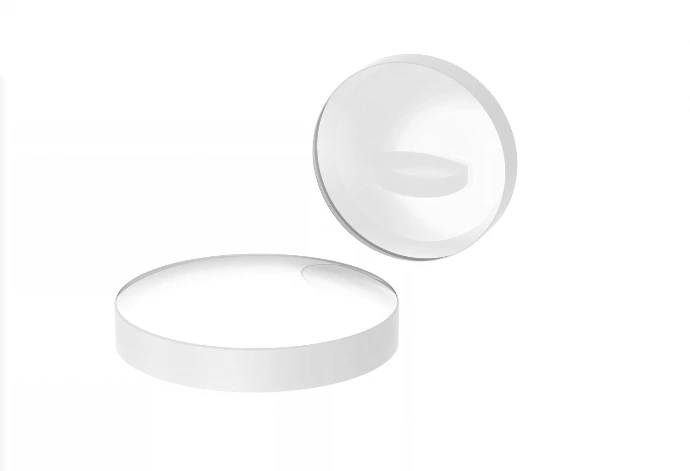
A hermetically sealed optical window engineered to maintain a vacuum barrier across pressures from atmosphere down to ultra-high vacuum, while providing undistorted optical access into the chamber. The essential observation and beam-delivery interface for vacuum chambers in research, semiconductor processing, and space simulation.
Pressure range
Atmosphere to 10⁻⁹ Torr (UHV)
Seal type
Metal-to-glass / O-ring / brazed
Bakeable
Yes (UHV-grade, to 450°C)
Mounting
CF, KF, ISO flange standards
Overview
- A flat (or occasionally curved) optical window hermetically sealed into a metal flange or housing, designed to maintain a vacuum-tight or pressure-tight barrier while transmitting light into or out of a sealed chamber
- Manufactured to standard vacuum flange specifications (ConFlat/CF, KF/NW, ISO) for direct bolt-on or clamp-on compatibility with standard vacuum chamber ports
- Available across the full vacuum range — from rough vacuum and high vacuum (10⁻³ to 10⁻⁷ Torr) through ultra-high vacuum (UHV, below 10⁻⁹ Torr) applications used in surface science and particle physics
- UHV-grade viewports use metal-to-glass or metal-to-sapphire brazed seals rather than elastomer O-rings, since O-ring seals outgas and cannot achieve or maintain UHV-level pressures
- Bakeable viewports tolerate the high-temperature bake-out cycles (typically 150–450°C) used to drive off adsorbed water and gas molecules from chamber walls during UHV system commissioning, without seal failure or optical degradation
- The optical substrate must be selected not only for its transmission properties but for compatibility with the vacuum environment — avoiding materials that outgas excessively or degrade under sustained vacuum and bake-out conditions
Key Features
Hermetic vacuum sealing
The metal-to-glass or metal-to-sapphire seal forms a permanent, leak-tight bond between the optical substrate and the metal flange — engineered with matched thermal expansion coefficients to maintain seal integrity across the temperature range from cryogenic to bake-out conditions without cracking or developing micro-leaks.
Bakeable to UHV temperatures
UHV-grade viewports withstand bake-out cycles up to 450°C — necessary to achieve and maintain the extreme vacuum levels (below 10⁻⁹ Torr) required for surface science, particle accelerator beamlines, and semiconductor fabrication, where any outgassing from chamber walls would compromise the vacuum quality.
Standard flange compatibility
Manufactured to standard vacuum flange dimensions (CF, KF, ISO-K/F) for direct, drop-in compatibility with the vast majority of commercial vacuum chambers and fittings — eliminating custom adapter engineering for most installation scenarios.
Low-outgassing optical access
Selected substrate materials and seal techniques minimize outgassing into the vacuum environment — critical for maintaining the cleanliness and pressure stability of sensitive vacuum processes such as molecular beam epitaxy, where even trace contamination can affect material growth quality.
Design and Construction
Seal technologies
UHV-compatible seals
- Metal-to-glass brazed seal — direct fusion bond between metal flange and glass/sapphire window; achieves the lowest outgassing and highest bake-out temperature tolerance
- Indium or copper gasket seals — used on CF-flange viewports; metal gasket compresses to form a UHV-tight seal
Lower-vacuum seals
- Elastomer O-ring seals (Viton, EPDM) — suitable for rough to high vacuum (down to ~10⁻⁷ Torr); not bakeable to UHV temperatures; lower cost
- KF/NW clamp-style viewports — quick-connect for rapid assembly/disassembly in lower-vacuum applications
Mechanical & optical specifications
Pressure & mechanical ratings
- Burst pressure rating: typically 3–5× the maximum rated working differential pressure for safety margin
- Window thickness sized to substrate strength, aperture diameter, and maximum pressure differential per industry safety standards
Optical specifications
- Surface flatness: λ/4 to λ/10 depending on application (general viewing vs. laser/interferometric use)
- AR coatings available on the vacuum-side and/or air-side surface for the application wavelength range
Optical Materials
Standard substrate materials
General-purpose UHV substrates
- Fused Silica — standard UHV viewport material; low outgassing, broad transmission range (UV through NIR), excellent thermal shock resistance for bake-out cycles
- Borosilicate glass — lower-vacuum, cost-sensitive applications; not typically used for UHV-grade bakeable viewports
Premium substrates
- Sapphire — exceptional mechanical strength, very low outgassing, broad transmission (UV through mid-IR); used for high-pressure differential and high-temperature-tolerant viewports
Specialty wavelength substrates
Extended wavelength range
- CaF₂ — UV-extended UHV viewports for deep-UV process monitoring
- MgF₂ — UV-transmitting, low-outgassing alternative for vacuum UV applications
- ZnSe / Germanium — specialty IR viewports for vacuum thermal imaging or IR process monitoring (less common; requires careful seal engineering due to material softness)
Wavelength Options
UV
- 185–400 nm
- UVFS / CaF₂
- UV-AR coatings
Visible
- 400–700 nm
- Fused Silica / Sapphire
- BBAR coatings
NIR
- 700–2000 nm
- Fused Silica / Sapphire
- NIR BBAR
MWIR
- 2–5 µm
- Sapphire / CaF₂
- BBAR 3–5 µm
Applications
Research
Particle physics & accelerator beamlines
UHV viewports provide optical access for beam diagnostics, alignment lasers, and visual inspection along particle accelerator beamlines and synchrotron radiation facilities, where chamber pressures must remain in the UHV range for beam quality.
Semiconductor
Process chamber monitoring
Used in semiconductor fabrication equipment (sputtering, CVD, etching chambers) to provide optical access for process monitoring, end-point detection, and pyrometry while maintaining the high-vacuum process environment.
Surface Science
Molecular beam epitaxy & UHV systems
Provides optical access for RHEED (reflection high-energy electron diffraction) monitoring and laser-based diagnostics in molecular beam epitaxy and other UHV surface science systems requiring extreme cleanliness.
Aerospace
Space environment simulation
Used in space simulation chambers to provide optical access for testing satellite components and instruments under vacuum and thermal conditions representative of the space environment.
Laser Systems
Vacuum laser beam delivery
Allows high-power or precision laser beams to enter vacuum chambers for laser processing, laser-induced fluorescence diagnostics, or laser-driven plasma experiments while maintaining chamber vacuum integrity.
Industrial
Vacuum coating & deposition systems
Provides visual and optical monitoring access in physical vapor deposition (PVD) and thin-film coating chambers, allowing operators to observe process conditions without breaking vacuum.
Why choose Vacuum Viewports
UHV-rated reliability
Engineered metal-to-glass seals maintain hermetic integrity from atmospheric pressure down to ultra-high vacuum, across full bake-out temperature cycles.
Standard flange compatibility
CF, KF, and ISO flange-compatible designs bolt directly onto standard vacuum chamber ports — no custom engineering required for most installations.
Low outgassing performance
Materials and seal techniques selected to minimize contamination of sensitive vacuum processes — critical for surface science and semiconductor applications.
Broad wavelength availability
Available in fused silica, sapphire, and specialty IR substrates — covering UV through mid-IR optical access needs across diverse vacuum research applications.
Frequently asked questions
Here are some common questions about achromatic lens.
Elastomer O-ring materials (such as Viton) contain dissolved gases and have a porous molecular structure that continuously outgasses small quantities of gas molecules, even under vacuum. At rough and high vacuum levels (down to roughly 10⁻⁷ Torr), this outgassing rate is negligible compared to the chamber's overall gas load. But to reach ultra-high vacuum (below 10⁻⁹ Torr), this outgassing becomes a dominant and limiting gas source — making O-ring seals incompatible with true UHV systems. Additionally, elastomers cannot withstand the high-temperature bake-out cycles (150–450°C) used to achieve UHV, as they would degrade or melt. Metal-to-glass brazed seals avoid both problems.
"Bakeable" means the viewport can withstand the high-temperature bake-out process used in UHV system commissioning, where the entire vacuum chamber (including all viewports, fittings, and internal components) is heated to 150–450°C for several hours to days. This heating drives off water vapor and other gas molecules that have adsorbed onto the interior surfaces, which would otherwise slowly outgas and prevent the chamber from reaching ultra-high vacuum. A bakeable viewport must maintain its hermetic seal integrity and optical performance through repeated bake-out cycles without cracking, seal failure, or coating degradation.
- Flange type and size — must match your chamber's port standard (CF, KF, ISO) and nominal diameter
- Vacuum level required — determines whether an O-ring seal (lower vacuum) or metal-to-glass UHV seal is needed
- Bake-out requirement — if your system requires bake-out to reach UHV, a bakeable viewport is mandatory
- Wavelength range — select the substrate material (fused silica, sapphire, CaF₂, etc.) appropriate for your optical application
- Pressure differential — confirm the viewport's pressure rating exceeds your maximum expected differential with appropriate safety margin