Infrared Window
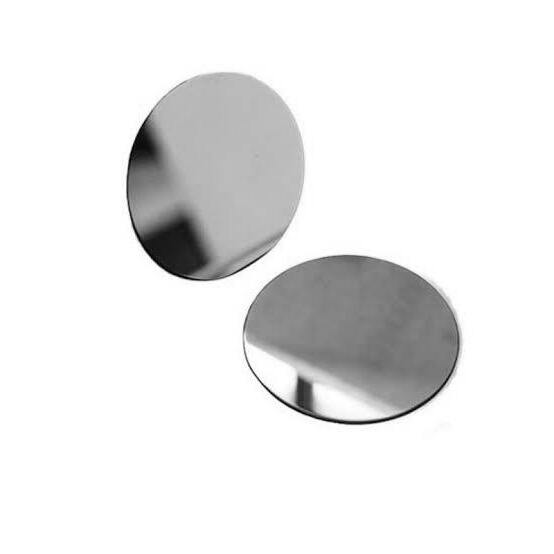
A window manufactured from specialized crystalline or glass materials that transmit efficiently in the near-, mid-, or long-wave infrared — wavelength ranges where conventional optical glass is completely opaque. The essential optical interface for thermal imaging, IR spectroscopy, and CO₂ laser systems.
Wavelength range
0.7–14+ µm (NIR–LWIR)
Common materials
Ge, Si, ZnSe, ZnS, sapphire
Visible appearance
Often opaque or colored
Refractive index
High (2.0–4.0 typical)
Overview
- A flat window made from one of a specialized family of crystalline or glass materials selected specifically for their transmission in the near-infrared (0.7–2.5 µm), mid-wave infrared (3–5 µm), or long-wave infrared (8–14 µm) bands
- Standard optical glasses such as BK7 become opaque beyond approximately 2.5 µm — IR windows use entirely different material families (germanium, silicon, zinc selenide, zinc sulfide, and others) engineered for transparency in these longer wavelength ranges
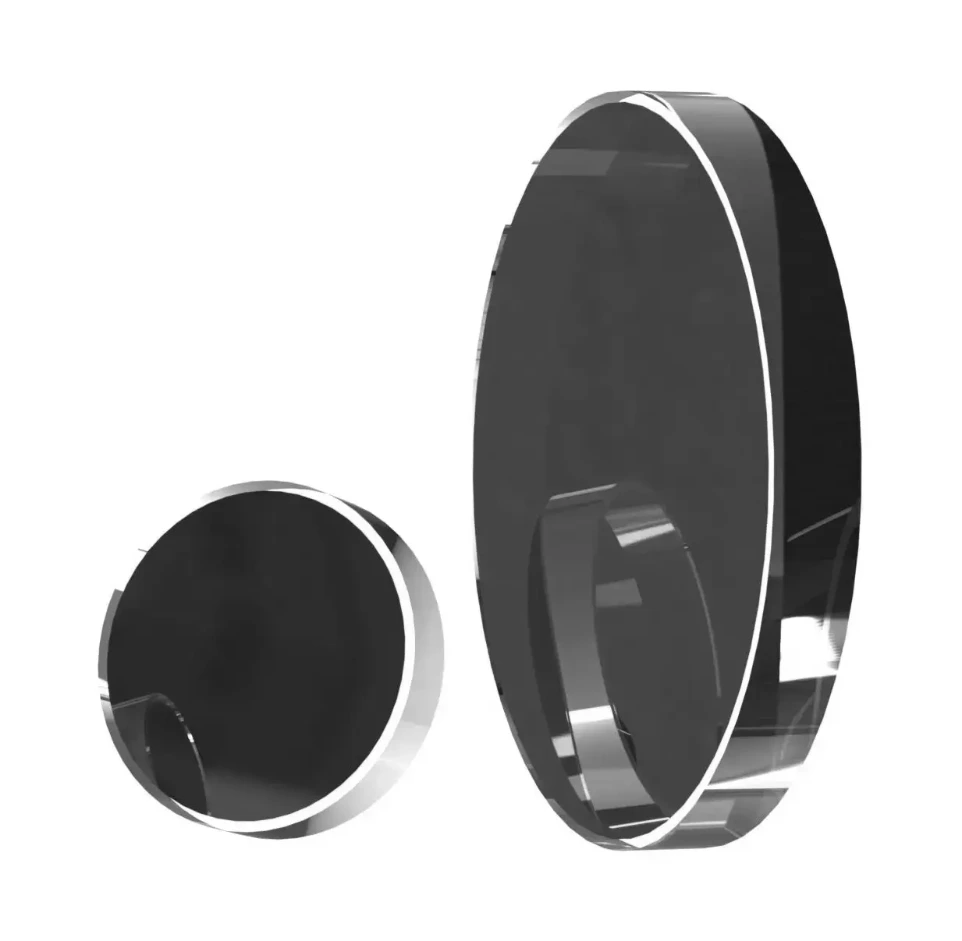
- Many IR window materials appear visually opaque or strongly colored (germanium appears mirror-like metallic gray; ZnSe appears yellow-orange) since their useful transmission band lies entirely or partially outside the visible spectrum
- IR materials typically have much higher refractive indices than visible-range optical glass (germanium n≈4.0, ZnSe n≈2.4) — resulting in higher uncoated surface reflection losses, making AR coatings especially important for IR window applications
- The defining optical component for thermal imaging cameras, FLIR systems, IR spectrometers, and CO₂ laser beam delivery — anywhere infrared radiation must cross a sealed or protected optical boundary
- Material selection must balance transmission range, mechanical durability, thermal properties, and cost — germanium offers excellent LWIR performance but exhibits thermal runaway above roughly 100°C, while ZnSe and sapphire provide more stable performance across temperature
Key Features
Extended transmission beyond visible glass
Where standard optical glasses become opaque around 2.5 µm, IR window materials maintain high transmission well into the mid- and long-wave infrared — germanium and ZnS transmit usefully out to 12–14 µm, enabling thermal imaging and IR sensing applications entirely beyond the reach of conventional glass optics.
Thermal imaging window standard
Germanium and chalcogenide-based windows form the protective front element of virtually every thermal imaging camera and FLIR sensor — sealing the sensor from environmental exposure while passing the long-wave infrared thermal radiation the detector needs to form an image.
High-power CO₂ laser compatibility
Zinc selenide's combination of low absorption at 10.6 µm and good mechanical properties makes it the standard window material for CO₂ laser beam delivery systems used in industrial cutting, welding, and marking — handling kilowatt-level continuous laser power with minimal thermal lensing.
High-index AR coating dependency
The high refractive index of most IR materials (n=2.0–4.0) produces substantial uncoated surface reflection — up to 36% per surface for germanium — making properly designed broadband or laser-line AR coatings essential to achieve usable system transmission efficiency in IR window applications.
Design and Construction
Material selection by band
Near-IR (0.7–2.5 µm)
- Fused Silica, N-BK7 — standard glass still transmits well into the near-IR
- Sapphire — extends slightly further with excellent mechanical properties
Mid-wave & long-wave IR
- Silicon — 1.2–8 µm; lightweight, hard, cost-effective MWIR window material
- Germanium — 2–14 µm; high index enables compact designs; LWIR thermal imaging standard
- Zinc Selenide — 0.5–20 µm; low absorption; standard CO₂ laser window material
- Zinc Sulfide (standard & multi-spectral grade) — 0.4–14 µm; harder than ZnSe; rugged FLIR window material
Specifications & coatings
Mechanical & thermal considerations
- Germanium: thermal runaway risk above ~100°C limits use in high-ambient-temperature environments without cooling
- ZnSe: softer material requiring careful handling; widely used due to excellent CO₂ laser performance
- Sapphire and ZnS (multi-spectral grade): superior mechanical durability for rugged field applications
Coating options
- BBAR coatings — broadband IR anti-reflection for imaging applications (3–5 µm or 8–12 µm bands)
- DLC (diamond-like carbon) — hard, durable protective/AR coating for rugged field-deployed IR windows
- V-coat — single-wavelength AR for CO₂ laser (10.6 µm) windows
Optical Materials
Primary IR substrates
High-index crystalline materials
- Germanium (n≈4.0) — premium LWIR thermal imaging window material; highest refractive index
- Silicon (n≈3.4) — MWIR window material; lighter weight than germanium
- Zinc Selenide (n≈2.4) — broadband IR and CO₂ laser standard
Rugged & multi-spectral
- Zinc Sulfide / Cleartran (multi-spectral grade) — visible through LWIR; rugged FLIR and defense applications
- Sapphire — visible through mid-IR; exceptional mechanical strength and erosion resistance
Selection guidance
By application priority
- Maximum LWIR performance, controlled environment: Germanium
- High-power CO₂ laser delivery: Zinc Selenide
- Rugged field/defense thermal imaging: Zinc Sulfide or Sapphire
- Lightweight MWIR system: Silicon
Wavelength Options
NIR
- 0.7–2.5 µm
- Sapphire / Silicon
- NIR BBAR
MWIR
- 3–5 µm
- Silicon / Sapphire
- BBAR 3–5 µm
LWIR
- 8–12 µm
- Germanium / ZnS
- BBAR + DLC
CO₂ Laser
- 10.6 µm
- Zinc Selenide
- V-coat 10.6 µm
Applications
Defense
Thermal imaging & FLIR systems
Germanium and ZnS windows protect and seal thermal imaging camera optics in military, security, and search-and-rescue FLIR systems, transmitting the long-wave infrared radiation emitted by warm objects and people.
Industrial
CO₂ laser beam delivery
ZnSe windows seal and protect CO₂ laser cutting, welding, and marking system optical paths, handling high continuous laser power with minimal absorption-induced thermal lensing at the 10.6 µm wavelength.
Spectroscopy
FTIR sample & gas cell windows
Used as sample compartment and gas cell windows in FTIR (Fourier-transform infrared) spectrometers, transmitting the broad mid-infrared spectral range used for molecular vibrational spectroscopy and chemical analysis.
Automotive
Night vision system windows
Provides the protective optical interface for automotive and aftermarket thermal night-vision camera systems, allowing the LWIR thermal signature of pedestrians and animals to reach the sensor through a sealed housing.
Process Monitoring
Pyrometry & furnace viewing windows
IR-transmitting windows allow non-contact temperature measurement (pyrometry) and thermal process monitoring through sealed furnace, kiln, and reactor walls in industrial high-temperature process environments.
Medical
Thermal diagnostic imaging
Used in medical thermal imaging instruments for non-contact temperature mapping and diagnostic applications, where the IR window seals the camera optics while preserving image fidelity in the diagnostic wavelength band.
Why choose Infrared Windows
Access beyond visible glass limits
The only window material family capable of transmitting in the mid- and long-wave infrared, where conventional optical glass is completely opaque.
Thermal imaging industry standard
Germanium and ZnS windows are the universally adopted standard for sealing and protecting thermal imaging camera optics across defense, industrial, and consumer applications.
High-power CO₂ laser proven
ZnSe windows reliably handle kilowatt-level CO₂ laser power in industrial cutting and welding systems — the established standard for this demanding application.
Material family for every IR need
From lightweight silicon to rugged zinc sulfide to high-index germanium, the IR window material family covers every combination of wavelength range, mechanical durability, and cost requirement.
Frequently asked questions
Here are some common questions about Infrared Window.
Germanium's useful optical transmission band lies almost entirely in the infrared (roughly 2–14 µm) — it strongly absorbs visible light, which is why a germanium window appears dark, opaque, and metallic-looking to human eyes. This is normal and does not indicate a defective window; the material is functioning exactly as intended for infrared applications, simply outside the range the human eye can detect. Transmission testing and verification must be performed with infrared-sensitive instrumentation, not visual inspection.
Germanium's infrared absorption coefficient increases with temperature — meaning a germanium window that absorbs a small amount of IR energy and heats up will absorb even more energy as its temperature rises, in a self-reinforcing cycle. Above approximately 100°C, this effect can become severe enough that the window's transmission degrades significantly or the part can be damaged by runaway heating. This makes germanium less suitable for high-ambient-temperature environments or very high-power applications without active cooling, where alternative materials like ZnSe or sapphire are often preferred instead.
Surface reflectance at normal incidence is approximately [(n−1)/(n+1)]² per surface. For germanium (n≈4.0), this works out to roughly 36% reflectance per surface — meaning an uncoated germanium window would transmit only around 41% of incident light after two surfaces (64% × 64%). Properly designed broadband AR coatings reduce this per-surface loss to a few percent or less, dramatically improving system throughput. Because IR materials generally have much higher refractive indices than visible-range glass, AR coating is far more impactful — and essentially mandatory — for achieving usable transmission in IR window applications.