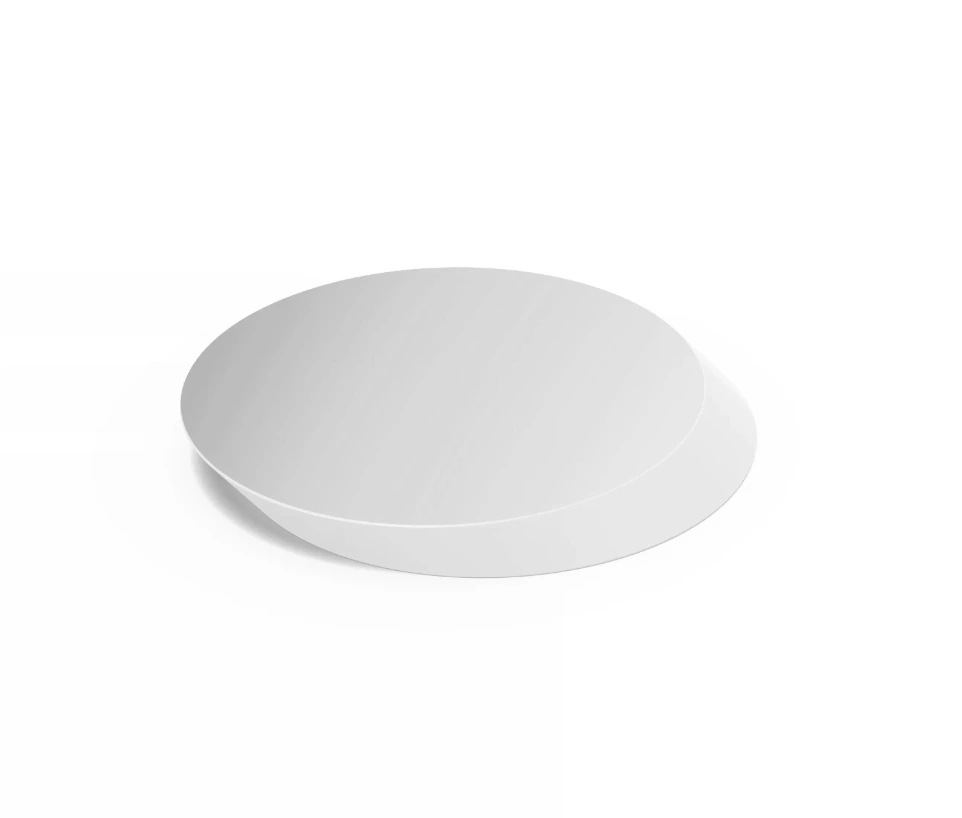
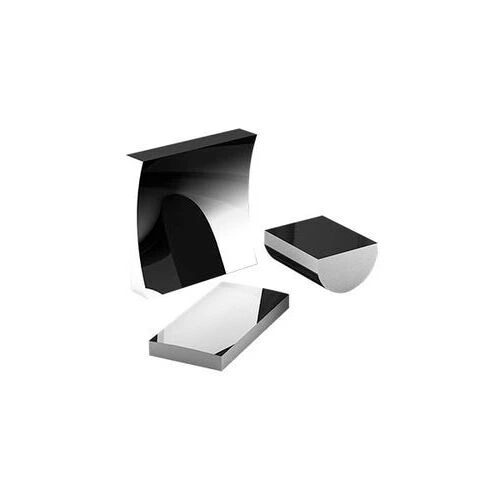
Plane -Parallel Window
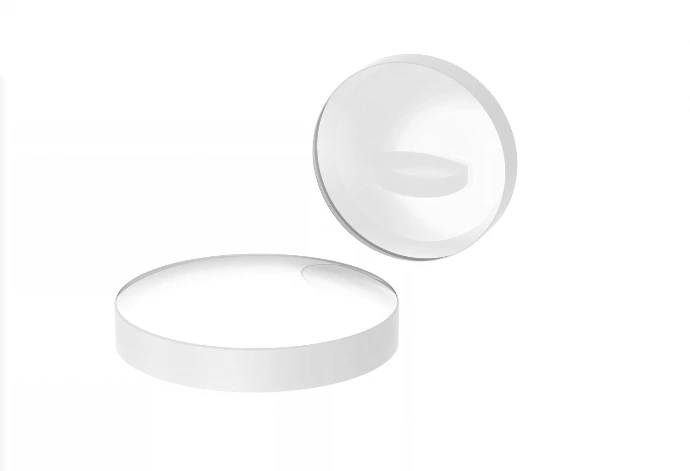
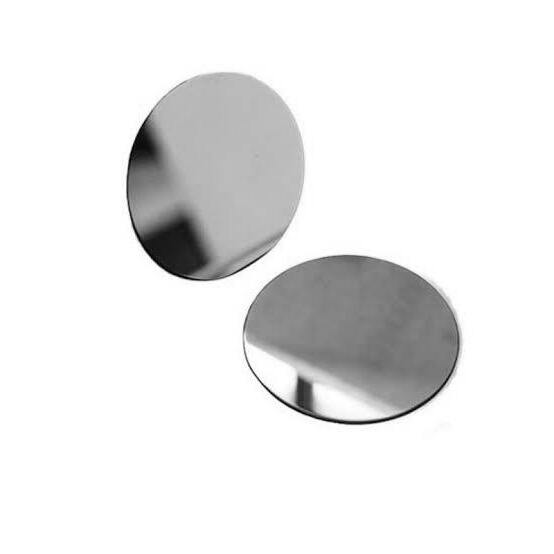
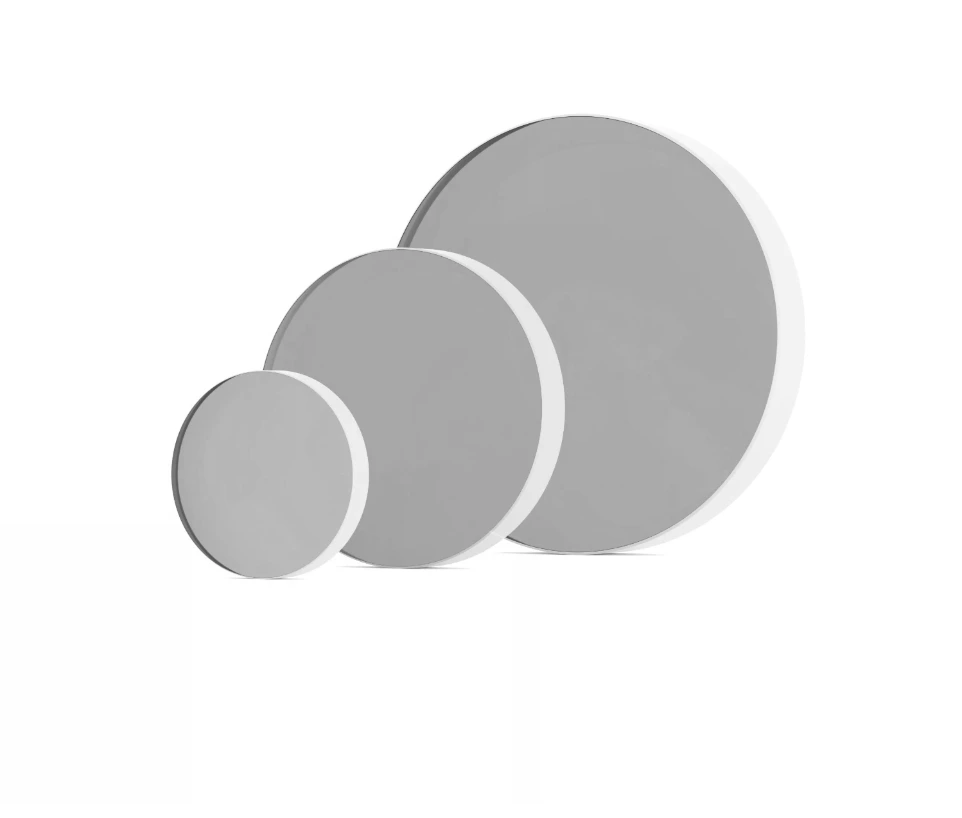
A flat, transparent optical plate with two precisely parallel surfaces — transmitting light with zero deviation, zero magnification, and zero added optical power. The universal sealing, separating, and protective element of optical systems, used wherever light must cross a boundary without being redirected or distorted.
Surface form
Two parallel flats
Optical power
None (afocal)
Beam deviation
Zero (normal incidence)
Parallelism
<5 arcsec to <1 arcmin
Overview
- Two flat, optically polished surfaces ground precisely parallel to each other — light passing through at normal incidence exits with no angular deviation and no change in beam direction
- Introduces zero optical power — collimated light remains collimated, and a focused beam's convergence angle is essentially unchanged (aside from a small focal shift due to the glass thickness and refractive index)
- Functions purely as a transparent barrier — separating two environments (vacuum/air, gas/atmosphere, clean/contaminated) while allowing light to pass with minimal disturbance
- Parallelism between the two surfaces is the critical specification — any deviation from true parallel introduces a small wedge angle that deviates the transmitted beam and can cause double imaging or ghosting
- The most fundamental and widely manufactured optical component — used as protective covers, beam splitters substrates, optical flats, retarders, and compensating plates across every field of optics
- A small focal shift occurs even in a perfectly parallel window: light traveling through a thick refractive plate shifts the apparent position of a focal point along the optical axis, a predictable effect calculated from window thickness and refractive index
Key Features
Zero beam deviation
At normal incidence, a plane-parallel window introduces no angular change to a transmitted beam — light enters and exits along the same direction, displaced only by a small, calculable lateral offset proportional to window thickness and refractive index. This makes it the only transmissive optic that doesn't require downstream realignment when inserted into a beam path.
Environmental & contamination barrier
Separates sensitive optical or electronic components from dust, moisture, and reactive atmospheres while preserving an unobstructed optical path. Used as the front element of camera and sensor housings, the seal of laser tube end caps, and the access port of sealed instrument enclosures.
Calibrated focal shift
Inserting a thick parallel window into a converging beam shifts the focal point axially by an amount Δ = t(1 − 1/n), where t is thickness and n is refractive index — a small, fully predictable effect that optical designers compensate for when windows are placed in front of cameras, detectors, or focusing systems.
Repeatable insertion & removal
Because parallel surfaces introduce no beam deviation regardless of small translational positioning errors, plane-parallel windows can be repeatedly inserted, removed, and replaced (such as in a filter wheel or sample compartment) without requiring realignment of the optical system — unlike a wedge or tilted element.
Design and Construction
Surface & parallelism specifications
Parallelism grades
- Commercial: 3–5 arcmin — general-purpose covers and barriers
- Precision: 30 arcsec to 1 arcmin — imaging and laser system windows
- High-precision: <5–10 arcsec — interferometry, laser cavities, and metrology windows
Surface flatness & quality
- Flatness: λ/4 standard; λ/10 to λ/20 for laser and interferometric applications
- Surface quality: 60-40 scratch-dig standard; 20-10 to 10-5 for laser-grade windows
Design parameters
Thickness considerations
- Thicker windows: greater mechanical strength and pressure resistance, but larger focal shift and more wavefront distortion potential
- Thinner windows: minimal focal shift and wavefront impact, but reduced strength and increased risk of bowing under pressure differential
Coating options
- Uncoated — for low-power or cost-sensitive applications; ~4% reflection loss per surface
- Single-layer MgF₂ AR — cost-effective visible-range reflection reduction
- Broadband AR (BBAR) — <0.5% reflection per surface across a defined waveband
- V-coat — minimal reflection at one specific laser wavelength
Optical Materials
Standard optical glass
Visible & NIR range
- N-BK7 — industry-standard borosilicate crown; excellent transmission 350–2000 nm; the default choice for general-purpose windows
- Borosilicate / float glass — economical alternative for non-critical protective windows
- Fused Silica — low thermal expansion, broader transmission range, higher laser damage threshold than BK7
UV-grade materials
- UV-grade Fused Silica — high transmission below 350 nm down to 185 nm; low autofluorescence
- Calcium Fluoride (CaF₂) — deep UV transmission to 130 nm; minimal dispersion
- Magnesium Fluoride (MgF₂) — UV through mid-IR; very high laser damage threshold
Specialty & infrared materials
Infrared substrates
- Germanium, Silicon, ZnSe, ZnS — extended NIR through LWIR transmission for thermal imaging and CO₂ laser windows
- Sapphire (Al₂O₃) — exceptional hardness, broad transmission (150 nm–5.5 µm), high thermal conductivity
Other specialty glass
- Borofloat / B270 — economical large-format protective windows
- Gorilla Glass / chemically strengthened glass — high impact resistance for consumer device cover windows
Wavelength Options
UV
- 185–400 nm
- UVFS / CaF₂
- UV-AR coatings
Visible
- 400–700 nm
- N-BK7
- MgF₂ or BBAR
NIR
- 700–2000 nm
- BK7 / Fused Silica
- NIR BBAR coatings
MWIR/LWIR
- 2–14 µm
- Ge / Si / ZnSe
- BBAR or DLC coatings
Applications
Imaging
Camera & sensor protective covers
Front protective elements for cameras, detectors, and machine vision sensors — sealing the optical path against dust and moisture while introducing minimal optical disturbance to the imaging path.
Laser Systems
Laser tube & cavity end windows
Sealing windows for gas laser tubes (HeNe, CO₂) and laser cavity enclosures — maintaining the internal gas environment or vacuum while transmitting the laser beam with minimal loss and no beam deviation.
Spectroscopy
Gas cell & sample compartment windows
Sealing windows for multipass gas absorption cells and sample compartments in spectroscopic instruments — allowing the measurement beam to pass through while containing the sample gas or maintaining a controlled atmosphere.
Industrial
Process viewing windows
Observation windows in industrial process equipment, furnaces, and reaction chambers — providing a sealed, transparent barrier for visual or optical monitoring of internal processes under controlled atmosphere or pressure.
Metrology
Compensating & reference plates
Used as compensator plates in Michelson interferometers to equalize the optical path length between reference and measurement arms, and as reference flats for testing the flatness of other optical components.
Consumer
Display & device cover glass
Protective cover windows for smartphone cameras, smartwatch displays, and consumer optical devices — combining optical clarity with mechanical scratch and impact resistance.
Why choose Plane-Parallel Windows
Zero deviation, zero power
The only transmissive optic that introduces neither beam deviation nor optical power — a truly neutral barrier element for any optical path.
Universal sealing solution
The standard component for sealing optical, vacuum, gas, and pressure boundaries while preserving an unobstructed line of sight or beam path.
Widest material range
Available in more substrate materials than any other optical component — from deep-UV fused silica to long-wave IR germanium — covering virtually every wavelength range.
Lowest-cost optical element
The simplest optical geometry to manufacture, making plane-parallel windows the most economical precision optical component available, especially at larger apertures.
Frequently asked questions
Here are some common questions about achromatic lens.
Yes, two small effects remain even with perfect parallelism: a lateral displacement of the beam path (offset proportional to thickness and angle of incidence, zero at normal incidence) and a longitudinal focal shift for converging or diverging beams (Δ = t(1 − 1/n), where t is thickness and n is refractive index). Both effects are fully predictable and are typically compensated for in system design — they are not aberrations and do not depend on wavefront quality, only on geometry and material index.
For general protective and sealing applications, commercial-grade parallelism (3–5 arcmin) is sufficient since any resulting beam deviation is negligible. For imaging systems, tighter parallelism (30 arcsec to 1 arcmin) avoids introducing double images or ghosting from internal reflections. For laser cavities, interferometers, and precision metrology, high-precision parallelism (under 5–10 arcsec) is required since even tiny wedge angles can introduce unwanted beam steering or interference artifacts.
Thicker windows provide greater mechanical strength and pressure resistance (important for vacuum viewports and pressure barriers) but introduce more focal shift and a longer path through dispersive material. Thinner windows minimize optical disturbance and weight but are more prone to bowing under pressure differential and are mechanically more fragile. The right choice balances the mechanical requirements (pressure rating, handling durability) against the optical sensitivity of the system to focal shift and wavefront distortion.