Ultra- Thin Window
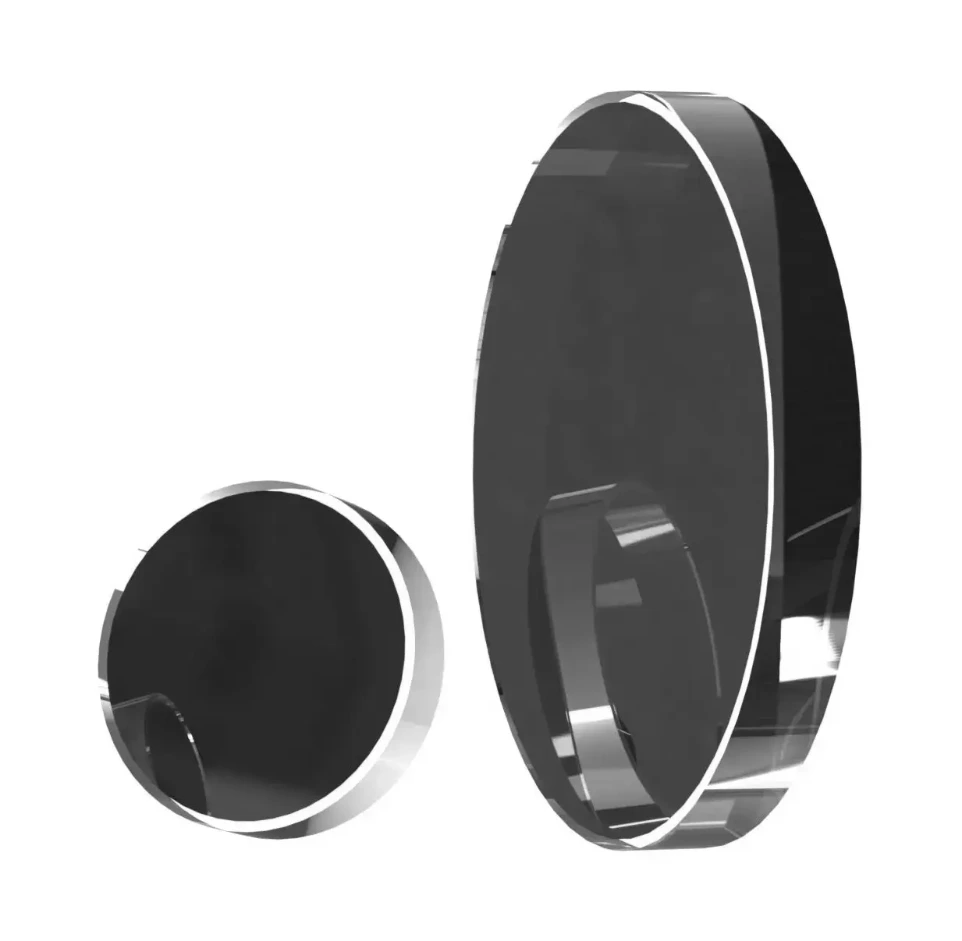
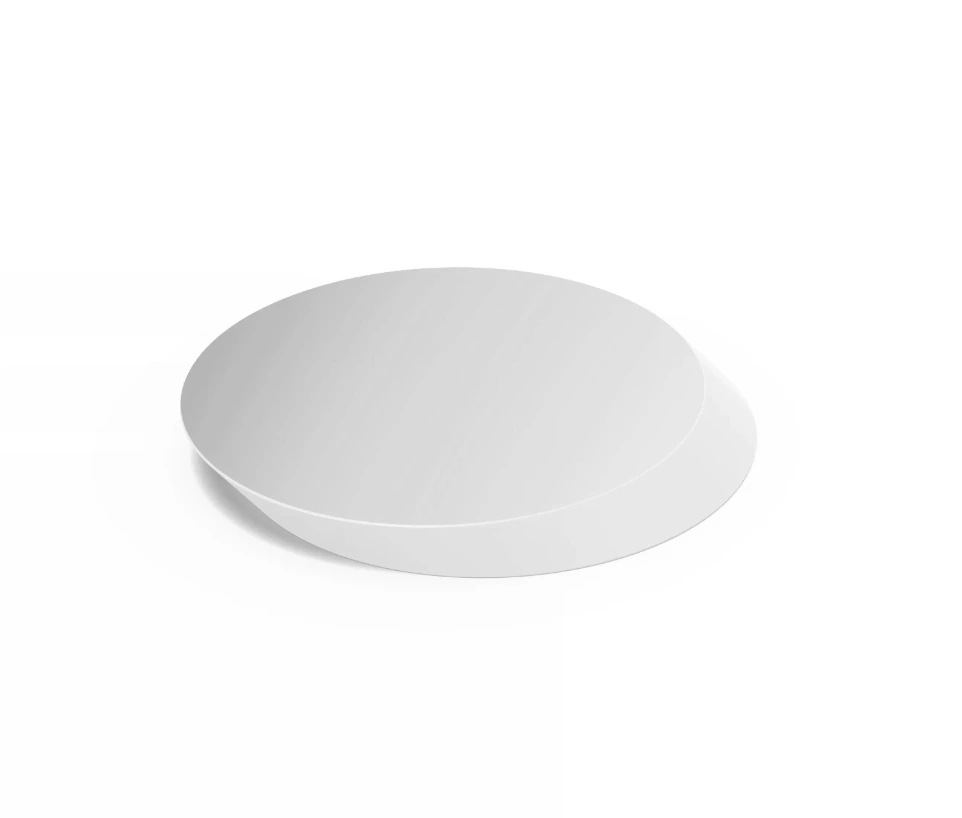
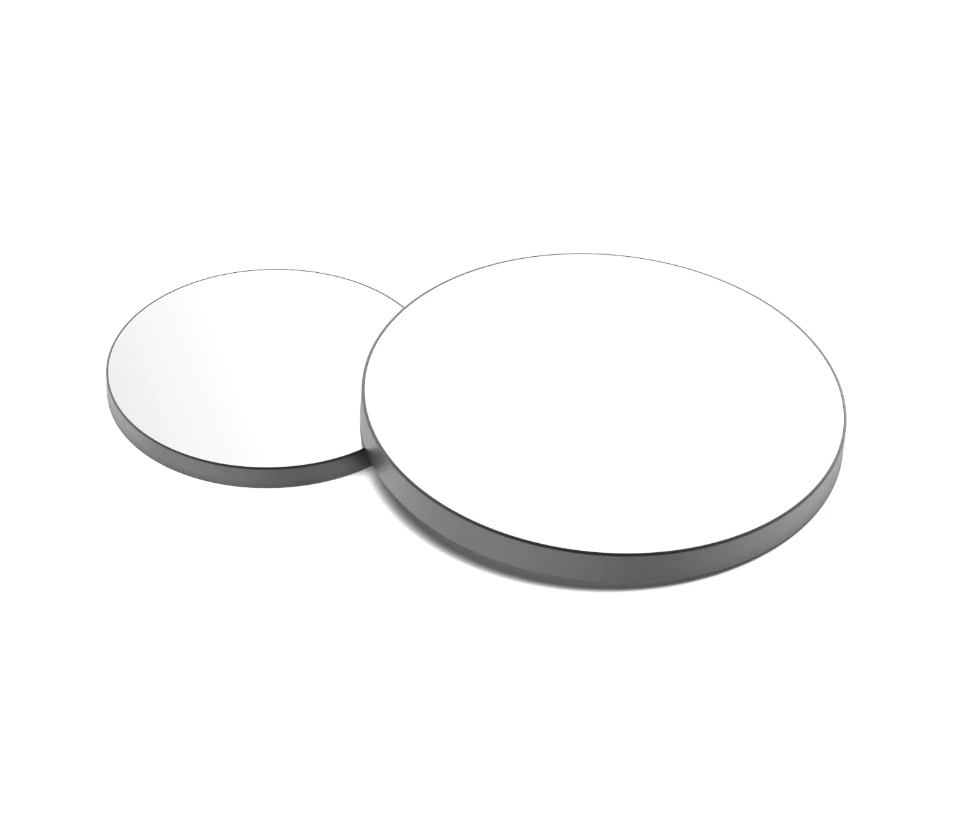
A precision optical window manufactured to extreme thinness — typically under 1 mm and down to a few hundred microns — minimizing focal shift, wavefront distortion, and absorption losses to near-negligible levels. Used wherever an optical barrier must be functionally "invisible" to the optical system it protects.
Typical thickness
0.1–1 mm
Focal shift
Minimal (proportional to thickness)
Mechanical strength
Reduced (handling care required)
Common materials
Fused silica, sapphire, glass
Overview
- A flat optical window manufactured to minimal thickness — typically well under 1 mm, sometimes down to a few hundred microns — to minimize its optical footprint within a system
- Since focal shift and wavefront path-length effects scale directly with window thickness, an ultra-thin window introduces a proportionally smaller disturbance to the optical system than a standard-thickness window of the same material and aperture
- Used wherever an optical barrier is functionally required (sealing, protection, separation) but the system cannot tolerate the focal shift, weight, or absorption that a thicker window would introduce
- Manufacturing ultra-thin windows to high flatness and parallelism specifications is significantly more challenging than standard-thickness windows, since thin substrates are more prone to bowing, warping, and breakage during grinding, polishing, and handling
- Requires careful mechanical mounting design, since thin substrates have substantially reduced resistance to pressure differential, mechanical shock, and bending stress compared to standard-thickness windows of the same material
- Common in compact consumer optics, fiber-optic component packaging, and any application where minimizing system size, weight, or optical path length is a primary design driver
Key Features
Minimal focal shift
Because the longitudinal focal shift introduced by a parallel window scales directly with thickness (Δ = t(1 − 1/n)), an ultra-thin window of 0.2 mm introduces roughly one-tenth the focal shift of an equivalent 2 mm window — critical in compact optical systems where even small focal shifts cannot be tolerated or easily compensated.
Reduced weight & footprint
Minimal material thickness directly reduces both weight and the physical space the window occupies within a compact optical assembly — important in size-, weight-, and power-constrained applications such as wearable devices, miniature sensors, and space-limited fiber-optic component packages.
Lower absorption & dispersion
A thinner optical path through the window material reduces total bulk absorption and chromatic dispersion accumulated as light passes through — beneficial for ultrafast laser applications and broadband systems sensitive to material dispersion, where every millimeter of glass path matters.
Specialized handling requirements
The reduced mechanical strength of ultra-thin substrates demands careful handling protocols, specialized mounting fixtures that avoid point-loading or excessive clamping force, and conservative pressure differential ratings compared to standard-thickness windows — a key design and assembly consideration.
Design and Construction
Manufacturing challenges
Thin-substrate processing
- Specialized grinding and polishing fixtures minimize stress and bowing during processing of substrates below 0.5 mm thickness
- Stress-relief annealing steps help prevent warping after thinning operations
- Final flatness and parallelism specifications are more difficult to achieve and hold at extreme thinness due to substrate flexibility
Mounting design
- Distributed-load mounting (avoiding point contact or excessive edge clamping) preserves flatness and prevents stress-induced fracture
- Edge protection (chamfering, edge coating) reduces chip and crack initiation risk in thin, fragile substrates
Specifications
Typical thickness ranges
- Standard ultra-thin: 0.3–1 mm — moderate strength improvement over true micro-thin substrates
- Extreme thin: 0.1–0.3 mm — maximum optical transparency to the system, minimal mechanical strength
Surface specifications
- Surface flatness: λ/4 to λ/8 — challenging to achieve consistently at minimal thickness
- AR coatings applied with care given the thin, more flexible substrate during the coating deposition process
Optical Materials
Standard ultra-thin substrates
Glass substrates
- Fused Silica — excellent processability at minimal thickness; standard choice for precision ultra-thin windows
- N-BK7 — used where ultra-thin protection is needed without extreme precision requirements
High-strength thin substrates
- Sapphire — exceptional strength-to-thickness ratio, allowing thinner windows than glass for the same mechanical durability requirement
- Chemically strengthened glass — improved fracture resistance at reduced thickness for consumer device applications
Specialty applications
Ultrafast & precision optics
- Ultra-thin fused silica — minimizes group delay dispersion in femtosecond laser beam paths where windows are unavoidable
- Ultra-thin sapphire — combines minimal thickness with high mechanical and thermal durability for demanding compact sensor protection
Wavelength Options
UV
- 200–400 nm
- Thin Fused Silica
- UV-AR coatings
Visible
- 400–700 nm
- Thin BK7 / Fused Silica
- BBAR coatings
NIR
- 700–2000 nm
- Thin Fused Silica
- NIR BBAR
Applications
Ultrafast Optics
Femtosecond laser beam path windows
Minimizes group delay dispersion accumulated as ultrashort laser pulses pass through necessary sealing or protective windows in femtosecond laser systems, preserving pulse duration and beam quality.
Consumer
Wearable & compact device optics
Provides minimal-footprint optical protection for sensors and cameras in wearable devices, smartwatches, and other size-constrained consumer electronics where every fraction of a millimeter of thickness matters.
Telecommunications
Fiber-optic component packaging
Used as minimal-footprint protective windows in compact fiber-optic component packages such as transceivers and sensors, where space constraints demand the thinnest viable optical barrier.
Research
Low-dispersion optical pathways
Used in precision research instruments and spectroscopic systems where minimizing accumulated material dispersion across the optical path is essential for measurement accuracy or pulse fidelity.
Medical
Miniature endoscope & probe windows
Provides protective sealing for the smallest medical imaging probes and miniature endoscopes, where the window thickness directly constrains the minimum achievable probe diameter.
Aerospace
Weight-critical sensor protection
Reduces mass in weight-critical aerospace and satellite sensor protection applications, where every gram of optical component weight contributes to overall mission payload constraints.
Why choose Ultra-Thin Windows
Negligible optical disturbance
Minimal thickness reduces focal shift, dispersion, and absorption to a fraction of what a standard-thickness window would introduce — approaching optical "invisibility" within the system.
Minimal weight and footprint
The thinnest practical protective barrier for size-, weight-, and space-constrained optical system designs across consumer, aerospace, and medical applications.
Essential for ultrafast optics
Minimizes group delay dispersion in femtosecond laser beam paths — critical wherever a protective window is unavoidable in an ultrafast pulse delivery system.
High-strength material options
Sapphire and chemically strengthened glass options maximize mechanical durability even at extreme thinness, balancing protection against optical transparency to the system.
Frequently asked questions
Here are some common questions about Ultra Thin Window .
Standard precision optical fabrication can reliably produce windows down to approximately 0.1–0.3 mm thickness while maintaining acceptable flatness and parallelism, particularly in fused silica and sapphire, which process well at minimal thickness. Below this range, specialized techniques (similar to those used for semiconductor wafer thinning) may be required, and mechanical fragility becomes an increasingly dominant practical limitation — the window becomes extremely susceptible to breakage during handling, mounting, and operational use, requiring very careful engineering of the supporting mount and assembly process.
Yes. Standard window mounting techniques that apply localized clamping force or point contact can easily crack or distort an ultra-thin substrate. Ultra-thin windows require distributed-load mounting approaches — such as continuous bead adhesive bonding, soft gasket seating across the full contact area, or specialized retainer designs that spread mechanical load evenly around the window perimeter — to avoid introducing stress concentrations that could fracture the thin substrate during assembly or under subsequent thermal or mechanical cycling.