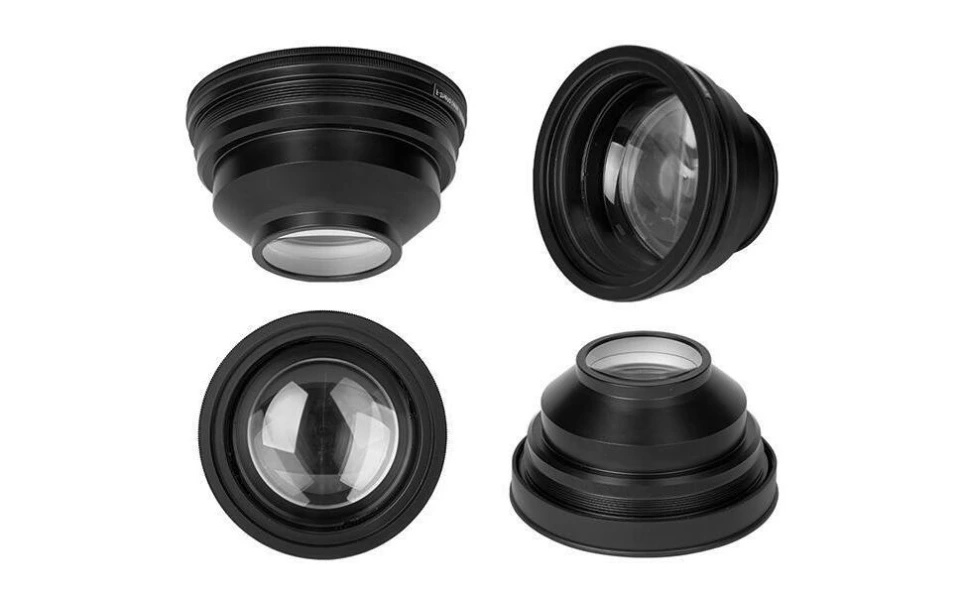
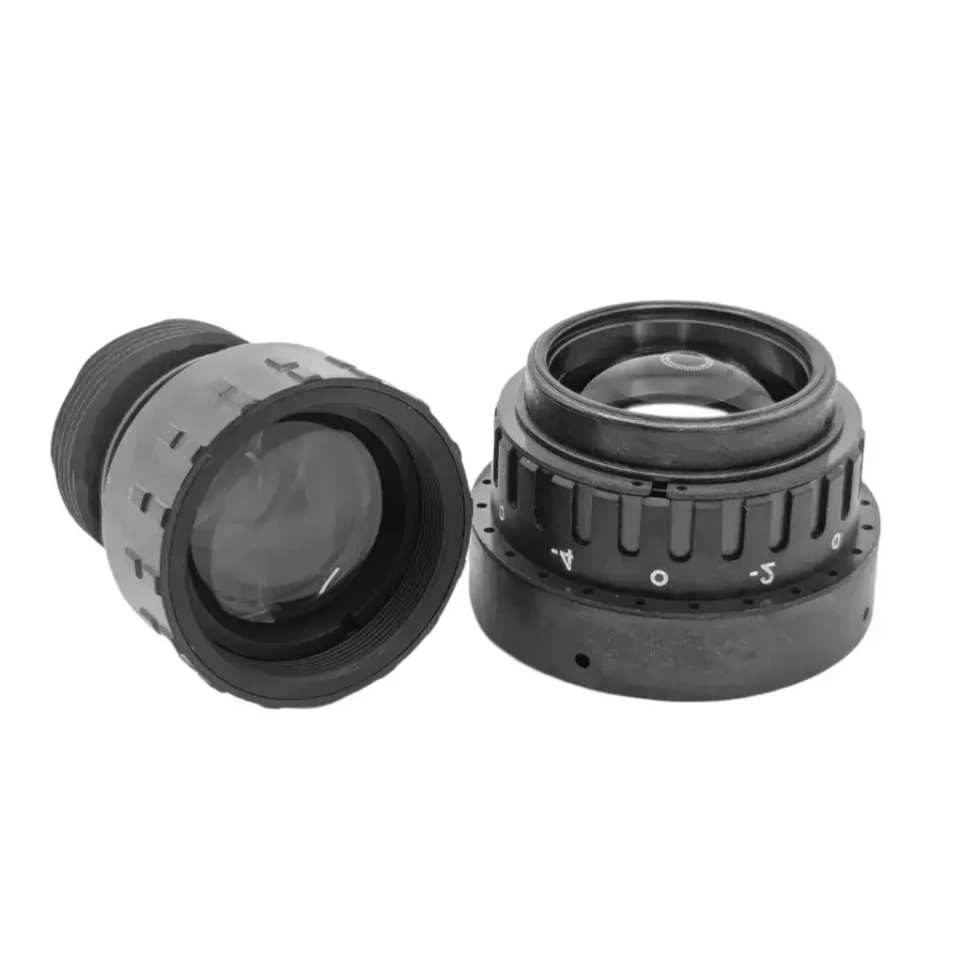
Anamorphic Lens Assembly
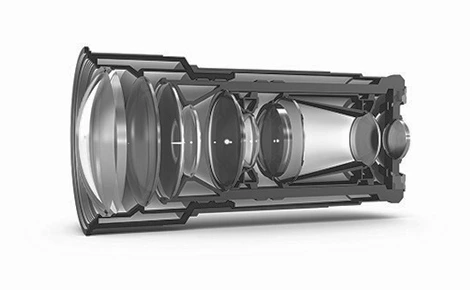
A multi-element lens system with different optical power in its horizontal and vertical axes — compressing a wide cinematic field of view onto a standard-format sensor or film frame, to be optically or digitally expanded back to its full width on projection. The signature optic behind the wide-screen "cinemascope" look and characteristic oval bokeh prized in feature filmmaking.
Function
Asymmetric horizontal/vertical compression
Common squeeze ratios
1.3×, 1.5×, 2×
Signature effect
Oval bokeh, horizontal flares
Construction
Spherical + cylindrical element groups
Overview
- A lens assembly that combines conventional spherical optical elements with one or more cylindrical elements (or element groups) to produce different magnification in the horizontal and vertical axes — the cylindrical component compresses ("squeezes") the image in one axis while leaving the orthogonal axis largely unaffected
- Historically developed to capture a wide cinematic aspect ratio (such as 2.39:1) onto standard-format film or sensor area — the anamorphic squeeze compresses the wide scene horizontally so it fits the available frame, with projection or post-production "unsqueezing" restoring the correct wide aspect ratio for viewing
- Squeeze ratio — the degree of horizontal compression relative to vertical — defines the anamorphic format; common ratios include 1.3×, 1.5×, and the classic 2× squeeze of traditional Cinemascope-style anamorphic lenses
- Produces characteristic, widely recognized optical signatures prized in cinematography — oval-shaped out-of-focus highlights (bokeh) rather than circular, horizontally elongated lens flares, and distinct focus "fall-off" characteristics — that have become a stylistic hallmark associated with big-budget feature filmmaking
- Modern digital cinema workflows can also achieve a wide-aspect-ratio "anamorphic look" through spherical lenses combined with digital horizontal stretching in post-production, but true optical anamorphic lenses remain valued for their distinctive in-camera optical character that digital emulation only approximates
- Beyond cinema, anamorphic-principle lens elements are also used in non-cinematic technical applications — laser beam shaping (correcting the elliptical output of laser diodes), and certain projection and scanning system designs requiring asymmetric magnification
Key Features
Asymmetric axis compression
Independently controls magnification in the horizontal and vertical axes — the defining optical property that allows a wide cinematic field of view to be captured on a standard-format sensor, with the squeeze ratio precisely defining how much horizontal compression is applied relative to the vertical axis.
Signature oval bokeh
Out-of-focus highlights render as horizontally elongated ovals rather than the circular bokeh of spherical lenses — a direct optical consequence of the asymmetric horizontal/vertical magnification, and one of the most visually distinctive and sought-after characteristics of true anamorphic cinematography.
Horizontal flare characteristics
Lens flares from bright light sources within or near the frame stretch horizontally across the image — typically rendered as a distinctive blue-tinted horizontal streak in classic anamorphic designs — a signature visual element extensively used as a deliberate creative tool in feature film cinematography.
Wide-format frame utilization
Captures a wide cinematic aspect ratio using the full available sensor or film area — rather than cropping a wide aspect ratio out of a smaller portion of a spherical lens's image circle, anamorphic capture uses the complete frame height and width, maximizing resolution and light-gathering efficiency for the final wide-format image.
Design and Construction
Optical architecture
Front anamorphic vs rear anamorphic
- Front anamorphic — cylindrical squeeze element(s) positioned in front of a conventional spherical lens group; classic traditional cinema anamorphic architecture
- Rear anamorphic — cylindrical element(s) positioned behind the spherical group, closer to the sensor; more compact, increasingly common in modern designs
Squeeze ratio implementation
- 2× squeeze — classic Cinemascope-style ratio; strongest, most pronounced anamorphic optical character
- 1.3×–1.5× squeeze — more moderate compression; popular in modern digital cinema for a subtler anamorphic look with somewhat reduced optical complexity
Design considerations
Focus & aberration challenges
- The cylindrical element group introduces unique focus breathing and aberration characteristics distinct from spherical lens behavior, requiring specialized correction approaches
- Close-focus performance is often more challenging in anamorphic designs than equivalent spherical lenses, due to the added optical complexity of the cylindrical group
Matched lens set design
- Cinema anamorphic lenses are typically produced as matched prime lens sets across multiple focal lengths, engineered to maintain consistent squeeze ratio, color rendition, and optical character across the full set for seamless intercutting in production
Optical Materials
Standard cinema lens glass
Spherical group materials
- Extra-low dispersion (ED) glass — controls chromatic aberration in the spherical element groups, particularly important given the additional complexity the cylindrical elements introduce
- High-index glass — manages curvature requirements in compact, fast-aperture cinema lens designs
Cylindrical element materials
- Precision-ground cylindrical glass elements — manufactured to maintain the consistent squeeze ratio and optical quality required across the cylindrical element's full aperture
Coatings
Coating considerations
- Multi-layer broadband AR coatings — balanced to achieve the desired flare characteristics, since some controlled flare is a deliberately retained creative property rather than something to be fully eliminated in cinema anamorphic lenses
- Color-matched coatings across a full prime lens set to maintain consistent color rendition between different focal lengths
Wavelength Options
Visible (cinema)
- 400–700 nm
- ED glass groups
- Color-matched BBAR
Laser beam shaping
- Diode laser wavelengths
- Cylindrical glass pairs
- Brewster or BBAR
Applications
Cinema
Feature film & television production
The signature optic of widescreen feature filmmaking, providing the wide aspect ratio capture, distinctive oval bokeh, and horizontal flare character that define the recognizable "anamorphic" cinematic visual style.
Commercial
Advertising & music video production
Used in commercial and music video production to achieve a premium, cinematic visual character distinguishing content from standard spherical-lens video production.
Laser Systems
Laser diode beam circularization
Anamorphic prism pairs and cylindrical lens combinations correct the inherent elliptical output beam of laser diodes, converting it to a circular beam for precision focusing and fiber coupling applications.
Projection
Anamorphic home theater projection
Used in premium home theater installations with anamorphic lens attachments to project the full native resolution of widescreen cinema content without the black letterboxing bars of standard spherical projection.
Broadcast
Live event & sports broadcast
Used in select live broadcast and sports production applications seeking a distinctive widescreen visual character distinguishing premium broadcast content.
Industrial
Asymmetric beam shaping systems
Used in industrial laser processing and optical system designs requiring asymmetric magnification or beam shaping, applying the same anamorphic optical principles outside the cinema context.
Why choose Anamorphic Lens Assemblies
Distinctive cinematic character
Delivers the oval bokeh, horizontal flares, and unique focus characteristics that define the recognizable anamorphic cinema look — a visual signature digital emulation only approximates.
Full-frame wide-format capture
Uses the complete sensor or film area to capture a wide aspect ratio, maximizing resolution and light-gathering efficiency compared to cropping a wide ratio from a spherical lens image.
Matched prime lens sets available
Available as coordinated multi-focal-length sets engineered for consistent optical character across an entire production — essential for professional cinema workflows.
Dual-purpose optical principle
The same asymmetric-magnification principle serves both premium cinema production and technical laser beam-shaping applications across very different industries.
Frequently asked questions
Here are some common questions about anamorphic lens Assembly.
Bokeh shape is determined by the shape of the lens's aperture as imaged through the optical system. In a conventional spherical lens, the circular aperture remains circular when imaged, producing circular out-of-focus highlights. In an anamorphic lens, the cylindrical element group magnifies the horizontal and vertical axes differently — this asymmetric magnification stretches the otherwise-circular aperture image into an oval shape when viewed through the lens, which directly translates into the horizontally elongated oval bokeh that defocused points of light produce in the final image. This effect is a direct, unavoidable optical consequence of the anamorphic squeeze mechanism, not an intentional separate design feature.
Squeeze ratio describes how much the lens compresses the horizontal field of view relative to the vertical when capturing the image onto the sensor or film frame. A 2× squeeze lens compresses a scene that is twice as wide (in angular terms) as it is tall into a frame with normal (1:1 relative) proportions — the captured image appears horizontally compressed and "squeezed" until it is "unsqueezed" (stretched back to correct proportions) during projection or in post-production. Lower squeeze ratios like 1.3× or 1.5× apply less compression, producing a more subtle anamorphic optical character while still achieving some of the format's distinctive visual signature, and are popular in modern digital cinema production as an alternative to the strongest classic 2× squeeze designs.
Digital post-production techniques can approximate some anamorphic visual characteristics — adding oval-shaped bokeh simulation or horizontal flare effects to footage shot with a conventional spherical lens. However, these digital techniques are approximations applied after the fact, and generally cannot fully replicate the authentic optical behavior of a true anamorphic lens — including its specific focus falloff characteristics, the precise interaction between aperture, focus distance, and bokeh shape, and the genuine optical flare physics of actual cylindrical lens elements interacting with real light sources during capture. This is why many cinematographers and productions continue to choose genuine optical anamorphic lenses for projects where achieving the authentic, distinctive look is a priority, despite the added cost and complexity compared to spherical lenses with digital post-processing.