Zoom Lens
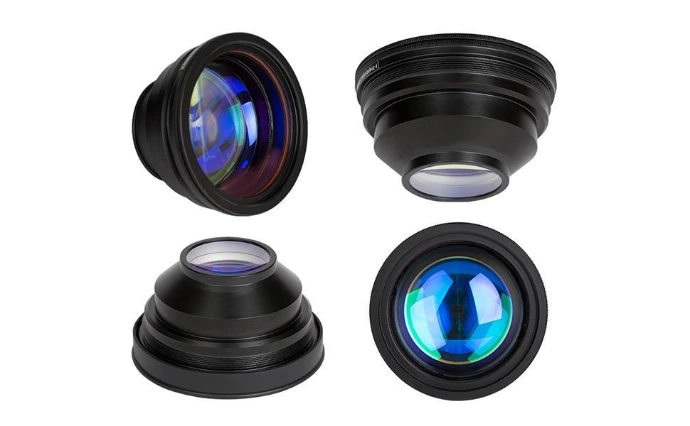
A multi-element lens assembly with internally moving element groups that continuously vary focal length — and therefore field of view and magnification — while maintaining focus on the image plane. The versatile optic that replaces multiple fixed-focal-length lenses with a single continuously adjustable system, from photographic zoom lenses to motorized machine vision and surveillance optics.
Function
Continuously variable focal length
Zoom ratio
2× to 30×+ depending on design
Element groups
Multiple independently moving
Focus tracking
Maintained throughout zoom rang
Overview
- A multi-element lens assembly in which several internal lens groups move along the optical axis — independently or in coordinated mechanical/electronic cam motion — to continuously vary the system's effective focal length across a defined range, changing field of view and magnification without changing lenses
- True (parfocal) zoom lenses maintain focus on the image plane throughout the zoom range — the image stays sharp as focal length changes, requiring the moving groups to follow a precisely calculated, often nonlinear, cam-driven motion path rather than simple linear translation
- Distinguished from a "varifocal" lens, which changes focal length but requires refocusing after each zoom adjustment — true zoom lenses are mechanically and optically more complex but eliminate this refocusing step, critical for video and continuous-observation applications
- Used wherever the operational field of view or magnification requirement varies and cannot be predicted in advance, or where rapidly switching between wide and narrow fields of view during continuous operation is required — photography, videography, surveillance, and machine vision systems inspecting parts of varying size
- Zoom lens optical complexity scales strongly with zoom ratio (the ratio of longest to shortest focal length) — high-ratio zoom lenses (10×, 20×, 30×+) require substantially more elements and tighter manufacturing tolerances than low-ratio (2×–3×) designs to maintain acceptable image quality across the full range
- Motorized zoom lenses (common in surveillance, broadcast, and automated machine vision systems) use precision actuators to drive the internal zoom and focus groups under electronic control, enabling remote or automated field-of-view adjustment without manual intervention
Key Features
Continuously variable field of view
A single lens assembly covers a range of focal lengths — replacing multiple fixed-focal-length lenses with one continuously adjustable system, valuable wherever the required field of view changes during operation or cannot be precisely predicted in advance.
Parfocal focus tracking
True zoom lens designs maintain sharp focus on the image plane throughout the zoom range, following a precisely calculated cam motion path for the internal moving groups — eliminating the need to refocus after each zoom adjustment, a critical capability for video recording and continuous live observation.
Coordinated multi-group mechanical motion
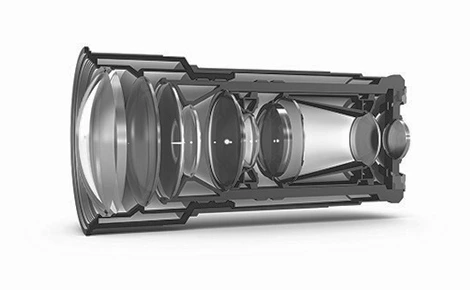
Internal zoom mechanisms coordinate the motion of multiple lens groups — typically a variator group (primarily changes focal length) and a compensator group (corrects the resulting focus shift) — moving along carefully calculated, often nonlinear cam paths to maintain image quality and focus throughout the zoom range.
Motorized remote operation
Motorized zoom lenses use precision actuators and encoders to drive zoom and focus position under electronic control — enabling remote-controlled, programmable, or fully automated field-of-view adjustment in surveillance, broadcast, and robotic machine vision applications without physical access to the lens.
Design and Construction
Optical architecture
Group functions
- Variator group — the primary moving group that changes the system's effective focal length as it translates
- Compensator group — moves in coordination with the variator to correct the focus shift the variator's motion would otherwise introduce
- Fixed front and rear groups — provide overall focusing and final image formation, remaining stationary during zoom
Cam-driven motion
- Mechanical cam tracks (or electronically calculated motion profiles in motorized designs) define the precise, often nonlinear position relationship between variator and compensator groups
- Ensures parfocal (focus-maintained) operation across the entire zoom range
Specifications
Key parameters
- Zoom ratio: ratio of longest to shortest focal length; 2×–3× for compact designs, 10×–30×+ for telephoto surveillance and broadcast zoom lenses
- F-number variation: many zoom lenses exhibit a variable maximum aperture across the zoom range (f-number increases at longer focal lengths) unless specifically designed as constant-aperture ("constant-f/stop")
- Parfocal accuracy: quantifies how precisely focus is maintained across the zoom range without manual refocus
Element count
- Typically 12–20+ elements in multiple groups for high-quality, high-ratio zoom designs — substantially more complex than fixed-focal-length lenses of comparable image quality
Optical Materials
Standard correction glass
Aberration-correcting elements
- Extra-low dispersion (ED) glass — controls chromatic aberration, which varies across the zoom range and is particularly challenging in high-ratio zoom designs
- High-index glass — manages curvature requirements while controlling the overall size and weight of multi-group zoom assemblies
Aspheric elements
- Used in modern zoom designs to control spherical aberration and distortion across the zoom range with fewer total elements than an all-spherical design would require
Coatings & mechanisms
Coating considerations
- Multi-layer broadband AR coatings across all surfaces — essential given the high element count of zoom lens designs to maintain transmission and contrast
- Image stabilization elements (in some designs) — a moving lens group that counteracts camera shake, common in handheld and vehicle-mounted zoom applications
Wavelength Options
Visible
- 400–700 nm
- ED glass groups
- VIS BBAR
Day/Night NIR
- 400–900 nm
- NIR-corrected glass
- VIS-NIR BBAR
Thermal zoom (IR)
- 8–12 µm
- Germanium / ZnS optics
- IR BBAR + DLC
Applications
Photography
Photographic & videographic zoom lenses
The standard versatile lens for photography and video production, allowing photographers and videographers to adjust framing and field of view continuously without changing lenses or repositioning the camera.
Security
PTZ surveillance cameras
Motorized zoom lenses are the core optic of pan-tilt-zoom (PTZ) security cameras, enabling operators to remotely adjust field of view from wide-area monitoring to detailed close-in identification without repositioning the camera.
Broadcast
Television & sports broadcast lenses
High-ratio (often 20×–80×) parfocal zoom lenses are essential broadcast camera equipment, allowing camera operators to smoothly transition from wide establishing shots to tight close-ups during live event coverage.
Machine Vision
Variable field-of-view inspection
Used in machine vision systems inspecting parts of varying size or requiring different magnification levels for different inspection steps, eliminating the need for multiple fixed-focal-length lens changeovers.
Defense
Targeting & reconnaissance optics
Used in military targeting, reconnaissance, and surveillance systems requiring rapid, wide-to-narrow field of view adjustment for target acquisition and identification at varying ranges.
Robotics
Adaptive robotic vision systems
Used in robotic and automated inspection platforms requiring adjustable field of view to accommodate varying part sizes or inspection distances within a single automated workflow.
Why choose Zoom Lenses
Single-lens versatility
Replaces multiple fixed-focal-length lenses with one continuously adjustable system — reducing equipment changeover time and complexity in applications requiring variable field of view.
Parfocal continuous operation
True zoom designs maintain focus throughout the zoom range — essential for video recording and live observation where refocusing after each adjustment would be impractical.
Remote & automated control
Motorized zoom variants enable remote or programmatic field-of-view control — critical for surveillance, broadcast, and unmanned inspection systems without physical lens access.
Adapts to varying inspection requirements
A single zoom lens accommodates parts or scenes of different sizes within one system — valuable wherever inspection or observation requirements change between operations.
Frequently asked questions
Here are some common questions about Zoom Lens.
A true zoom lens is parfocal — it maintains focus on the image plane automatically as focal length changes, following a precisely engineered cam motion path between its internal moving groups. A varifocal lens also changes focal length via internal element movement, but does not maintain focus through that range — the user (or system) must manually refocus after every focal length adjustment. Varifocal lenses are generally simpler, smaller, and less expensive than true zoom lenses, making them common in budget security cameras and applications where occasional manual refocusing after a field-of-view change is acceptable. True zoom lenses are required wherever continuous, in-focus operation during the zoom adjustment itself is necessary, such as video recording while zooming.
In many zoom lens designs, particularly more compact and affordable ones, the physical entrance pupil size relative to focal length changes as the lens zooms — meaning the maximum usable aperture (expressed as f-number, which is focal length divided by entrance pupil diameter) becomes effectively smaller (a larger f-number) at longer focal lengths, since the lens cannot maintain as large a relative aperture at the telephoto end. "Constant aperture" or "constant f/stop" zoom lenses are specifically engineered (typically with larger, more complex optics) to maintain the same maximum f-number throughout the entire zoom range — a desirable but more expensive design feature, especially valued in professional video and broadcast applications where consistent exposure during zooming is important.
Zoom ratio (the ratio between the longest and shortest focal length in the lens's range) is a major driver of optical design complexity. Low-ratio zoom lenses (2×–3×) can achieve image quality approaching that of fixed-focal-length lenses across their range with a moderate element count. High-ratio zoom lenses (10×, 20×, 30×+) require substantially more lens elements, more complex cam mechanisms, and tighter manufacturing tolerances to control aberrations across the much wider range of focal length conditions — and even with this added complexity, very high-ratio zoom lenses often show some compromise in image quality (typically at the extreme ends of their range) compared to an equivalent fixed-focal-length lens or a lower-ratio zoom design.