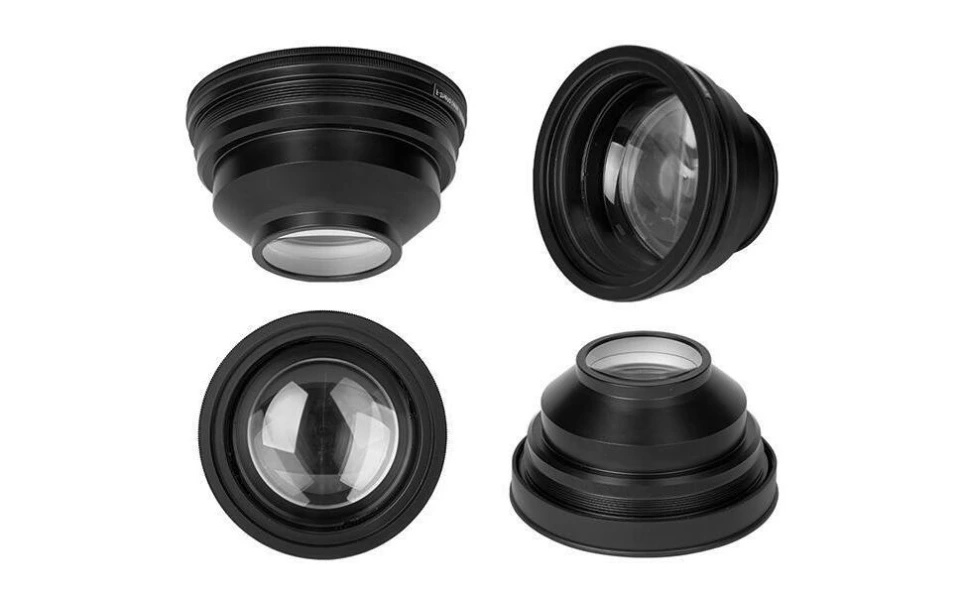
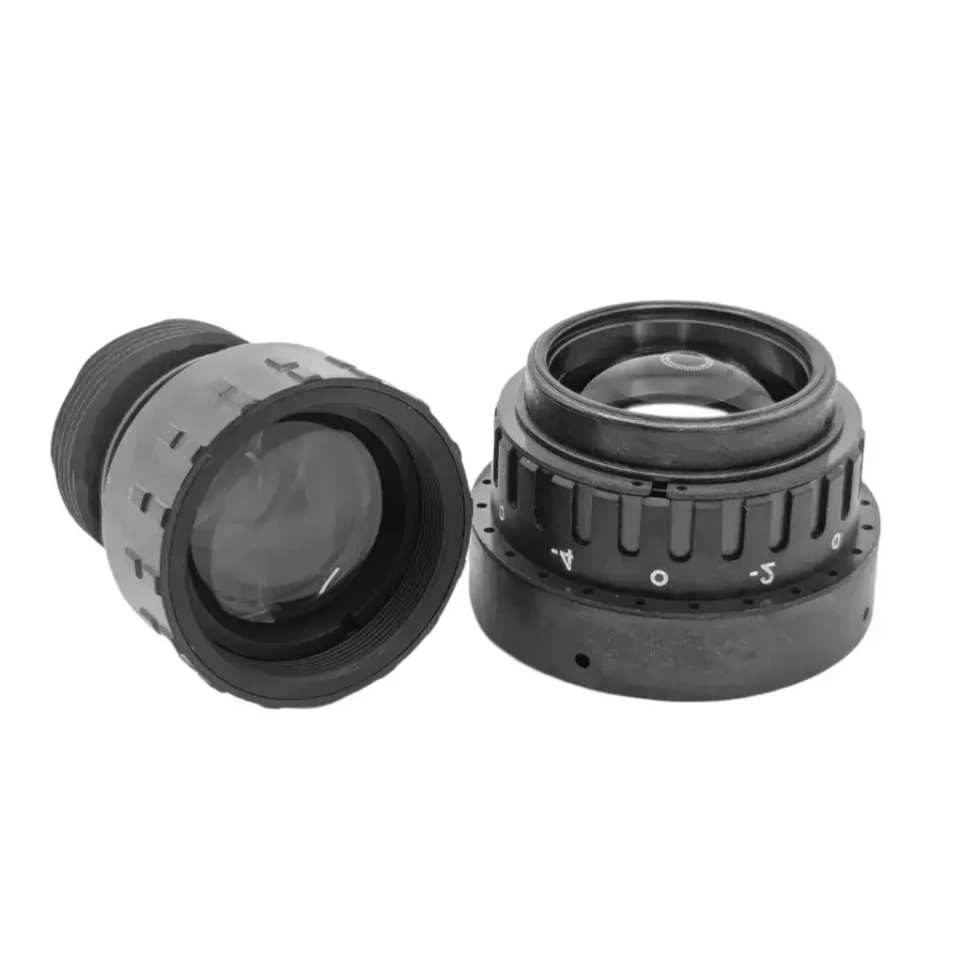
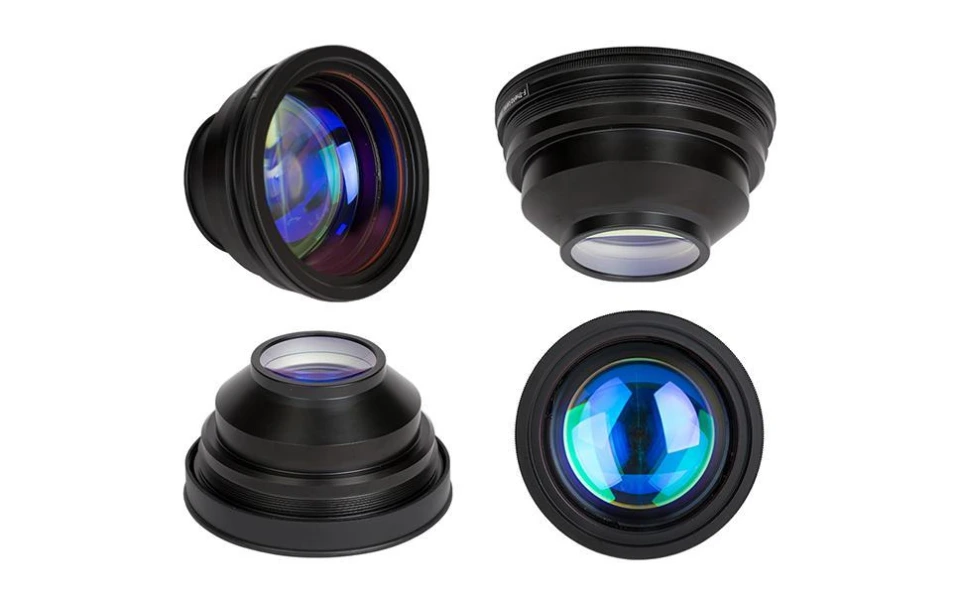
Macro/ Micro Lens
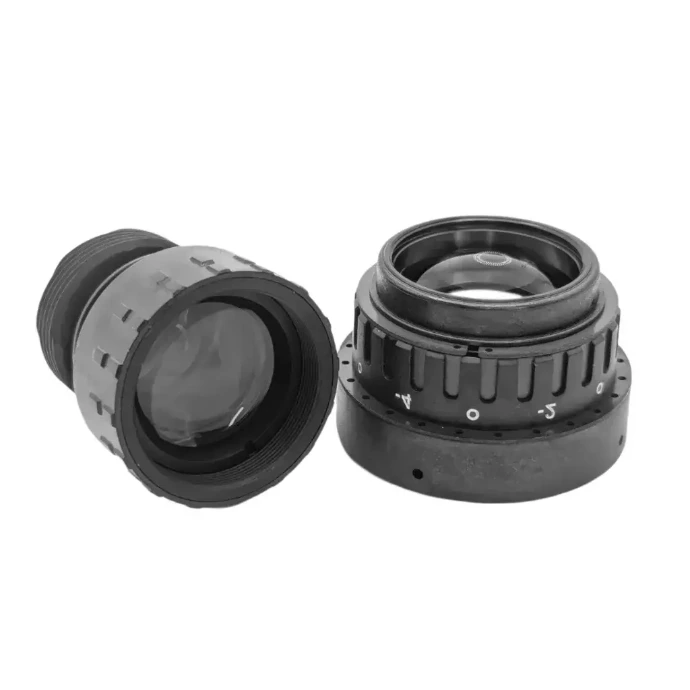
A multi-element lens assembly specifically optimized for close-focusing and high magnification — typically achieving 1:1 (life-size) reproduction or greater, with aberration correction tuned for the unique optical conditions of short conjugate distances. The essential optic for capturing fine detail at close range, from product photography to automated inspection of small components.
Magnification
Up to 1:1 or greater
Working distance
Short (often <100 mm)
Aberration focus
Optimized for close conjugate
Depth of field
Very shallow at high magnification
Overview
- A multi-element lens assembly specifically designed and optically optimized for close-range, high-magnification imaging — achieving reproduction ratios of 1:1 (life-size on the sensor) or greater, well beyond the close-focus capability of a general-purpose lens
- Conventional lenses are optimized for distant or moderate-distance object conjugates where the object-to-image distance ratio is large — at close focusing distances and high magnification, this same lens design exhibits significantly increased aberrations (particularly spherical aberration and field curvature) that a dedicated macro lens design corrects for the specific close-conjugate operating condition
- True macro lenses are internally optimized (floating elements, internal focusing groups) to maintain optical correction across their full focusing range from infinity (or near it) down to 1:1 magnification — distinguishing them from lenses that merely achieve close focus via an extension tube or close-up filter without true macro-corrected optics
- Used wherever fine surface detail, small components, or specimen-level imaging is required — product photography, scientific specimen documentation, and machine vision inspection of small parts, electronic components, and surface defects
- Depth of field becomes extremely shallow at high magnification — a fundamental optical consequence of close-conjugate imaging, not a design flaw, requiring careful focus stacking techniques or small apertures to manage in critical applications
- Machine vision "micro" lenses extend this category into industrial inspection, often providing telecentric or near-telecentric close-focus performance for accurate dimensional measurement of small parts and features
Key Features
High magnification capability
Achieves 1:1 (life-size) reproduction or greater — meaning a 10 mm object fills 10 mm of the sensor area — capturing fine detail and texture invisible at normal photographic distances, a capability conventional lenses cannot match without significant optical compromise.
Close-conjugate aberration correction
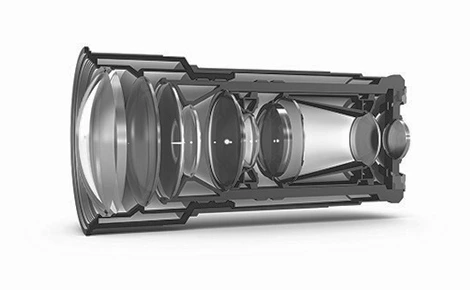
Internal floating-element designs reoptimize the lens's internal element spacing as focus distance changes, maintaining sharp, well-corrected imaging from infinity through the full close-focus range to maximum magnification — a conventional lens design would show significantly degraded performance at these close conjugate distances without this active correction.
Flat-field performance
Many macro and micro lenses are specifically corrected for flat-field performance across the image — ensuring the entire frame (not just the center) remains in sharp focus on a flat subject plane, important for documenting flat specimens, circuit boards, and planar inspection targets uniformly.
Precise working distance control
Machine vision macro/micro lenses are specified with precise, repeatable working distances and magnification ratios, supporting the dimensional accuracy required for automated optical inspection of small components, solder joints, and fine surface features.
Design and Construction
Optical architecture
Floating element designs
- Internal focusing groups move independently (not as a single rigid unit) as focus distance changes
- Reoptimizes aberration correction continuously across the focusing range rather than only at one design distance
- Standard in modern photographic and high-performance machine vision macro lenses
Symmetric & near-symmetric designs
- Many macro lenses use symmetric or near-symmetric element arrangements around the aperture stop
- Naturally minimizes coma and distortion at the close-conjugate, near-unity-magnification condition where macro lenses primarily operate
Specifications
Key parameters
- Maximum magnification: 1:1 standard for "true macro"; some specialized lenses reach 2:1, 5:1, or higher for micro-scale subjects
- Working distance: ranges from a few millimeters (very high magnification) to 100+ mm (1:1 macro), inversely related to magnification
- Resolution: often specified at multiple magnification points across the focusing range, not just at one nominal condition
Machine vision telecentric macro variants
- Telecentric macro lenses combine high magnification with constant magnification regardless of small working distance variation — used for precision small-part dimensional measurement
Optical Materials
Standard correction glass
Aberration-correcting elements
- Extra-low dispersion (ED) glass — controls chromatic aberration which becomes more pronounced at high magnification close-conjugate imaging
- High-index glass elements — manage strong curvature requirements in compact macro lens designs
Floating element groups
- Multiple independently-moving glass groups, often 10–15+ total elements in premium macro lens designs to maintain correction across the full focus range
Coatings
Coating considerations
- Multi-layer broadband AR coatings across all surfaces — important given the high element count of floating-group macro designs
- Specialized coatings to manage flare from the close working distance, where illumination sources are often positioned very near the lens and subject
Wavelength Options
UV inspection
- 365–400 nm
- UV-transmissive glass
- UV-AR coatings
Visible
- 400–700 nm
- ED glass groups
- VIS BBAR
Machine vision NIR
- 700–900 nm
- NIR-corrected glass
- NIR BBAR
Applications
Photography
Product & close-up photography
The standard lens choice for commercial product photography requiring fine detail capture — jewelry, textures, small product features — where life-size or greater reproduction reveals detail invisible at normal shooting distances.
Scientific
Specimen & biological documentation
Used in scientific and biological documentation to capture detailed images of small specimens, insects, and botanical subjects at magnifications revealing structural detail beyond normal visual observation.
Electronics
PCB & component inspection
Provides the high-magnification imaging needed for automated optical inspection of solder joints, surface-mount components, and fine circuit traces in electronics manufacturing quality control.
Medical
Dermatology & wound documentation
Used in medical and dermatological imaging to document fine skin detail, lesions, and wound healing progression at close range with the magnification needed for accurate visual assessment over time.
Manufacturing
Surface defect & texture inspection
Used in automated inspection systems to detect fine surface defects, scratches, and texture irregularities on manufactured parts that would be invisible to standard-magnification machine vision optics
Forensics
Evidence & trace examination
Provides the close-range, high-detail imaging required for forensic documentation of fingerprints, tool marks, and trace physical evidence where fine detail capture is essential for analysis..
Why choose Macro / Micro Lenses
True close-conjugate correction
Optically corrected specifically for the high-magnification, short working distance condition — unlike extension tubes or close-up filters that merely enable close focus without true aberration correction.
Life-size and beyond reproduction
Achieves 1:1 magnification or greater — revealing fine surface detail and texture impossible to capture with conventional lens designs.
Consistent performance across focus range
Floating-element designs maintain optical correction from infinity through maximum close-focus magnification — a single lens serves multiple working distances without performance compromise.
Precision inspection capability
Machine vision macro/micro variants provide the accurate, repeatable magnification needed for automated dimensional measurement and defect detection of small components.
Frequently asked questions
Here are some common questions about Macro/ Micro lens.
Depth of field is fundamentally related to magnification — as magnification increases, depth of field decreases roughly in inverse proportion, a consequence of basic optical geometry rather than a flaw in any specific lens design. At 1:1 magnification, depth of field at typical apertures can be a fraction of a millimeter — meaning only a very thin slice of the subject is in sharp focus at any one time. This is why macro and micro photography often relies on focus stacking (combining multiple images focused at different depths) or stopping down to small apertures (accepting some diffraction softening) to achieve adequate depth of field for the subject.
Extension tubes are simple mechanical spacers placed between a conventional lens and the camera body — they increase the lens-to-sensor distance, which increases magnification, but the lens itself remains optically optimized for its original (typically much longer) working distance. This means image quality, especially at the edges of the frame, often degrades at the close conjugate distances extension tubes create. A true macro lens is internally optically redesigned — with floating elements and aberration correction specifically calculated for the close-conjugate, high-magnification condition — delivering sharp, well-corrected images across its full magnification range, including at 1:1, in a way a conventional lens with extension tubes generally cannot match.
Magnification ratio is determined by the smallest feature size you need to resolve relative to your sensor's pixel size and resolution. For general product photography and moderate detail work, 1:2 to 1:1 (half-life-size to life-size) is typically sufficient. For fine detail such as small electronic components, insect specimens, or surface defect detection, 1:1 to 2:1 may be required. For micro-scale subjects requiring extreme detail — fine circuit traces, microscopic specimens — specialized lenses reaching 5:1, 10:1, or higher magnification, or a true microscope objective, become necessary instead of a standard macro lens.