Endoscope Relay Lens

A precision multi-element lens assembly that transfers an image along a rigid endoscope's elongated shaft — typically built around the Hopkins rod-lens system — preserving brightness, resolution, and color fidelity through repeated relay stages from the objective at the distal tip to the eyepiece or camera at the proximal end.
Function
Multi-stage image transfer
Core technology
Hopkins rod-lens relay
Shaft diameter
1 mm to 10 mm typical
Sterilization
Autoclave-compatible designs
available
Overview
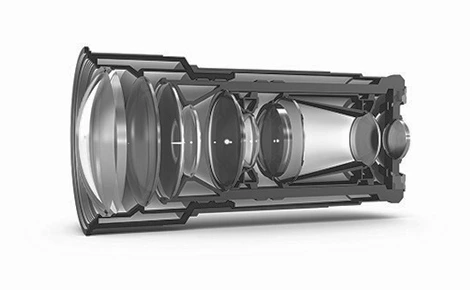
- A multi-element, multi-stage lens assembly that relays a real image along the length of a rigid endoscope shaft — collecting the image formed by a distal objective lens and transferring it, often through several intermediate relay stages, to an eyepiece or camera coupler at the proximal (operator) end
- Built predominantly around the Hopkins rod-lens system — long glass rod lenses separated by short air gaps, an inversion of the earlier lens-and-air-gap-dominated relay designs that dramatically increased light throughput and image brightness compared to fiber-bundle or older relay lens architectures
- Each relay stage in the chain introduces some image degradation (loss of contrast, slight aberration accumulation) — overall endoscope image quality depends on the cumulative performance of every stage in series, making manufacturing precision and alignment across the full relay chain critical to final image quality
- Must accommodate the endoscope's mechanical constraints — narrow shaft diameter (often just a few millimeters), substantial length (tens of centimeters), and in medical applications, full compatibility with steam autoclave or other sterilization processes for reusable instruments
- Used in rigid medical endoscopes (laparoscopes, arthroscopes, cystoscopes, hysteroscopes) and industrial borescopes for internal inspection of machinery, engines, and structures inaccessible to direct visual or camera access
- Distal objective lens design (field of view, viewing angle — straight-ahead, oblique, or side-viewing) is paired with the relay system to determine the endoscope's overall imaging characteristics, with the relay chain itself responsible for faithfully transferring whatever image the objective forms
Key Features
Multi-stage image relay
Transfers a real image through a sequence of relay lens stages along the endoscope shaft length — each stage re-images the previous stage's output, allowing the overall relay chain to span shaft lengths from a few centimeters to over half a meter while maintaining a continuous, viewable image at the proximal end.
High light throughput (Hopkins design)
The Hopkins rod-lens architecture — using long glass rods with minimal air gaps rather than the reverse arrangement — dramatically increases the light-collecting glass cross-section compared to earlier relay designs, delivering substantially higher image brightness for a given shaft diameter, a critical advantage for endoscopic visualization under limited internal illumination.
Narrow-diameter mechanical packaging
Relay lens elements must be precisely manufactured and aligned within shaft diameters often just a few millimeters across — requiring extremely tight manufacturing and assembly tolerances to maintain image quality within such a constrained mechanical envelope, particularly challenging in the smallest-diameter pediatric and minimally invasive surgical endoscopes.
Sterilization-compatible construction
Medical-grade relay lens assemblies (particularly using sapphire rod elements and appropriate cement-free or high-temperature-tolerant bonding) are engineered to withstand repeated steam autoclave sterilization cycles without image-degrading damage to lens coatings, cementing, or alignment — a defining requirement distinguishing reusable medical endoscope optics from industrial borescope designs.
Design and Construction
Relay chain architecture
Hopkins rod-lens system
- Alternating long glass rod lenses and short air gaps — inverted glass-to-air ratio compared to earlier relay designs
- Each rod section acts as a relay/field lens stage; multiple rods in series span the full shaft length
- Standard architecture for virtually all modern rigid medical endoscopes
Alternative & legacy designs
- Conventional lens-and-air-gap relay (pre-Hopkins) — lower light throughput; largely superseded in medical applications but still found in some industrial borescopes
- GRIN-rod relay — used in some ultra-narrow-diameter endoscope and microendoscope designs as a compact alternative to discrete rod lenses
Specifications & tolerances
Key specifications
- Shaft diameter: 1 mm (microendoscopes) to 10 mm (standard laparoscopes/arthroscopes)
- Working length: typically 15–60 cm depending on application
- Field of view: typically 60°–120° depending on objective design; viewing angle (0°, 12°, 30°, 70°, etc.) set by the objective
Manufacturing tolerances
- Rod end-face parallelism: sub-arcminute tolerance required to maintain relay image quality across multiple stages
- Centration and alignment: critical at each stage interface; cumulative misalignment across many stages directly degrades final image sharpness and contrast
Optical Materials
Standard relay materials
Glass rod elements
- N-BK7 — standard relay rod material; excellent visible transmission and availability
- High-index crown glass — used in some compact designs for stronger relay optical power per unit rod length
Sterilization-grade materials
- Sapphire — premium relay rod and objective material for reusable surgical endoscopes; withstands repeated autoclave sterilization cycles without degradation
- Borosilicate glass — chemically resistant alternative for industrial borescope applications exposed to harsh chemicals
Coatings
Coating considerations
- BBAR coatings on rod end faces — reduce per-stage reflection loss, important given the multiple relay stages compounding any per-surface loss
- Hard, scratch-resistant coatings — for frequently cleaned and sterilized reusable medical endoscope components
Wavelength Options
Visible
- 400–700 nm
- N-BK7 / Sapphire
- BBAR coatings
NIR fluorescence
- 700–900 nm
- NIR-transmissive glass
- NIR BBAR
UV (specialty)
- 250–400 nm
- UV Fused Silica
- UV-AR coatings
Applications
Medical
Laparoscopic & arthroscopic surgery
The core image-relay technology of every rigid laparoscope and arthroscope used in minimally invasive surgery, delivering the bright, high-resolution visualization surgeons depend on for accurate procedure execution.
Medical
Urology & gynecology endoscopy
Used in cystoscopes, hysteroscopes, and related urological and gynecological rigid endoscopes, providing the relay imaging needed for diagnostic and therapeutic procedures within these specialty fields.
Industrial
Borescope inspection
Used in industrial rigid borescopes for internal inspection of engine cylinders, turbine blades, weapon bores, and pipe interiors — accessing spaces too small or hazardous for direct visual or camera access.
Dental
Intraoral & dental endoscopy
Used in dental endoscopic instruments and intraoral cameras requiring rigid relay optics within the constrained working space of the oral cavity.
Veterinary
Veterinary surgical endoscopy
Used in veterinary minimally invasive surgical procedures across a range of animal sizes, requiring relay endoscope designs scaled appropriately for different patient anatomies.
Research
Microscope erector prisms
Amici prisms are used as erecting elements in stereo microscope observation tubes and comparison microscopes — correcting the inverted image of the objective in a compact housing without additional relay lenses.
Why choose Endoscope Relay Lens Systems
Maximum light throughput
The Hopkins rod-lens architecture delivers dramatically more light per unit shaft diameter than earlier relay designs — essential for adequate visualization under limited internal illumination.
Proven minimally invasive surgery standard
The established, decades-proven optical technology underlying virtually every rigid medical endoscope used in minimally invasive surgical procedures worldwide.
Sterilization-durable construction
Sapphire-based and properly engineered relay systems withstand repeated autoclave sterilization cycles — enabling cost-effective reusable medical endoscope designs.
Scales to extreme miniaturization
Available from standard surgical endoscope diameters down to needle-gauge microendoscope probes for the most space-constrained inspection and research applications.
Frequently asked questions
Here are some common questions about Endoscope relay lens.
In a multi-stage relay system, each stage re-images the output of the previous stage — any aberration, contrast loss, or misalignment introduced at one stage is passed forward and potentially compounded by subsequent stages, rather than being isolated to that one stage. A small manufacturing or alignment error that would be negligible in a single-lens system can become visually significant after being relayed through several stages along a long endoscope shaft. This is why endoscope relay lens manufacturing requires extremely tight tolerances at every stage — the cumulative effect of multiple stages makes per-stage precision far more critical than it would be in a simpler, single-image-formation optical system.
Reusable surgical endoscopes undergo repeated steam autoclave sterilization cycles — typically 134°C at elevated pressure — between every use. Standard optical glass and conventional optical cements can be degraded by repeated exposure to this thermal and pressure cycling over the instrument's operational lifetime, potentially causing delamination, cracking, or gradual image quality degradation. Sapphire's exceptional hardness, thermal shock resistance, and chemical inertness allow relay rod elements made from this material to withstand hundreds or thousands of autoclave cycles without degradation, making it the preferred material for the most demanding reusable surgical endoscope applications, despite its higher material and manufacturing cost compared to standard glass.
Viewing angle is determined primarily by the distal objective lens at the tip of the endoscope, not by the relay lens system itself — a 0° (straight-ahead), 30° (forward-oblique), or 70° (side-viewing) endoscope uses an objective lens design that directs the field of view in that specific direction relative to the shaft axis. The relay lens system's job is simply to faithfully transfer whatever image the objective forms, regardless of the objective's viewing angle, along the shaft to the proximal end. This means the same general relay lens architecture (such as the Hopkins rod-lens system) can be paired with different objective designs to produce endoscopes covering the full range of standard viewing angles used in different surgical and inspection applications.